RC Warbird Helicopter Tutorial: Practical Combat-Style Flying and Maintenance
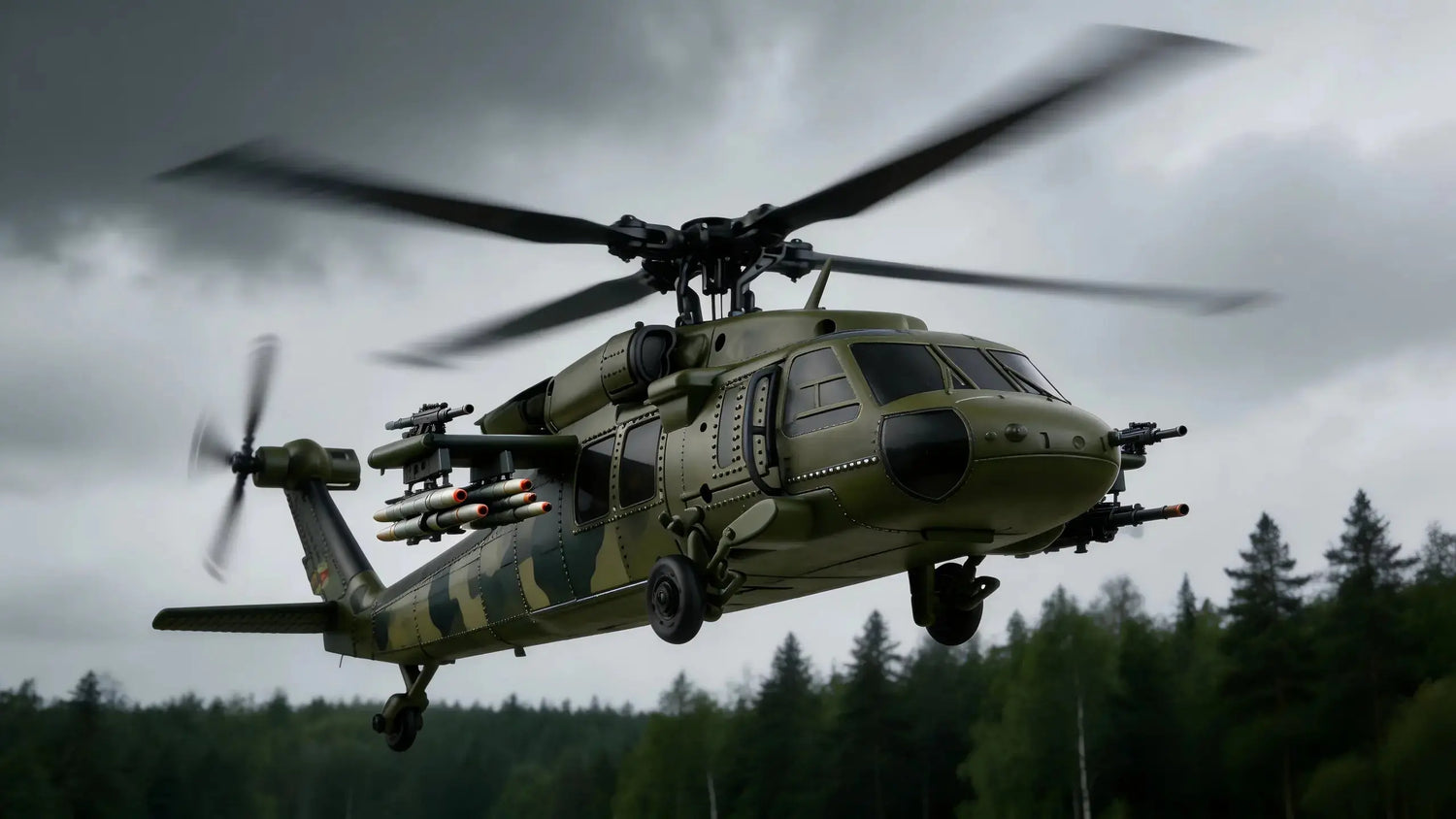
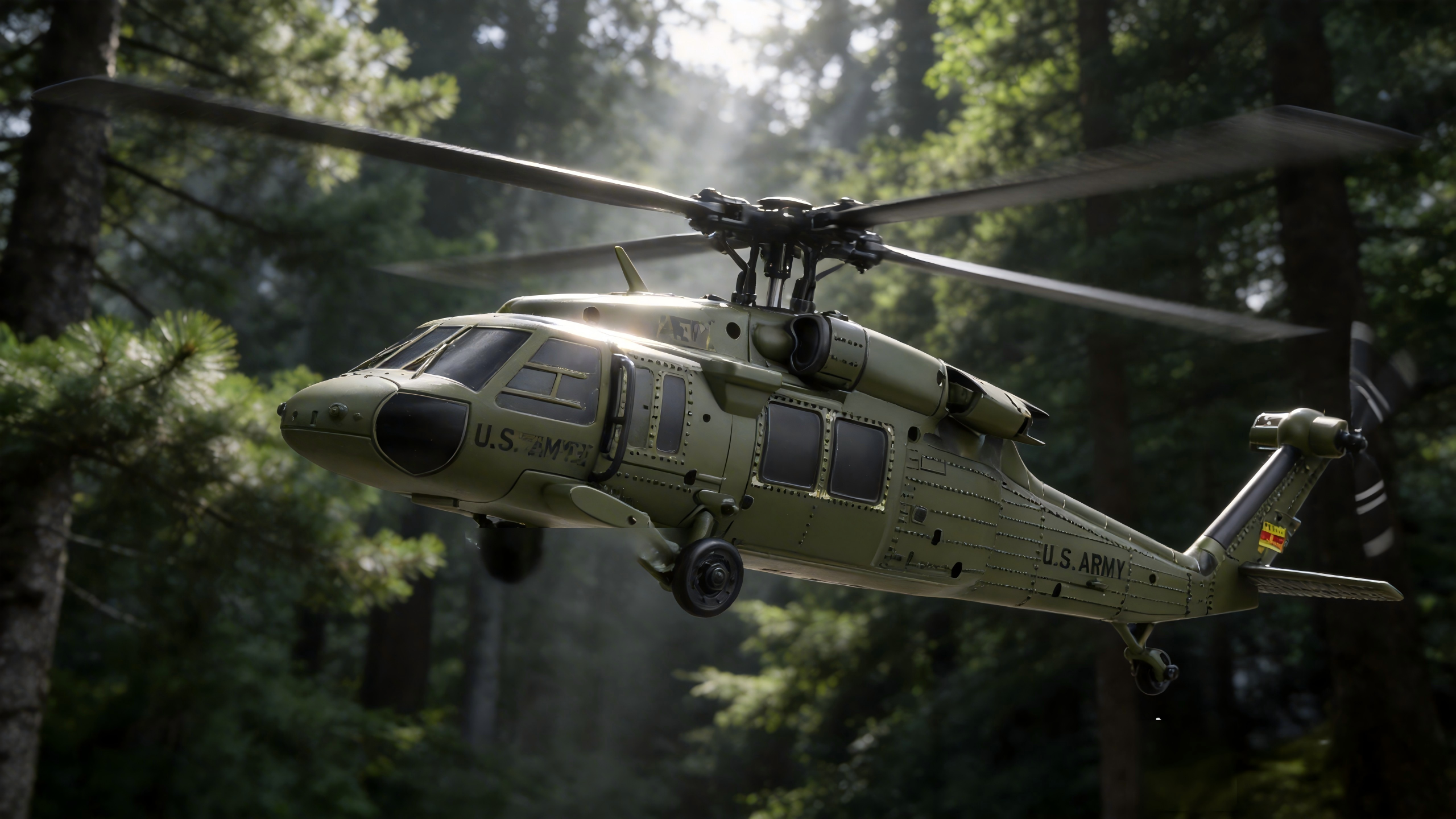
Warbird helicopters marry the presence of full‑scale military aircraft with the nimble control of RC rotorcraft. Modelers love them for their riveted skins, weathered camo, and purposeful silhouettes—and then discover that scale fuselages add weight, drag, and new vibration paths that change how the heli flies and how you maintain it. This RC warbird helicopter tutorial focuses on beginner‑friendly stability, crash mitigation, and practical, combat‑style flying patterns you can practice safely. Think of it this way: you’re not just flying a heli—you’re preserving a scale model in motion.
Key takeaways
-
Fly at a clear, legal site with visual line of sight, a spotter when needed, and conservative separation from spectators following a community safety code.
-
Enable stabilization early: use an FBL controller with rescue or self‑level as your last‑line bailout while you build muscle memory.
-
Start with symptom‑based tuning: raise tail gain until mild oscillation, then back off; confirm correct swash geometry before first spool‑up.
-
Progress in stages: simulator → basic trainer settings → collective‑pitch transitions → scale fly‑bys and figure‑8s.
-
Run a pre‑flight checklist every outing; log vibration cues and fasteners that tend to loosen under the warbird fuselage.
-
Maintain batteries carefully: balance‑charge, avoid fast charging when cold, and store at ~3.8 V/cell.
-
Keep scale mods light and forward of the main shaft; re‑check CG after every cosmetic change.
-
Document firmware, gains, and trim per airframe so you can revert after a hard landing or mis‑tune.
RC warbird helicopter tutorial essentials for pre‑flight and safe sites
A safe, predictable environment lowers workload and protects your scale shell. Choose a wide, level field free of trees and power lines, maintain visual line of sight, and yield to manned aircraft. In the U.S., recreational flyers must follow the rules summarized on the FAA’s Recreational Flyers page, including TRUST, ≤400 ft AGL in Class G, and Remote ID or FRIA where applicable, as outlined by the FAA in the Recreational Flyers guidance. See the FAA’s overview of recreational requirements on the agency’s official hub: the Recreational Flyers and Community‑Based Organizations page at the FAA website (https://www.faa.gov/uas/recreational_flyers). Use a community safety code such as the Academy of Model Aeronautics; AMA documents detail spotter expectations and separation practices for model operations, as described in the AMA’s See and Avoid guidance and related safety codes on modelaircraft.org.
Pre‑flight checklist
-
Inspect blades for nicks; confirm main/tail rotation directions and blade tracking during low‑RPM spin.
-
Verify swash leveling and correct control directions; check tail slider travel and smoothness.
-
Confirm throttle hold works; test failsafe on the bench before arriving at the site.
-
Check all visible fasteners on head, grips, tail case, landing gear; add a tiny paint mark to spot loosening over time.
-
Check battery condition and voltage; seat and secure pack so CG matches the manufacturer’s recommendation.
-
Confirm FBL orientation, sensor mounting tape integrity, and that the selected bank loads with expected rates/expo.
-
Range‑check the radio; verify that rescue/self‑level triggers the correct positive collective response.
PlayPulse RC micro‑example Many ready‑to‑run packages include the airframe, a 2.4 GHz transmitter, LiPo, USB charger, spares, and a manual. Map those contents to your checklist at home: charge and balance the pack, bind the radio, and verify throttle hold before you head out. If you want a simple reference, the PlayPulse RC beginner guide explains basic pre‑flight checks clearly in the article How to Fly an RC Helicopter: Stable Beginner Tips (https://www.playpulserc.com/blogs/playpulserc-blog-rc-toys-news/how-to-fly-rc-helicopter). If you’re comparing RTR airframes, see the PlayPulse RC Aircraft collection page for packaging norms and specs at the PlayPulse RC aircraft collection (https://www.playpulserc.com/collections/rc-aircraft). (Knowledge Base Source)
Stabilization that saves models: FBL, gyros, governor, and rescue modes
A modern flybarless (FBL) controller integrates 3‑axis gyros and control logic that steadies the model and interprets pilot inputs. Most systems offer heading‑lock tail control, multiple “banks” for rates/expo, and a rescue or self‑level function you can assign to a switch.
-
VBar NEO: Follow the setup wizard to ensure correct geometry and orientation, and enable a bank with the rescue function as described in Mikado’s official VBar NEO Quick Start Guide from Mikado Model Helicopters. The Mikado Quick Start brochure for VBar NEO on mikado‑heli.de outlines the bank and rescue concepts in beginner‑friendly terms (https://www.mikado-heli.de/downloads/anleitungen/vbar_neo/QSG-Broschuere_A6_NEO_en_web.pdf).
-
BeastX/AR7210BX: Tail gain is commonly adjusted via a transmitter channel. The BEASTX documentation explains symptom‑based tuning—reduce gain for tail wag, increase if the tail drifts—within the AR7210BX gains guide on the official BEASTX wiki (https://wiki.beastx.com/index.php?title=Manuals%3AAR7210FblV5%3AGains%2Fen).
-
Spirit: Beginner‑friendly modes such as Rescue and Scale Stabilization are documented in the Spirit System manual, which also stresses verifying positive collective on rescue during bench tests in the Spirit Configuration Manual hosted by Spirit System (https://manual.spirit-system.com/index.php/Configuration).
Starter settings mindset
-
Dual rates and expo: For your first flights, set cyclic rates modest and add 15–20% expo for smoother stick response. Reduce expo as precision improves.
-
Tail gain: Begin conservatively. Increase by small steps until you see the first hint of oscillation in hover, then back off a few points.
-
Governor: For scale warbirds, a stable headspeed matters more than maximum RPM. Choose a moderate headspeed that avoids resonance with your fuselage and blades.
Micro‑workflow: baseline FBL setup for a warbird fuselage
-
Complete the airframe mechanical setup out of the fuselage; verify level swash at mid‑stick and zero tracking on a bare frame.
-
Mount the FBL unit oriented per the manual; use fresh gel tape and a strap to minimize vibration.
-
Run the FBL setup wizard to confirm sensor directions, servo endpoints, and collective range; target ±12° collective and ~6–8° cyclic to start.
-
Assign a rescue/self‑level bank to a momentary switch; bench‑test that rescue commands positive pitch when the model is upright.
-
Install the fuselage; re‑check CG and ensure linkages don’t bind on the scale shell. Re‑validate tail gain at hover.
Additional tuning detail and references
-
Verifying blade tracking: Many Align manuals include a visual tracking method during low‑RPM spool‑up at a safe distance; see the Align T‑Rex 470LM manual page “Main Rotor Adjustments” in the official Align manual library on align.com.tw (https://www.align.com.tw/ManuaLib/Heli/Helicopter/RH47E01XT.pdf).
-
Typical Horizon Hobby/Blade setup checks: The Blade Trio 360 CFX manual documents throttle hold checks, control verification, and tail setup as part of pre‑flight; see the manufacturer PDF on horizonhobby.com (https://www.horizonhobby.com/on/demandware.static/Sites-horizon-us-Site/Sites-horizon-master/default/Manuals/BLH4755-Manual-EN.pdf).
Training progression: from sim to scale passes
Keep your training intentional. Here’s the deal: structured drills shrink your risk curve and protect the paint.
Stage 1 — Simulator
-
Practice liftoff to a stable hover at 5–10 ft for 60 seconds with <1 m drift. Add “clock” hovers—nose‑out, left side‑in, right side‑in, nose‑in—for 20–30 seconds each.
Stage 2 — Trainer settings on the model
-
Fly in calm air with soft rates and 15–20% expo. Practice takeoffs to hover boxes and gentle pirouettes using throttle hold as your safety net on approach.
Stage 3 — Collective‑pitch transition
-
Introduce short forward flights down the centerline and returns at reduced speed. Keep altitude changes small to maintain a steady headspeed and tail authority.
Stage 4 — Scale handling and combat‑style patterns
-
Add low‑speed, down‑the‑line fly‑bys, wide figure‑8s, and gentle banking turns. Emphasize smoothness and constant altitude; warbirds look most convincing when movements are measured and precise.
Three measurable practice drills
-
Hover hold: 60 s stable hover at 5–10 ft; drift <1 m; tail error <2°. Pass three times before advancing.
-
Centerline passes: Three straight passes at 20–30 m distance, altitude 8–12 ft, throttle‑hold rehearsed before each pass.
-
Figure‑8s for scale: Two continuous figure‑8s with bank angles ≤20°, no altitude excursions >3 ft, and smooth tail management throughout.
Maintenance that prevents crashes
Warbird shells can mask vibration and make inspections harder. Compensate with disciplined routines and notes.
Post‑flight checklist
-
Let the pack cool, then record flight time and any unusual vibes or tail behavior.
-
Inspect blades and linkages for scuffs; spin the head slowly by hand and feel for notchiness.
-
Verify all screws you paint‑marked remain aligned; re‑mark if any moved.
Maintenance schedule
-
Daily or every session: Visual inspection of blades, grips, swash links, tail slider; verify control directions; check landing gear and canopy mounts; confirm FBL sensor tape is intact.
-
Weekly or every 10–15 flights: Check head and tail bearings for smoothness; inspect belts/gears; re‑balance blades and confirm tracking during a low‑RPM spin at a safe distance.
-
Monthly or 40–50 flights: Replace rough bearings; verify motor mount screws and tail hub hardware; recalibrate gyro if your vendor recommends periodic recalibration.
Troubleshooting quick reference
|
Symptom |
Likely cause |
Quick fix |
Source |
|---|---|---|---|
|
No initialization on power‑up |
Throttle not low; stunt mode active |
Power cycle; set throttle low; confirm normal mode before arming |
See example startup checks in the Blade Trio 360 CFX manual on horizonhobby.com (https://www.horizonhobby.com/on/demandware.static/Sites-horizon-us-Site/Sites-horizon-master/default/Manuals/BLH4755-Manual-EN.pdf) |
|
Tail wag or oscillation |
Tail gain too high; bent tail shaft or blades |
Reduce gyro gain; inspect and replace damaged tail parts |
The BEASTX AR7210BX gains guide explains wag vs. gain on the official BEASTX wiki (https://wiki.beastx.com/index.php?title=Manuals%3AAR7210FblV5%3AGains%2Fen) |
|
Persistent tail drift in hover |
Tail gain too low; linkage binding |
Increase gain gradually; free binding; re‑lube if appropriate |
Process guidance is described in the BEASTX gains documentation on wiki.beastx.com |
|
Excess vibration |
Unbalanced or chipped main blades; bent spindle |
Replace damaged parts; re‑balance; verify tracking at 10–15 ft |
See Align’s T‑Rex 470LM manual “Main Rotor Adjustments” for tracking guidance on align.com.tw (https://www.align.com.tw/ManuaLib/Heli/Helicopter/RH47E01XT.pdf) |
|
Motor spools but no lift |
Wrong blade pitch/rotation; low battery |
Verify main/tail rotation and blade orientation; charge or replace pack |
Basic diagnosis examples appear in the Blade 150 S manual on horizonhobby.com (https://www.horizonhobby.com/on/demandware.static/Sites-horizon-us-Site/Sites-horizon-master/default/Manuals/BLH4400-Manual-EN.pdf) |
Battery care essentials
-
Charge method: Balanced CC/CV to 4.20 V/cell at 0.5–1 C; avoid fast charging, especially when cells are cold. The Battery University article on charging lithium‑ion cells explains CC/CV and safe rates in BU‑409 on batteryuniversity.com (https://batteryuniversity.com/article/bu-409-charging-lithium-ion).
-
Temperature and storage: Avoid charging below
41°F; store packs at ~40–50% state of charge (3.8–3.85 V/cell) in a cool place. Battery University summarizes safe temperature ranges and storage guidance in BU‑410 and BU‑702 (https://batteryuniversity.com/article/bu-410-charging-at-high-and-low-temperatures; https://batteryuniversity.com/article/bu-702-how-to-store-batteries).

Scale‑mod tips without hurting CG or aerodynamics
Scale beauty should not cost you a tail boom. Keep cosmetic changes light and forward of the main shaft.
-
Lightweight cosmetics: Favor decals, airbrushed weathering, and thin styrene detail over heavy hardware. Test paint compatibility on scrap if your fuselage is foam.
-
Subtle reinforcement: Use narrow fiberglass tape or carbon strips with thin CA or epoxy to stiffen landing skids and canopy mounts. Keep reinforcements short and close to the mast.
-
CG discipline: After any mod, re‑check balance by supporting the model at the recommended point and adjusting battery position; avoid adding tail weight unless absolutely necessary.
-
Aerodynamics: Keep antennas external and clear; avoid protrusions that intercept rotor downwash. If you add scale armaments, mount them symmetrically and review tracking.
Safety and legal compliance notes for U.S. flyers
Recreational flyers should complete TRUST, register any model over 0.55 lb, and mark the aircraft accordingly. Fly at or below 400 ft AGL in Class G, maintain visual line of sight, yield to manned aircraft, and use LAANC to request authorization in controlled airspace. Remote ID applies unless you fly within a FRIA. These expectations are summarized by the FAA on its Recreational Flyers and Community‑Based Organizations page at the FAA website (https://www.faa.gov/uas/recreational_flyers). To operationalize safe separation, many pilots follow a community‑based safety code; the Academy of Model Aeronautics describes pilot‑spotter coordination and separation practices in its safety code and See and Avoid guidance on modelaircraft.org (https://www.modelaircraft.org/system/files/documents/540-D.pdf). Always confirm local laws and field rules.
Next steps
Build habits around these checklists and drills, then inch your warbird into graceful, convincing fly‑bys. For a concise pre‑flight refresher, see the PlayPulse RC beginner helicopter guide at How to Fly an RC Helicopter: Stable Beginner Tips (https://www.playpulserc.com/blogs/playpulserc-blog-rc-toys-news/how-to-fly-rc-helicopter).
— Written by a long‑time RC helicopter pilot who tunes FBL systems and builds scale warbird fuselages for weekend flying and club demos.