The ultimate guide to RC construction vehicles for kids (ages 6–12)
RC construction vehicles—excavators, bulldozers, and dump trucks—turn a simple sandbox into a jobsite brimming with problem-solving, teamwork, and pure fun. This guide is for parents of kids ages 6–12 who want safe, durable, and realistic remote-control play that also builds early engineering habits. We’ll help you choose the right vehicle by age and skill, understand the key safety standards, set up multi-vehicle play without chaos, and run simple STEM activities that make learning feel like play.
Key takeaways
-
Safety first: Look for compliance with U.S. toy rules (ASTM F963 via CPSIA/CPC), check FCC Part 15 notices for radios, and use simple battery routines to reduce risk.
-
Match complexity to age: Start with simpler dump trucks at 6–8, add bulldozers or multi-joint excavators at 8–10, and move to advanced, realistic cycles by 10–12.
-
Realism drives learning: Multi-joint controls and “authentic jobsite” tasks encourage planning, measurement, and collaboration.
-
2.4 GHz helps teamwork: Modern radios reduce crosstalk so several RCs can run together with good habits (binding, spacing, line of sight).
-
Think “operate → understand → collaborate”: Use short, repeatable activities to teach measurement, cause-and-effect, and team roles.
Quick comparison snapshot: excavator vs bulldozer vs dump truck
|
Vehicle type |
Best age window |
Control complexity |
Ideal play space |
Typical runtime |
Strengths |
Learning focus |
|---|---|---|---|---|---|---|
|
Excavator |
8–12 (supervised 7–8) |
High (boom/arm/bucket/swing + drive) |
Sandbox, garden bed with soft soil |
~15–30 min per pack |
Precise digging and placement |
Levers, volume estimation, planning cycles |
|
Bulldozer |
7–12 |
Medium (blade lift/tilt + drive/steer) |
Sand, fine gravel, firm dirt paths |
~15–30 min per pack |
Shaping surfaces and pushing loads |
Force, friction, surface grading |
|
Dump truck |
6–12 |
Low–Medium (drive/steer + bed lift) |
Any sandbox or backyard path |
~15–30 min per pack |
Hauling and coordinated teamwork |
Capacity, timing, logistics |
Notes: Runtimes and materials vary by model. Many kid-focused vehicles use ABS bodies with selective metal parts; plan around splash resistance rather than immersion.
Safety and standards parents should actually verify
You don’t need to be an engineer to buy safely. Here’s what matters—and how to check it in plain language.
-
U.S. toy safety standard and CPC: In the U.S., toys for children 12 and under must meet the federal toy standard (ASTM F963) and have a Children’s Product Certificate (CPC) based on third‑party lab testing before sale. See the U.S. Consumer Product Safety Commission’s overview in the Toy Safety Business Guidance. For background on the CPC, review the CPSC’s concise explanation at Children’s Product Certificate. Ask sellers for a copy if you have doubts, and look for ASTM F963 wording in product descriptions or packaging.
-
According to the CPSC’s guidance for businesses, toys must comply with ASTM F963 via CPSIA and be certified before sale; parents can learn what compliant language and age grading look like in the same resource: the CPSC’s Business Education page on Toy Safety and Children’s Product Certificate.
-
-
Small parts and mechanical safety: Younger kids face stricter small‑parts rules and sharp‑edge limits. If you’re buying for under 8, double‑check age grading and avoid vehicles with easily detachable tiny accessories. For background, see the CPSC’s small parts guidance.
-
EU references (CE/EN 71): If a product mentions CE or EN 71, it’s referring to European toy safety. EN 71‑1 covers mechanical/physical properties (sharp points, entrapment, structural integrity). You can read a plain‑English catalog summary at BSI’s page for BS EN 71‑1:2026.
-
Radio compliance: 2.4 GHz RC toys in the U.S. should carry FCC Part 15 statements on the label or in the manual (the two‑condition statement and a caution about unauthorized modifications). You can see those requirements listed in the eCFR index for Part 15 labeling and user info.
-
Battery safety routines: Treat batteries with care. Keep compartments secured (usually with a screw), supervise charging, and never charge while wet or hot. For a parent‑friendly overview of battery‑operated toy safety expectations, see the CPSC’s staff summary: Overview of U.S. Battery‑Operated Toy Safety Requirements.
-
Water language: “Waterproof” is frequently misused in toy marketing. Unless a model lists an IP rating, assume splash‑resistant at best; avoid immersion. For context on IP codes (e.g., IPX4 splash resistance), see UL’s explainer on enclosure and environmental ratings.
Tip: Keep packaging and manuals. They’re your proof of standards, age grading, FCC notices, and battery instructions.
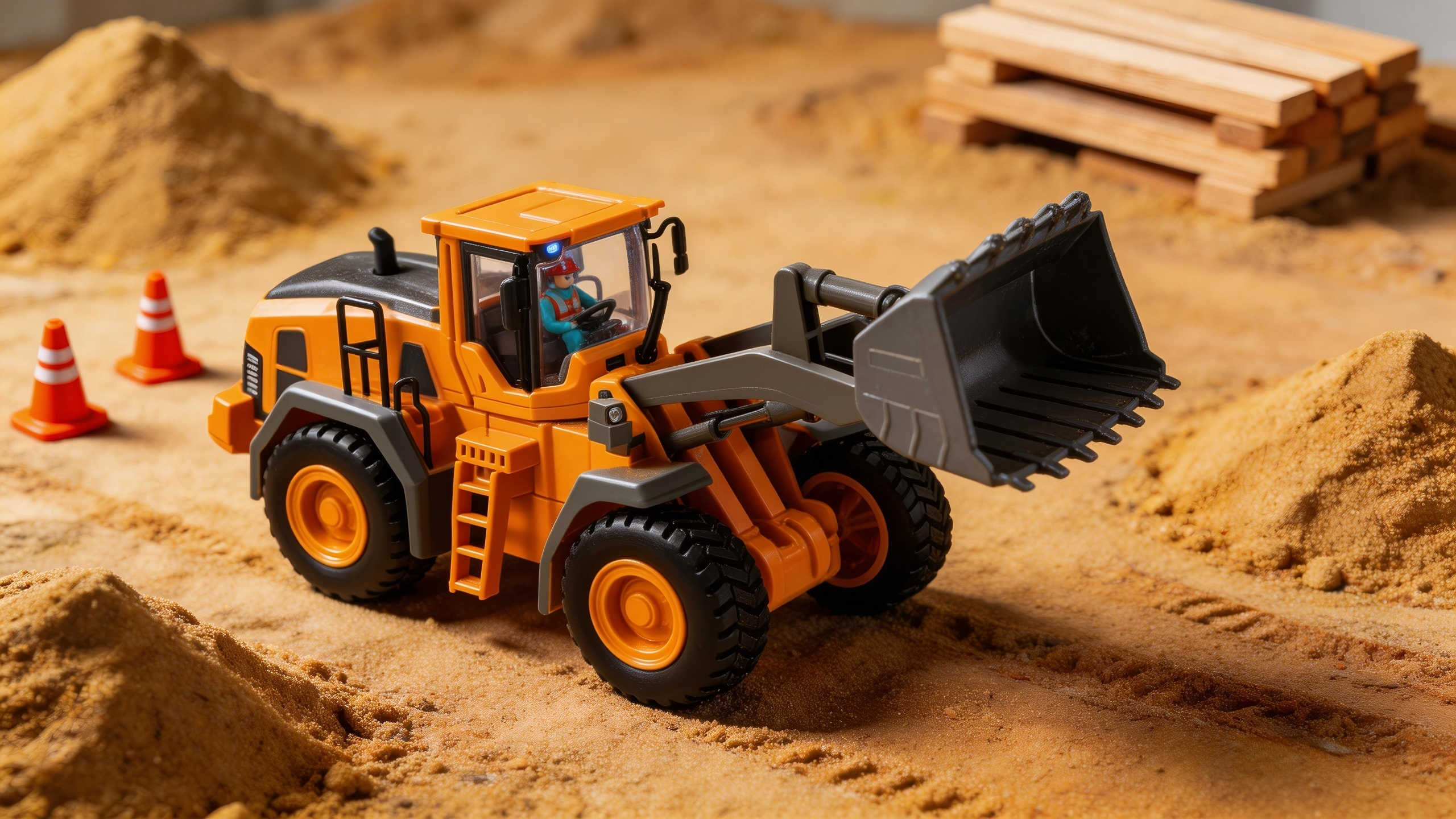
Choosing RC construction vehicles for kids by age and skill
Kids grow fast, and so should the challenge. Use this simple progression to keep play rewarding—not frustrating.
Ages 6–8: Entry stage
Start simple to build confidence and basic control. A remote‑control dump truck is usually the friendliest first step: drive/steer plus a lifting bed makes it easy to understand “load → haul → dump.” Look for slower top speeds, sturdy bumpers, and a clearly secured battery door. If your child is keen on digging, a basic excavator with fewer independent joints can work under close supervision, but don’t rush the complexity.
What to aim for in this window: short, successful task cycles. For example, five loads from point A to point B, with a parent acting as the spotter who calls “stop” before obstacles. Keep surfaces soft and forgiving (sandbox, garden bed, or a tray of kinetic sand indoors) and emphasize careful control over speed.
Ages 8–10: Intermediate stage
This is the sweet spot for many families. Kids can handle multi‑joint excavators (boom, arm, bucket, and rotation) and bulldozers that lift/tilt blades while pushing material. 2.4 GHz radios allow multiple vehicles to work in the same space, so you can pair an excavator with a dump truck for realistic teamwork.
Focus here on precision and planning. Encourage kids to think through a cycle: where to dig, how full a bucket should be, the best path to the dump zone, and how to keep the jobsite tidy. They’re ready for gentle problem‑solving: what to do if sand is too wet or dry, or how to adjust the blade to smooth a surface without bogging down.
Ages 10–12: Advanced stage
Older kids can manage higher channel counts, longer task sequences, and light troubleshooting. Challenge them with “mini projects” that require site planning: excavate a trench, grade a road, and coordinate two vehicles over a timed session. Introduce simple data logging—count cycles, time runs, and estimate volumes—so they can compare strategies.
If you add mild complexity (e.g., a slightly heavier bucket with selective metal parts or adjustable tracks), be sure durability stays age‑appropriate and that you review safe handling of weight and momentum.
RC fundamentals for parents: why 2.4 GHz enables smoother teamwork
In the crystal‑radio era, two nearby RCs could easily fight for the same channel. Modern 2.4 GHz systems use spread‑spectrum techniques and a pairing process (“binding”) so each transmitter talks mainly to its own vehicle. Think of it like each pair having a private conversation that quietly hops between seats in an empty theater—others are around, but no one is shouting over anyone else.
Practical takeaways:
-
Look for “2.4 GHz” on the box/manual. Most kid‑focused RC toys use it.
-
Bind each transmitter/vehicle pair separately. Keep transmitters powered on only when you intend to use them.
-
Maintain line of sight and a little spacing between operators. If controls feel laggy in a crowded park, move a few meters away from dense Wi‑Fi or metal structures and try again.
If you’re curious about the radio tech behind this, hobby manufacturers like Spektrum describe how digital spread‑spectrum keeps signals stable in family settings. See Spektrum’s DSMR overview for a plain explanation of hopping and binding in their technology summary.
Excavator vs bulldozer vs dump truck: how to match play to space
The “right” first vehicle depends as much on your yard or play area as it does on your child’s skills.
-
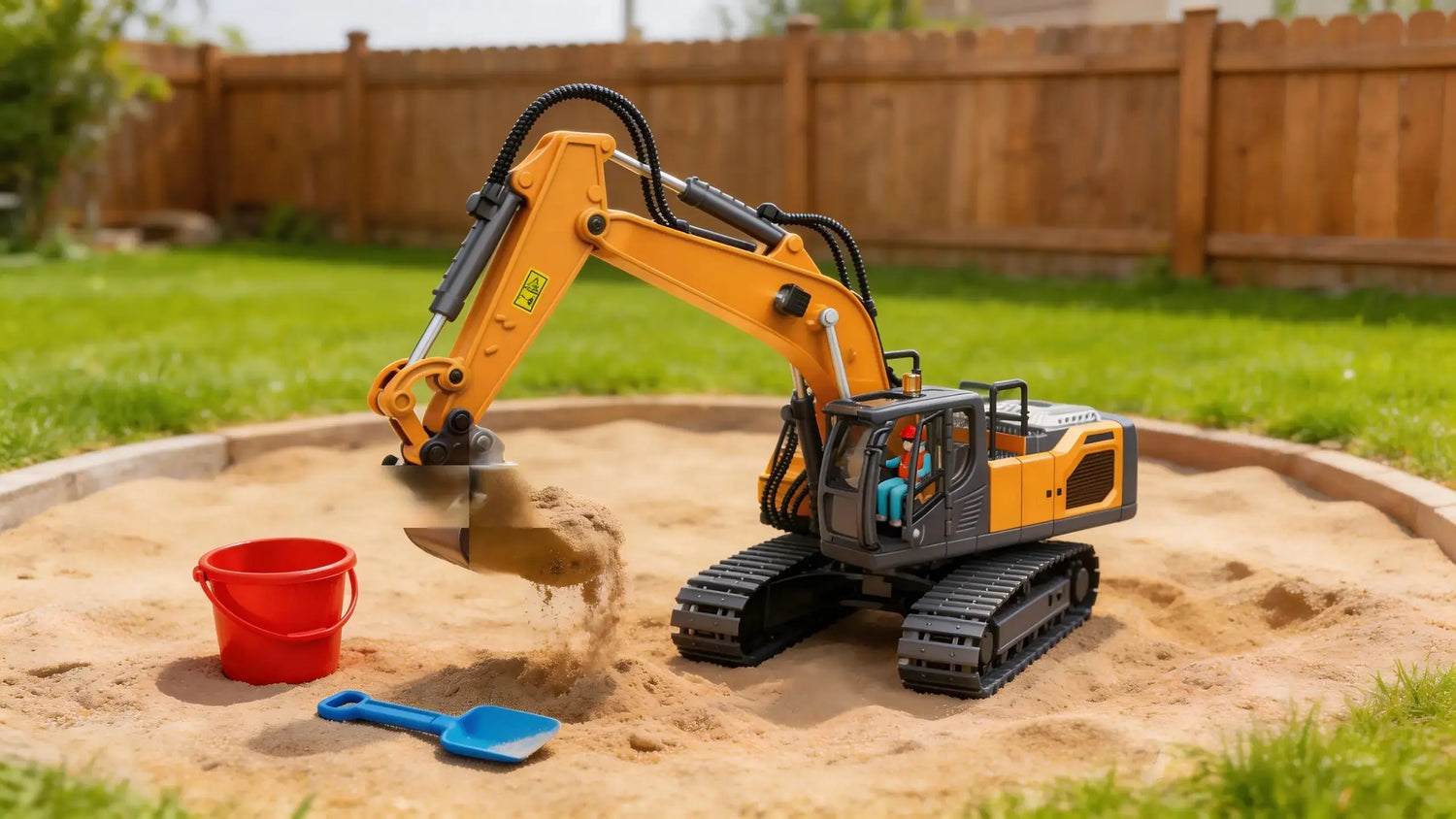
Excavator: Best for soft, diggable material and focused, fine‑motor practice. A small backyard sandbox or garden bed is ideal. If you plan an excavator first, pair it with a simple dump truck later to make the digging feel purposeful.
-
Bulldozer: Great for kids who like momentum and shaping a surface. Works best on firm sand or fine gravel where the blade can move material without the tracks bogging down. It’s a satisfying middle ground—more tactile than a truck, less finger‑intensive than an excavator.
-
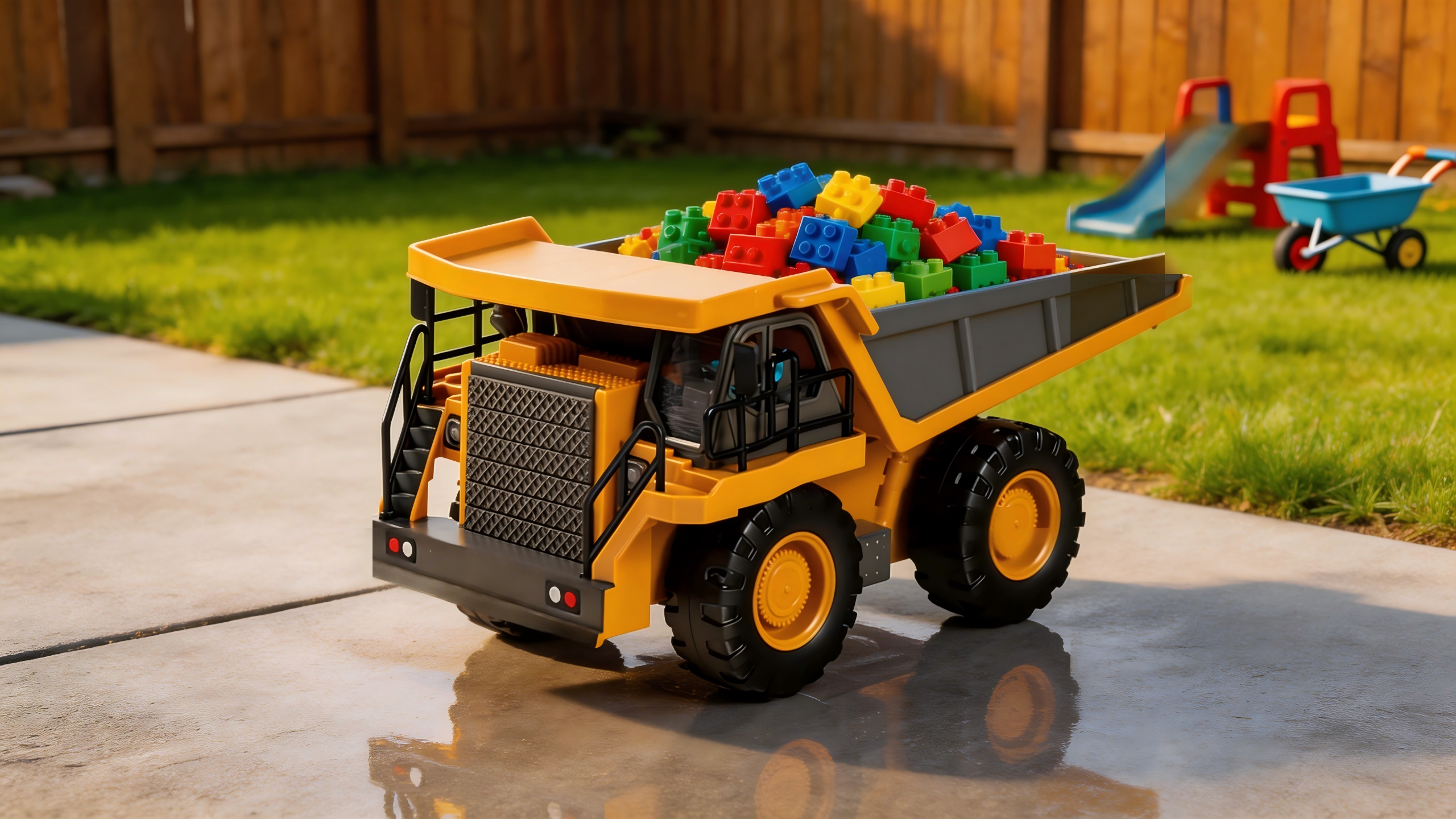
Dump truck: The most portable option and perfect for teamwork. Any sandbox or driveway corner with a small ramp becomes a jobsite. Trucks also shine in group play because kids can queue up, take turns loading, and “deliver” to marked zones.
Tip: Think of space in “stations.” A dig zone, a haul path, and a dump zone make even a small yard feel like a real construction site.
What to verify before checkout (a quick parent’s pass/fail)
Before you click buy, do a 60‑second scan:
-
Is there a clear age grade (e.g., 6+ or 8+) and mention of ASTM F963 compliance? If you’re in doubt, message the seller and ask for the CPC or the lab confirmation.
-
Does the listing or manual show FCC Part 15 statements for the radio? If yes, good; that’s standard for 2.4 GHz devices.
-
Are battery and charger details transparent, and is the battery compartment secured by a tool? That’s a must for kids’ toys.
-
Does the store clearly explain shipping timelines and warranty/returns? Reputable retailers usually publish straightforward policy pages. For example, PlayPulse RC outlines shipping timelines on their logistics policy and coverage details on their warranty—use pages like these (wherever you shop) as a reference for what clarity should look like. If you’d like to see how a typical 2.4 GHz feature is described on a kid‑friendly model, an example page is the brand’s RC rock crawler with 2.4 GHz control (context only; check construction vehicles for equivalent specs).
This isn’t about choosing one brand; it’s about verifying the seller provides enough information for you to buy with confidence.
Maintenance, safety routines, and simple troubleshooting
A few predictable habits will keep RC construction vehicles ready for the next play session—and keep kids safe.
-
Pre‑play: Inspect for cracks or sharp edges. Ensure the battery door is screwed shut. Do a 10‑second control test at low speed, and agree on a family “stop word.”
-
Water care: Treat splashy marketing claims skeptically. If a toy gets wet, power off, remove the battery, and air‑dry fully before charging. Never charge a warm or damp battery.
-
Charging and storage: Use the included charger in a dry, ventilated area; supervise charging; allow a cool‑down after play; store batteries at room temperature. Keep charging surfaces tidy and non‑flammable.
-
Post‑play: Brush off sand, check track tension/axles, and note runtime so you can plan the next session’s battery needs.
Troubleshooting in a pinch: If controls feel unresponsive, power‑cycle the vehicle and transmitter, re‑bind if needed, increase distance from routers/metal, and confirm the battery is charged and seated correctly.
STEM mini‑labs: turn jobsite play into learning moments
Short, repeatable activities help kids connect what their hands feel to what their minds can measure. These ideas align with core engineering design practices found in the NGSS K–5 topics. For an overview of the K–5 engineering design themes, see the NGSS K–5 by Topic summary. For classroom‑quality activity structures to adapt at home, browse TeachEngineering’s NGSS‑aligned library.
1) Bucket volume estimator (excavator)
Goal: Estimate how many bucket loads fill the truck. Materials: measuring cup, small bucket or tray, RC excavator, RC dump truck. Method: Time five cycles, then multiply to predict a full load; verify by counting actual cycles. Talk about error sources (spills, different scoop sizes). Learning: unit measurement, estimation, iteration.
2) Push or scoop? (bulldozer vs excavator)
Goal: Compare which vehicle moves more material in two minutes. Materials: marked sand area, timer, scale or measuring cup. Method: Run the bulldozer for two minutes pushing material past a line; repeat with excavator+scoops. Compare volumes or mass. Learning: force, friction, method comparison, fair tests.
3) Haul optimization (dump truck logistics)
Goal: Minimize time per load over five trips. Materials: cones to define a path, timer, notepad. Method: Test two routes (short with sharp turns vs slightly longer with smooth turns). Record times and choose the most efficient path. Learning: planning, data logging, trade‑offs.
4) Lever in the wild (excavator arm)
Goal: Observe how changing “where you scoop” affects effort. Materials: same sand, same excavator. Method: Ask kids to keep the bucket at the same angle but change arm extension. Discuss why a longer lever arm feels slower or weaker at the tip. Learning: levers, torque, cause‑and‑effect.
5) Team roles and comms (multi‑vehicle)
Goal: Run an excavate‑haul‑dump cycle safely with two kids. Materials: vehicles, cones, a whistle or “stop word.” Method: Assign roles—operator, hauler, and spotter (if a parent can join). Practice calling “clear,” “dump,” and “stop.” Time three cycles; reflect on what made it smoother. Learning: collaboration, signaling, safety language.
Case snapshots: real family setups
-
Backyard sandbox build: An 8‑year‑old runs an excavator while a parent handles the truck. They mark a dig zone and a dump zone with cones. At first, buckets are overfilled and spill; by round three, the operator scoops half‑full to avoid drips, finishing faster overall. The child notices “smaller scoops, more control” beats “one giant scoop.”
-
Rain‑day indoor mod: A 10‑year‑old lays a painter’s drop cloth on the kitchen floor and uses a storage bin with kinetic sand as a mini site. Tape marks a “road.” The bulldozer’s blade is set just above the surface to avoid scraping; the family uses a tray to catch overflow. Afterward, they log runtime and clean tracks in the tub (no water on electronics).
-
Birthday party teamwork: Three kids split roles: excavator operator, dump truck driver, and spotter. Using a kitchen timer, they run six cycles and swap jobs. The spotter’s calls (“clear,” “haul,” “dump”) keep things safe and coordinate traffic, and everyone gets a turn at each role.
FAQ
Are RC construction vehicles safe for 6–12‑year‑olds?
Yes—when they comply with toy standards and are used with basic supervision. In the U.S., look for ASTM F963 compliance and age grading; sellers should be able to provide a CPC based on third‑party testing. The CPSC’s Toy Safety guidance explains what compliant toys include.
What does FCC Part 15 mean on the label?
It indicates the radio meets unlicensed device rules and includes the two‑condition statement about interference. For context, see the eCFR Part 15 index. In practice, if control feels glitchy in a crowded area, move, re‑bind, or add spacing between users.
How “waterproof” are these toys?
Unless an IP rating is clearly stated, assume splash resistance only. Keep electronics out of puddles, and dry thoroughly before charging. UL’s IP/enclosure overview shows how ratings like IPX4 are defined.
How long do batteries last, and how long do they take to charge?
Kid‑focused RC construction vehicles commonly run about 15–30 minutes per charge, with charge times around 60–120 minutes depending on capacity and charger. Plan for rotation: one battery in use while another cools/charges. Always use the supplied charger and supervise.
Can multiple kids drive at once without signals crossing?
Generally yes with 2.4 GHz radios. Each transmitter binds to its vehicle, and spread‑spectrum hopping helps prevent crosstalk. Keep some distance between operators and maintain line of sight for best results.
What materials should I look for—plastic or metal?
ABS plastic bodies with selective metal gears or buckets are common and appropriate for younger kids. As skills grow, limited metal reinforcements can add durability and realism, but weight also increases—so keep speed and supervision in mind.
Resources and further reading
-
U.S. toy rules, ASTM F963, and CPC background—CPSC: Toy Safety Business Guidance and Children’s Product Certificate.
-
Radio compliance—FCC: 47 CFR Part 15 overview.
-
Mechanical/physical safety—EU reference: BS EN 71‑1:2026 summary (BSI).
-
Battery care—CPSC staff overview: Battery‑operated toy safety requirements.
-
2.4 GHz basics—Spektrum DSMR: Technology summary.
-
IP ratings—UL: Enclosure and environmental ratings.
-
STEM framing—NGSS: K–5 by Topic and classroom ideas via TeachEngineering NGSS standards page.
Author’s note for parents
If you remember the first time you steered a toy truck over a backyard bump, you already know why these toys matter. They’re tiny invitations to plan, test, and try again. Keep the challenges just a hair above your child’s current skill, and you’ll see the confidence click into place. Ready to build their next adventure? Let’s dig in.