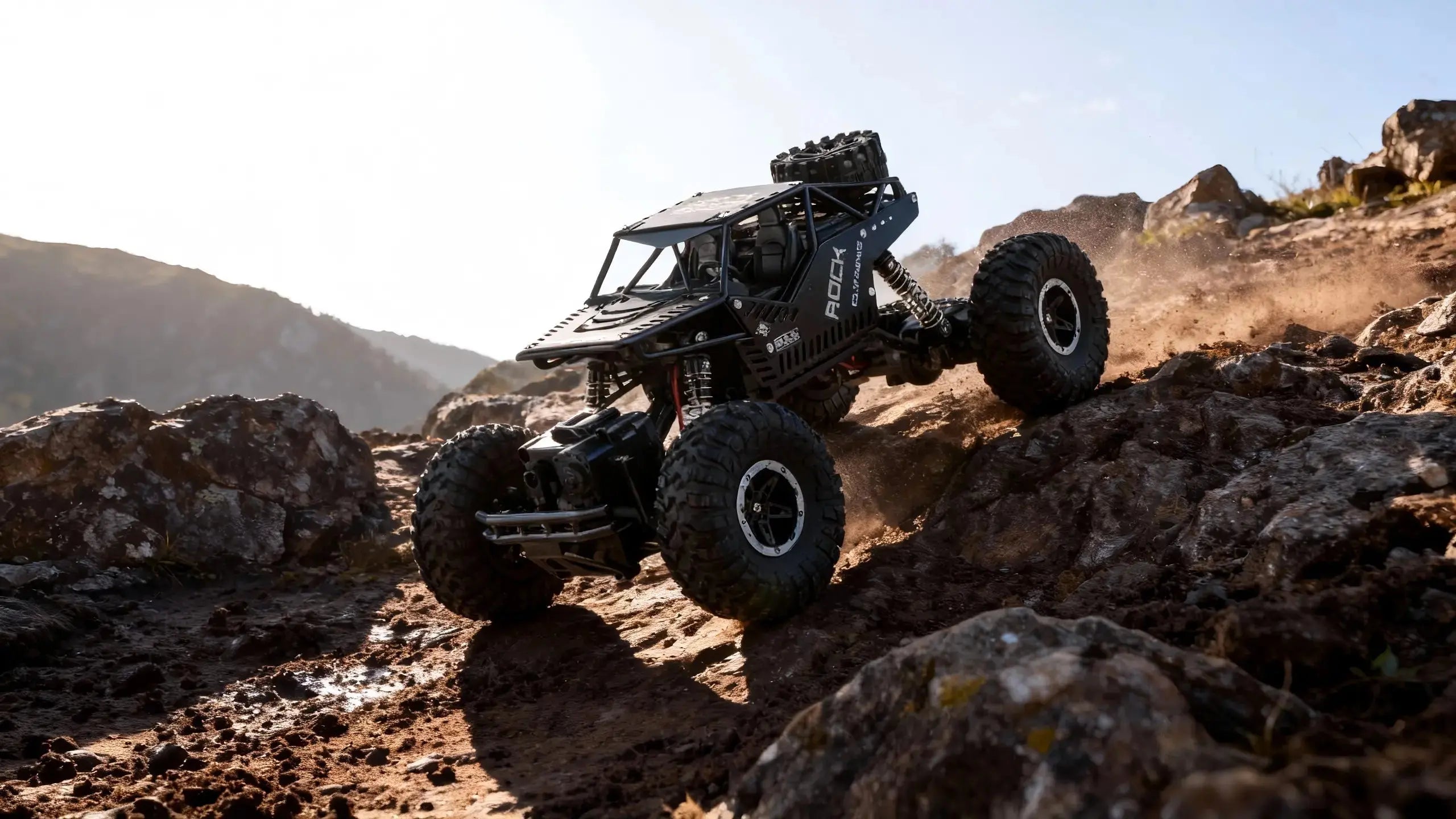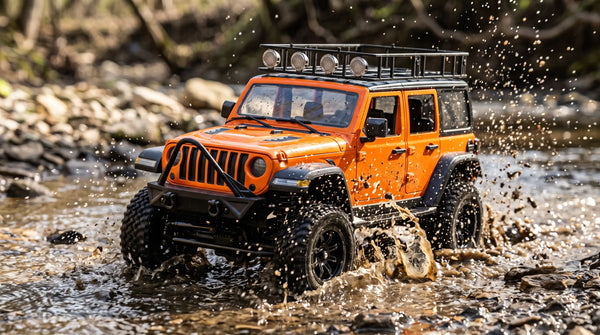
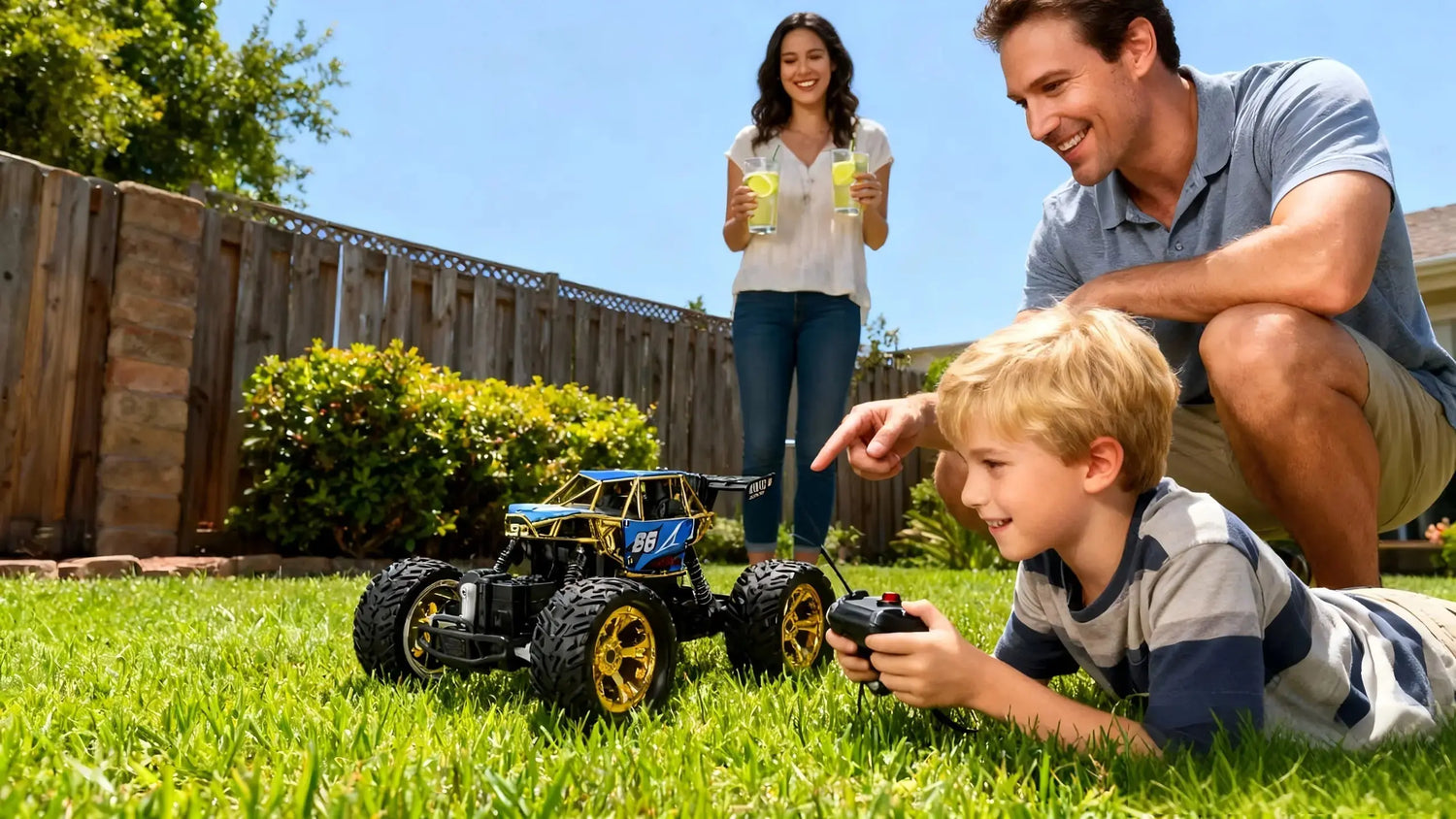
Weekend afternoon. Sun on the grass. A small RC rock crawler nudges up a gentle ramp while your child feathers the throttle and you cheer them on. That’s the magic of crawling: slow, precise, confidence-building—and a perfect parent–child challenge right in your backyard.
Key takeaways
-
An RC rock crawler favors torque and control over speed—ideal for safe, confidence-building play with kids 6–12.
-
Start with a simple 5-step learning path: basics, safety setup, practice drills, backyard course, care.
-
Keep it safety-first: adult supervision, careful battery handling, gentle ramp angles, and post-run checks.
-
Use 2.4GHz radios for reliable multi-user play; avoid water submersion even if electronics are water-resistant.
-
Build a progressive backyard course with easy, moderate, and advanced zones; scale difficulty as skills grow.

Your 5-Step Family Learning Path
-
Learn the basics (10 minutes): What makes a crawler different from a speed RC? Meet 4WD, torque, suspension, and waterproofing.
-
Safety and setup (20 minutes): Supervision, charging, pairing the radio, and low-speed modes.
-
Practice drills (20 minutes): Throttle feathering, line choice, and steering precision.
-
Build your backyard challenge (30–60 minutes): Lay out ramps, rocks, and cones for easy → moderate → advanced.
-
Care and progress (10 minutes after each session): Clean, dry, and store; increase difficulty over time.
Parent Tip: Keep sessions short and positive. Celebrate small wins—like clearing a gentle ramp without stopping.
RC Rock Crawler Basics (Plain English)
What makes a crawler different from a speed car? Think of a crawler like a hiking boot and a speed car like a running shoe. Crawlers prioritize grip, balance, and control on uneven terrain rather than top speed.
-
4WD and traction: Four-wheel drive keeps power flowing to all wheels so the crawler can climb and maintain grip over rocks, ramps, and lawn edges.
-
Torque and gearing: Crawlers use gearing that multiplies torque, allowing slow, controlled climbs. You’ll spend more time feathering the throttle than flooring it.
-
Suspension travel: Compliant shocks help each wheel stay in contact with the ground. More suspension travel means fewer sudden tips or stuck tires.
-
Waterproof electronics: Many beginner crawlers include water-resistant electronics. Splashes and damp grass are okay; submersion is not. Dry and inspect after water exposure.
-
2.4GHz radios: Modern 2.4GHz systems reduce interference and let multiple families drive together. They also typically support easy binding/pairing.
If your child asks, “Why can’t we go faster?” remind them that crawling is about precision. Speed comes later—first we master control.
Safety and Setup for Your First Run
Family crawling is safe and rewarding when you set the stage properly.
-
Supervision and outdoor play: An adult should supervise children while operating RC toys. Pediatric guidance highlights benefits of outdoor play for motor skills, attention, and family bonding. See the AAP’s HealthyChildren overview of outdoor play (American Academy of Pediatrics, 2024).
-
Toy safety standards (U.S.): Toys for children 12 and under must meet the federal toy safety standard ASTM F963; the CPSC’s guidance explains manufacturer responsibilities and safety provisions. Read CPSC Toy Safety Business Guidance.
-
Radio compliance: RC transmitters operate under FCC Part 15 conditions and must not cause harmful interference. For context, consult the ECFR Part 15 overview.
Step-by-step setup (RTR beginner models)
-
Charge the vehicle battery fully using the supplied/approved charger on a dry, non-flammable surface. Supervise charging; allow batteries to cool before recharging.
-
Install fresh AA cells in the transmitter.
-
Power on the transmitter, then the vehicle, to establish the link (binding/pairing). Indicator lights usually confirm connection.
-
Engage any available training or low-speed mode. If your model includes throttle dual-rate or speed limit settings, lower them for early sessions.
-
Pre-run check: Confirm steering works both directions, throttle responds smoothly, and tires are secure. Inspect for any damage.
-
Waterproofing check: If electronics are water-resistant, avoid puddles deeper than tire height. After splashes, power down, wipe dry, and let components air out.
Parent Tip: Keep obstacles stable and edges smooth. Sand splinters, secure rocks, and leave clear run-off space in front of ramps.

Practice First: Drills Kids Love
Before building the big course, invest 20–30 minutes in practice. Short drills help kids build confidence fast.
-
Slow crawl line: Lay two cones six feet apart. Drive a straight line slowly, keeping steering smooth. Goal: finish in under 30 seconds without stopping.
-
Feathered climb: Approach a gentle ramp (≈20–25°). Use tiny throttle inputs to keep a steady pace. Goal: climb without wheelspin.
-
Gate steering: Place two cones 12 inches apart. Drive through without touching either cone. Goal: three clean passes in a row.
-
Recovery practice: Intentionally stop on the ramp mid-climb. Reverse slowly, realign, and continue. Goal: recover without tipping.
-
Circle crawl: Drive a slow circle around a cone, keeping the crawler at walking pace. Goal: maintain a consistent radius.
-
Precision parking: Stop the crawler with front tires touching a strip of tape. Goal: three accurate stops.
Disclosure: PlayPulse RC is our product. As a neutral example, a beginner RTR like the MN128 1:12 Rock Crawler includes 4WD and proportional control suitable for these drills. For step-by-step pairing and safety checks, see the PlayPulse RC beginner setup guide. Use objective settings: lower throttle dual-rate for early sessions; verify steering trim is centered; confirm water-resistance before damp grass. Keep language with kids simple—“tiny turns,” “gentle squeeze,” “stop and think.”

Build a Backyard Parent–Child Challenge
Design a simple three-zone course. Start easy, then scale difficulty based on your child’s progress.
-
Easy: A gentle plywood ramp (about 20–25°), two cones marking the route, and a wide approach. Focus on slow throttle.
-
Moderate: A slightly steeper ramp (around 30°) plus a small rock garden with flat stones. Emphasize line choice.
-
Advanced: A narrow gate between cones and a steeper ramp (≈35–40°) only after mastery of slow control. Keep supervision close.
Materials checklist for your first build
-
Plywood sheet and bricks/blocks to set safe angles
-
Flat rocks or pavers (stable, no wobble)
-
Traffic cones or bright cups for gates and markers
-
Painter’s tape or chalk for lines
-
Sandpaper for smoothing edges
-
A small brush and towel for post-run cleaning
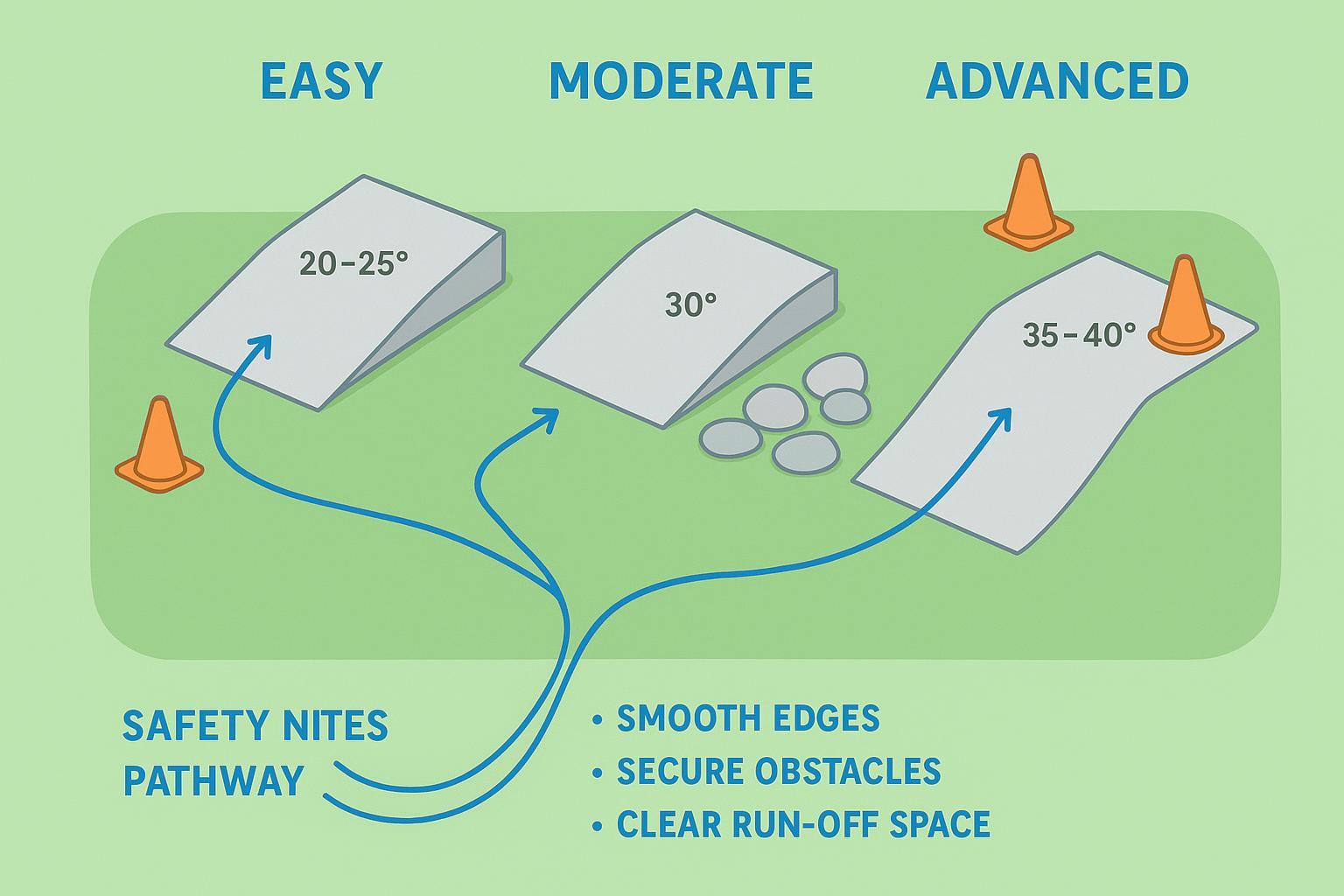
Safety notes: Test each obstacle at low speed first. Secure ramps so they don’t shift. Keep kids’ footing clear of loose gravel or splinters.
Parent Tip: If the crawler stalls, pause. Ask your child to plan a new line—“Which tire should touch that rock first?” Planning before driving builds focus.
Quick Fixes and Care
Troubleshooting
|
Symptom |
Likely cause |
Simple fix |
|---|---|---|
|
Crawler won’t move |
Transmitter not linked; battery low |
Power cycle transmitter→vehicle; recharge battery; check indicator lights |
|
Jerky throttle |
Dirty connectors or low battery |
Clean contacts; fully charge; retest in low-speed mode |
|
Pulls left/right |
Steering trim off or tire pressure uneven |
Center trim on transmitter; inspect tires and suspension |
|
Cuts out briefly |
Interference or loose battery plug |
Keep transmitter close; reseat plugs; avoid metal obstacles |
|
Tips on ramps |
Angle too steep or approach too fast |
Reduce ramp angle; practice slower throttle; widen the approach |
Post-run care
-
Wipe down the crawler, especially tires and chassis.
-
If wet, power down, disconnect the battery, and dry components. Avoid submersion.
-
Store batteries per the manual; charge only with approved chargers. Keep gear dry and organized.
Mini Glossary for Parents and Kids
-
4WD: Power to all four wheels for better traction on uneven surfaces.
-
Torque: The “twisting force” that helps the crawler climb slowly and steadily.
-
Gearing: The ratio that multiplies torque and sets how fast the wheels turn for a given motor speed.
-
Suspension travel: How much each wheel can move up/down to stay planted on bumpy ground.
-
Proportional control: The crawler responds smoothly to small changes in throttle and steering.
-
2.4GHz: Modern radio band and technology that reduces interference and enables easy multi-user operation.
-
Waterproof vs. water-resistant: Water-resistant tolerates splashes; waterproof implies a seal for submersion (most crawlers are not waterproof). Always dry after exposure.
Parent Tip: Kids love names. Let them name the crawler and keep a simple “challenge log” with dates and milestones.
Next Steps
Ready to host your first family challenge day? Explore kid-friendly beginner crawlers and simple setup guidance. Browse the PlayPulse RC cars and trucks collection and review the beginner setup guide for parents. Then sketch your easy–moderate–advanced course, set gentle goals, and enjoy the slow-and-steady wins together.
References and context
-
Toy safety: CPSC Toy Safety Business Guidance; ASTM F963 is the mandatory toy safety standard for toys intended for children 12 and under.
-
Radio compliance: ECFR Part 15 overview for intentional radiators like RC transmitters.
-
Outdoor play benefits: HealthyChildren (AAP) on playing outside.
-
EU context: Radio Equipment Directive (RED) overview.
-
2.4GHz tech context: Spektrum DSMR technology overview.