Best 4WD RC Climbing Car for Kids: Safety & Durability Checklist (Ages 6–12)
Parents want a gift that holds up to real‑world kid play: wet grass, curb hops, and accidental drops. If you’re searching for the best 4WD RC climbing car for kids, focus first on safety and durability. This guide translates standards and hands‑on testing into simple steps you can use on shopping day and the first run in the yard.
Key takeaways
Safety labels and real materials matter more than flashy speed numbers. Look for ASTM F963 toy safety compliance and FCC Part 15 radio labeling, sealed electronics for splash exposure, and durable driveline parts (metal gears or at least a metal pinion). Treat “waterproof” as splash‑only unless you see an IPX7 claim. For charging, use the manufacturer’s charger, supervise, and retire any battery that swells or overheats. Set throttle limits for new drivers, start slow, and build skills on easy terrain before tackling bigger rocks.
What makes the best 4WD RC climbing car for kids safe and durable
A kid‑friendly crawler trades raw speed for control and torque. Think of torque like the “push” that gets tires up a rock, while top speed is how fast it goes on flat ground. For 6–12 year olds, slow‑and‑steady wins.
-
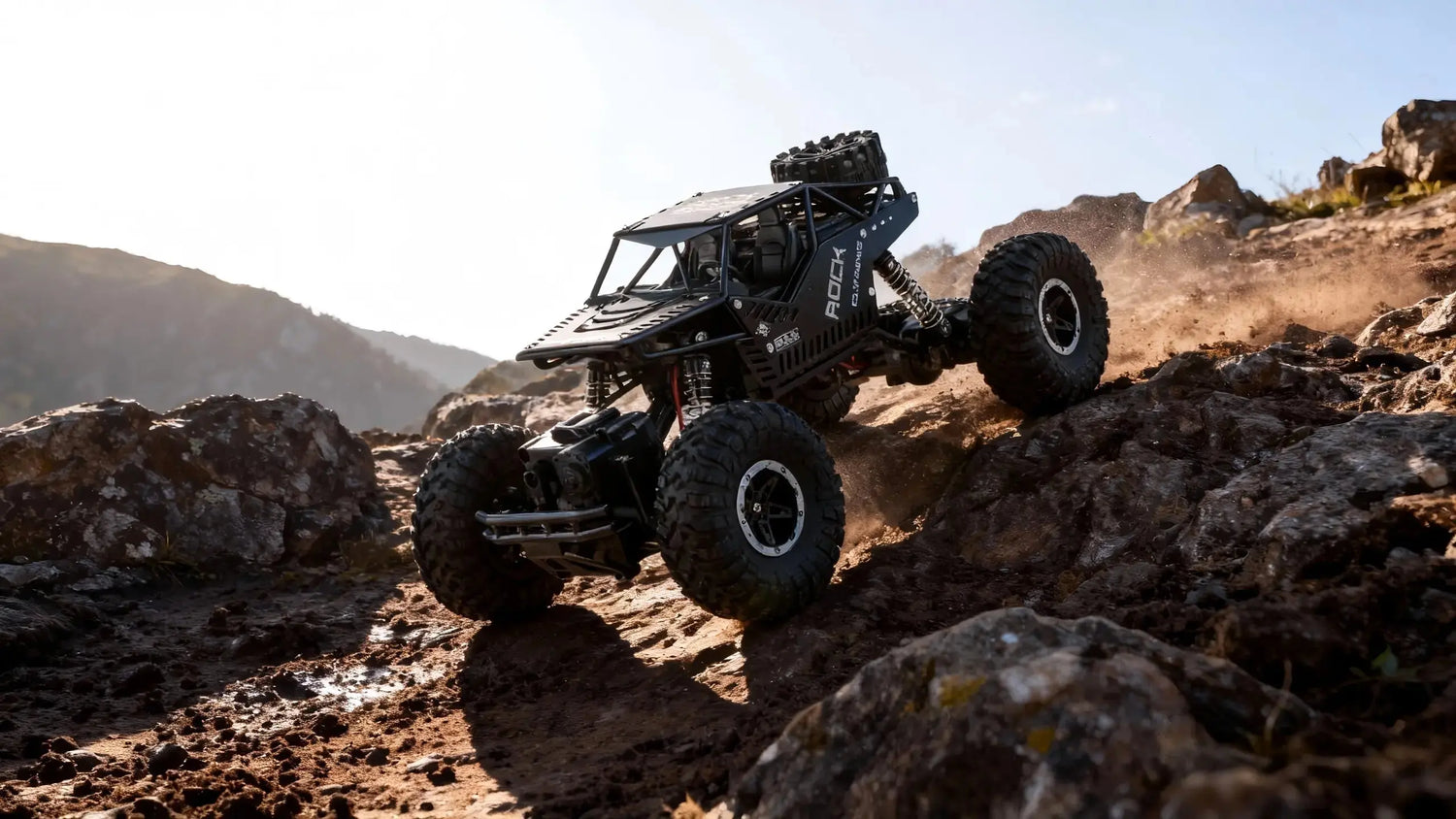
Ground clearance and tire size: Taller clearance and chunky tires help roll over sticks and curbs without scraping. For backyard rock play, aim for tires in the 90–120 mm range on 1:10–1:12 rigs; smaller 1:24–1:18 models use proportionally smaller tires but still benefit from tread and soft rubber.
-
Suspension travel: A crawler with flexible suspension keeps more tire contact on uneven surfaces, boosting grip. Look for four‑link suspension and oil‑filled shocks on mid‑size rigs.
-
Materials and driveline: Reinforced bumpers, sealed bearings, and metal or metal‑hybrid gears reduce stripped gears after drops or stalls. A servo saver helps protect steering.
-
Age‑appropriate radio control: A 2.4 GHz transmitter with throttle endpoint or a beginner mode lets you cap speed while kids learn.
For quick trust checks you can perform on the box and in the manual, toy safety for under‑14s follows the mandatory ASTM F963 standard. And for radios and receivers, devices must include the Part 15 statements defined by the eCFR Part 15 rules.
Quick buyer checklist — must‑haves vs red flags
|
What to look for |
Why it matters |
Quick check |
|---|---|---|
|
ASTM F963 compliance and age grading |
Mandatory U.S. toy safety for under‑14s |
Label on box/manual; age range shown |
|
FCC Part 15 statements |
Confirms radio interference compliance |
Look for §15.19/§15.21 text in manual/device |
|
Sealed electronics (splash‑resistant) |
Protects receiver/ESC in wet grass/puddles |
Receiver box gasket or sealed ESC noted |
|
Durable driveline parts |
Reduces stripped gears and early failures |
Metal pinion/spur or metal‑hybrid gears |
|
Throttle limiting/beginner mode |
Keeps speed manageable for new drivers |
Transmitter endpoints or beginner toggle |
|
Clear battery & charger specs |
Safe runtime and charging habits |
Chemistry/capacity stated; matched charger included |
|
Spare parts availability |
Easier repairs after kid use |
Tires, gears, servo saver, bumpers listed |
|
Warranty/returns |
Peace of mind for defects/DOA |
6‑month warranty; 30‑day returns common |
Waterproofing reality for kids’ crawlers
“Waterproof” is often used loosely. IP/IPX ratings provide a clearer picture: IPX4 is splash‑resistant, IPX5 handles gentle jets, and IPX7 can survive temporary immersion. Most kid‑grade crawlers are splash‑tolerant, not submersible. See the RS Components IP rating overview for plain‑language definitions.
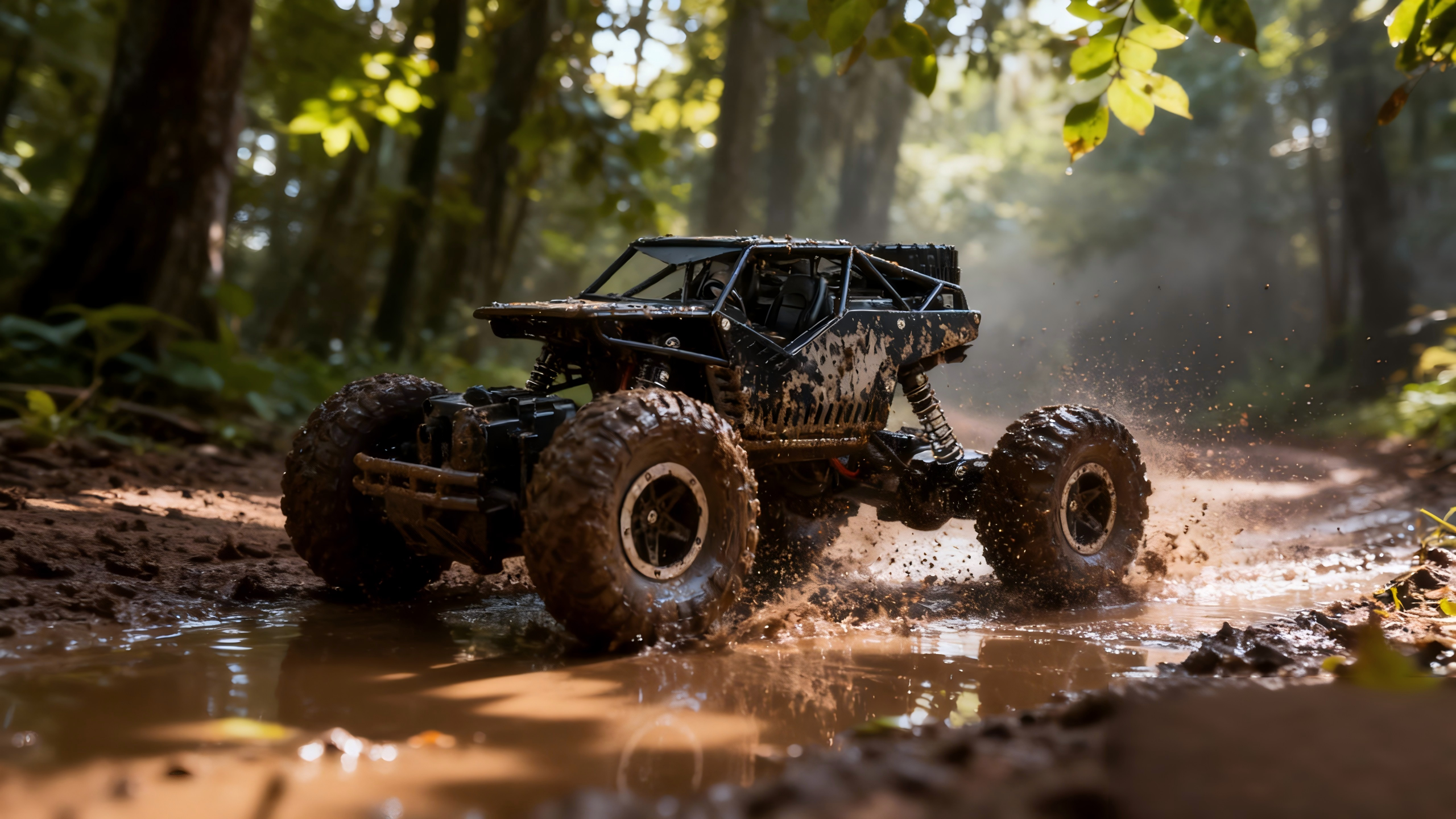
Practical water rules: Avoid puddles deeper than axle height unless the product specifies IPX7. Splashes across shallow water are fine for splash‑rated models. After any wet run, power off, remove the battery, and dry thoroughly. Major manufacturers advise compressed air to blow out water, towel dry, and re‑lubricate bearings/diffs before the next run. Horizon’s guidance for wet/cold use outlines similar care in their winter driving tips.
Shock and drop resilience — how to tell if a crawler will survive kid use
Kids drop things. A crawler that survives bench‑height falls tends to have:
-
A sturdy chassis and reinforced bumpers.
-
Sealed bearings and protected wiring.
-
Metal or metal‑hybrid gears in the driveline (even a metal pinion/spur helps).
-
Replaceable parts available (servo saver, bumpers, tires, gears).
A simple home resilience scan: hold the vehicle a foot or two above grass, gently set it down (no throws), and check for loosened screws or misaligned gears after a short obstacle run. If the gears grind or the steering binds, pause and inspect.
Battery and charger safety — simple rules that prevent problems
Use the charger the manufacturer supplies or specifies. Charge on a hard, non‑flammable surface with adult supervision. For younger kids, NiMH packs are simpler; small Li‑ion/LiPo packs are fine when properly managed.
-
Storage: room temperature, dry place; never leave charging unattended.
-
Inspection: retire any battery that swells, smells odd, becomes unusually hot, or shows big runtime drops.
-
For home charging safety messages, the NFPA provides parent‑friendly tips.
Setup and maintenance checklists
First‑run setup (quick and calm):
-
Confirm age label and scan the manual for the FCC Part 15 statements.
-
Bind the radio and test steering and throttle at low speed.
-
Set throttle endpoints or beginner mode to cap speed.
-
Inspect fasteners, wheel nuts, and tire seating.
-
Check battery polarity and secure the pack; use the included or specified charger.
Routine care in practice: After wet runs, remove the battery, dry thoroughly, and re‑lubricate bearings. Weekly, re‑tighten screws and check for driveline lash or odd noises. Monthly, inspect tire wear and connectors for corrosion. Retire suspect batteries and replace worn tires to keep traction lively.
Avoid‑pitfalls checklist — common mistakes to skip
-
Treating “waterproof” as submersible without an IPX7‑level claim.
-
Buying crawlers without visible ASTM F963 labeling or FCC Part 15 text.
-
Ignoring throttle limiting for new drivers.
-
Charging unattended or on soft surfaces.
-
Accepting brittle plastics and no spare parts availability.
-
Using a random charger with unknown charge rate.
-
Skipping post‑wet maintenance.
Practical example — sealed electronics in action for the best RC rock crawler for 8–12
Disclosure: PlayPulse RC is our product.
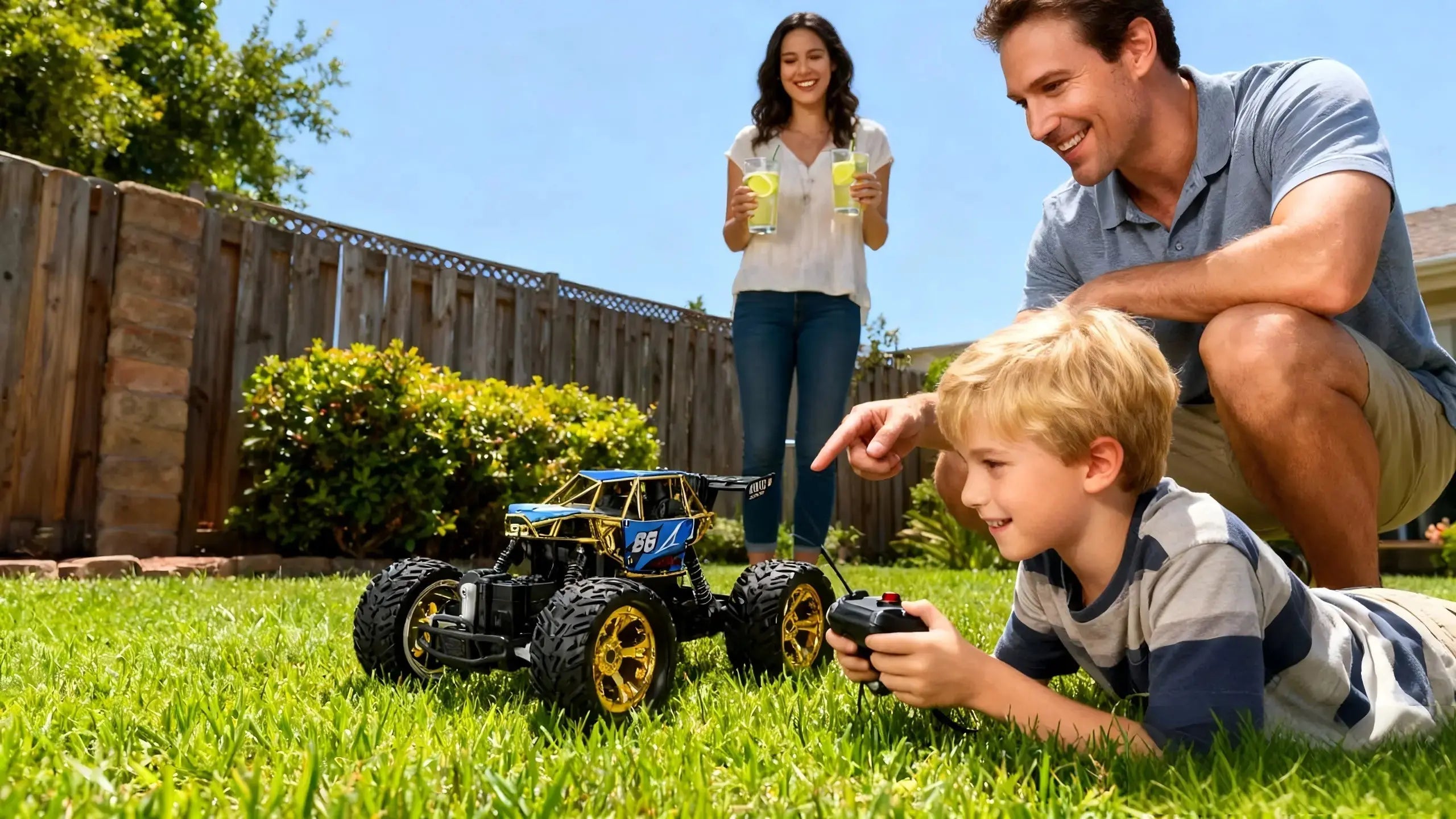
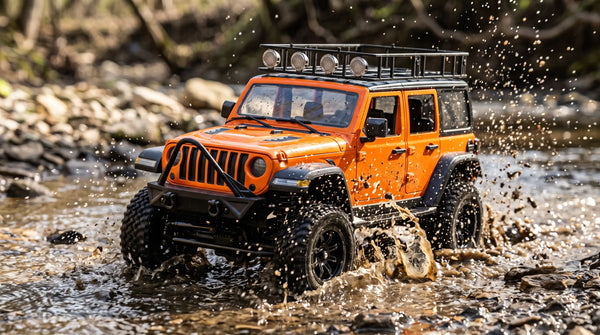
On a Saturday yard session, a 1:12 crawler with a sealed receiver box and metal pinion crossed a shallow puddle and damp grass, then bumped a curb. Because the receiver and ESC were gasket‑sealed, the radio stayed responsive, and the driveline didn’t grind. We powered down, removed the battery, blew out water with compressed air, towel‑dried, and left the truck open to air overnight. Next morning, a quick re‑lubrication of bearings kept things smooth. That simple maintenance loop—dry, inspect, lube—turns splash exposure from a potential failure into a non‑event.
If you need a step‑by‑step setup refresher, this parent‑friendly guide walks through binding, throttle limiting, and first‑run checks: How to set up a beginner RC crawler. For a representative 4WD crawler, see MN128 “Born to Climb” 1:12 Rock Crawler for an example of in‑the‑box simplicity.
Why keyword matters in your choice
The phrase best 4WD RC climbing car for kids is less about a single “winner” and more about fit: splash‑tolerant electronics, durable driveline parts, and controls that grow with your child. Ask yourself: will this crawler survive puddles, curbs, and a bench‑height tumble—and can I cap speed while my kid learns? If the answer is yes, you’ve likely found a great RC rock crawler for 8–12.
Next steps
Ready to try these safety checks in the yard? Browse parent‑friendly setup tips and kid‑fit crawlers on PlayPulse RC.
References and recall checks: Search the CPSC Recalls database before first use. Review IP ratings via RS Components’ guide and radio compliance text in the eCFR Part 15 rules. For battery safety messaging at home, see NFPA guidance.