

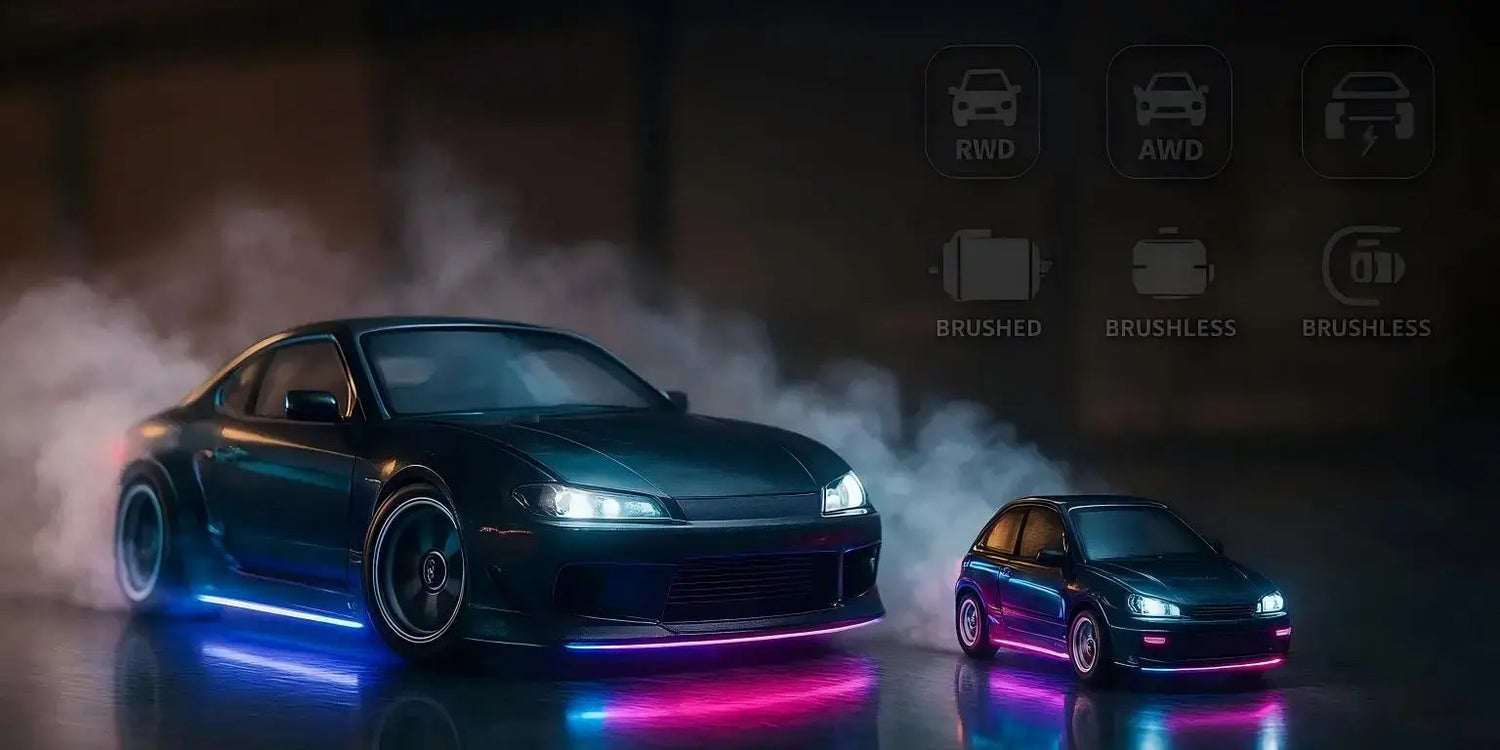
Best RC Drift Cars 2026: RWD vs AWD, Brushless vs Brushed (Buyer’s Guide for Style‑First Speed Seekers)
If you’re chasing slick slides, bold body kits, and short‑form video moments, you’re in the right place. This guide ranks the best RC drift cars 2026 for style‑first speed seekers, with clear callouts for beginners who want controllable, safe first drifts.
Below you’ll find our transparent criteria, a scannable comparison table, and eight vetted picks across RWD and AWD—plus a buyer’s guide covering brushed vs brushless, sensored control, and surface/tire tips.
Tip: Want the fast route? Skim the comparison table first, then jump to the picks that match your size, motor, and budget.
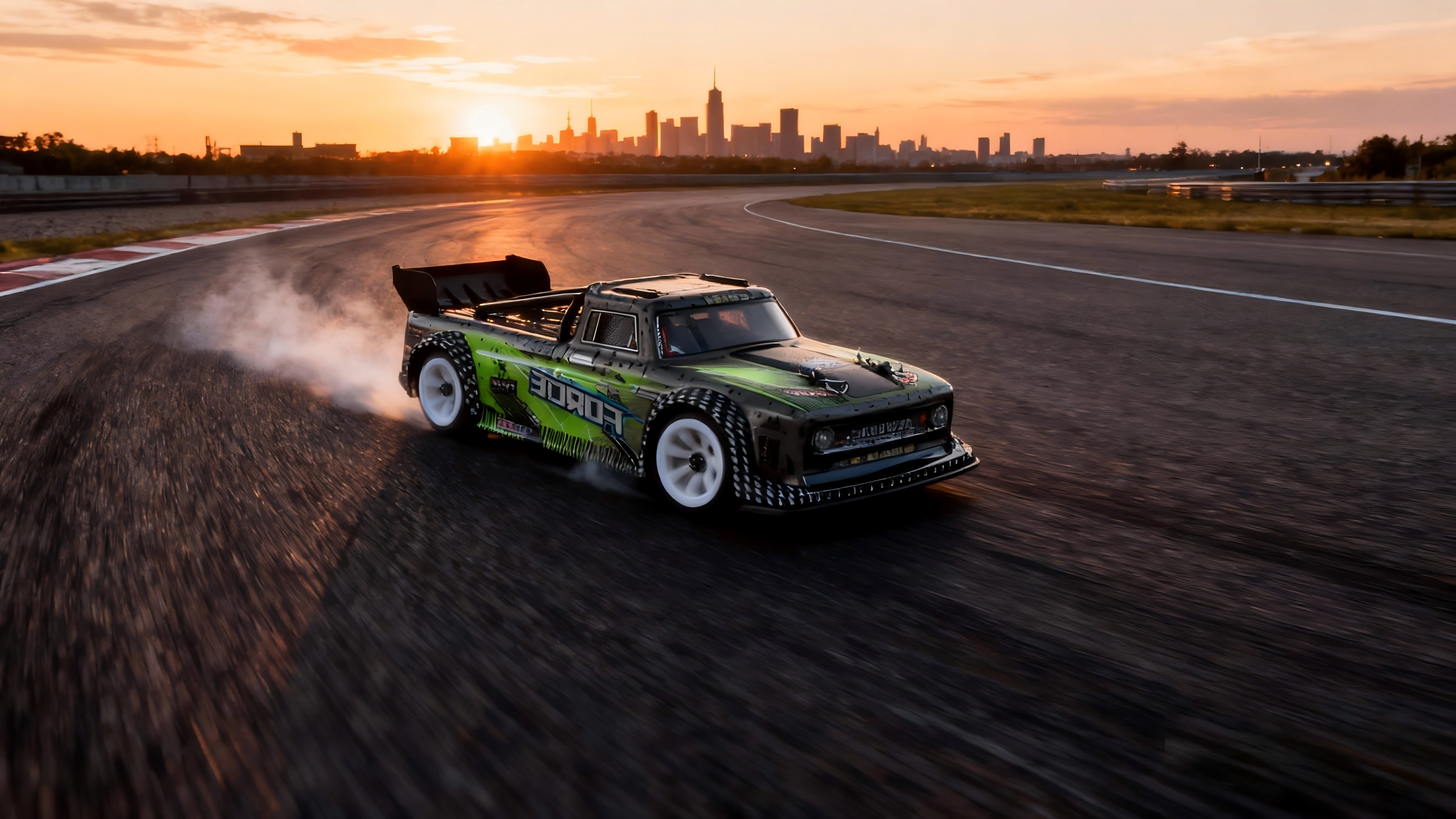
Key takeaways
-
Teens who want stylish slides fast should consider an RTR AWD or a well‑supported RWD RTR; minis (1:28) are perfect for indoor content.
-
Beginners and parents: choose stable AWD RTRs or mini AWD sets to build confidence, then upgrade tires/electronics later.
-
Hobbyists and tuners: RWD kits like MST/Yokomo deliver the angle and realism you’re after, especially with sensored brushless electronics.
How we chose (criteria and weights) + disclosure
We ranked each model using a weighted blueprint tailored for drifting:
-
Drift handling & control realism — 22%
-
Beginner friendliness & setup simplicity — 18%
-
Performance per dollar (value) — 16%
-
Durability & reliability — 14%
-
Availability, shipping speed & after‑sales — 12%
-
Safety & compliance transparency — 10%
-
Style/visual appeal & social shareability — 8%
Data sources included official manuals/spec pages and respected hobby outlets; prices are shown as ranges and are subject to change.
Disclosure: Playpulse RC is our product. We evaluated it using the same criteria as other tools in this list. Learn more at the official site: Playpulse RC.
Best RC drift cars 2026: comparison table
Prices last checked: 2026‑01‑28 (subject to change; bundles, batteries, and local stock can impact final price).
|
Model |
Drive type |
Motor |
Scale |
Speed (range) |
Price (range) |
Best for |
Limitations |
|---|---|---|---|---|---|---|---|
|
MST RMX 2.5 |
RWD |
Brushless RTR or kit (varies; RTR often sensorless) |
1/10 |
— |
$399–$420 |
Balanced growth path, tuners |
RTR electronics are basic; tuning curve |
|
HPI Sport 3 Drift (Silvia S15) |
AWD |
Brushed 15T |
1/10 |
— |
$300–$350 |
Plug‑and‑play realism |
Less throttle finesse than sensored brushless |
|
Tamiya TT‑02D Drift Spec (kit) |
AWD |
Brushed sport‑tuned (kit includes motor) |
1/10 |
— |
$170–$215 (kit) |
Build experience and classic bodies |
Needs full electronics; plastic limits ceiling |
|
Kyosho Mini‑Z AWD MA‑020 ReadySet |
AWD |
Brushed 130‑class |
1/28 |
— |
$189–$240 |
Indoor micro‑drift, small spaces |
Sensitive to surface; AAA batteries required |
|
Yokomo RD2.0 “Rookie Drift” (kit) |
RWD |
— (kit) |
1/10 |
— |
$210–$250 (kit) |
RWD learning with big angle |
Requires full electronics and tuning time |
|
Team Associated Apex2 Sport Drift RTR |
AWD |
Brushed RTR |
1/10 |
— |
≈$300 |
Durable AWD platform |
Generalist electronics; LiPo/charger often not included |
|
3Racing Sakura D5 (kit) |
RWD |
— (kit) |
1/10 |
— |
~$120–$170 (typical) |
Budget RWD kit modding |
Softer plastics; evidence on 2026 pricing varies |
|
Playpulse RC 1:28 4WD Drift (284131) |
AWD |
Brushed |
1/28 |
~30 km/h |
— (see product page) |
Beginner‑friendly mini AWD |
Toy‑class limits; smooth surfaces work best |
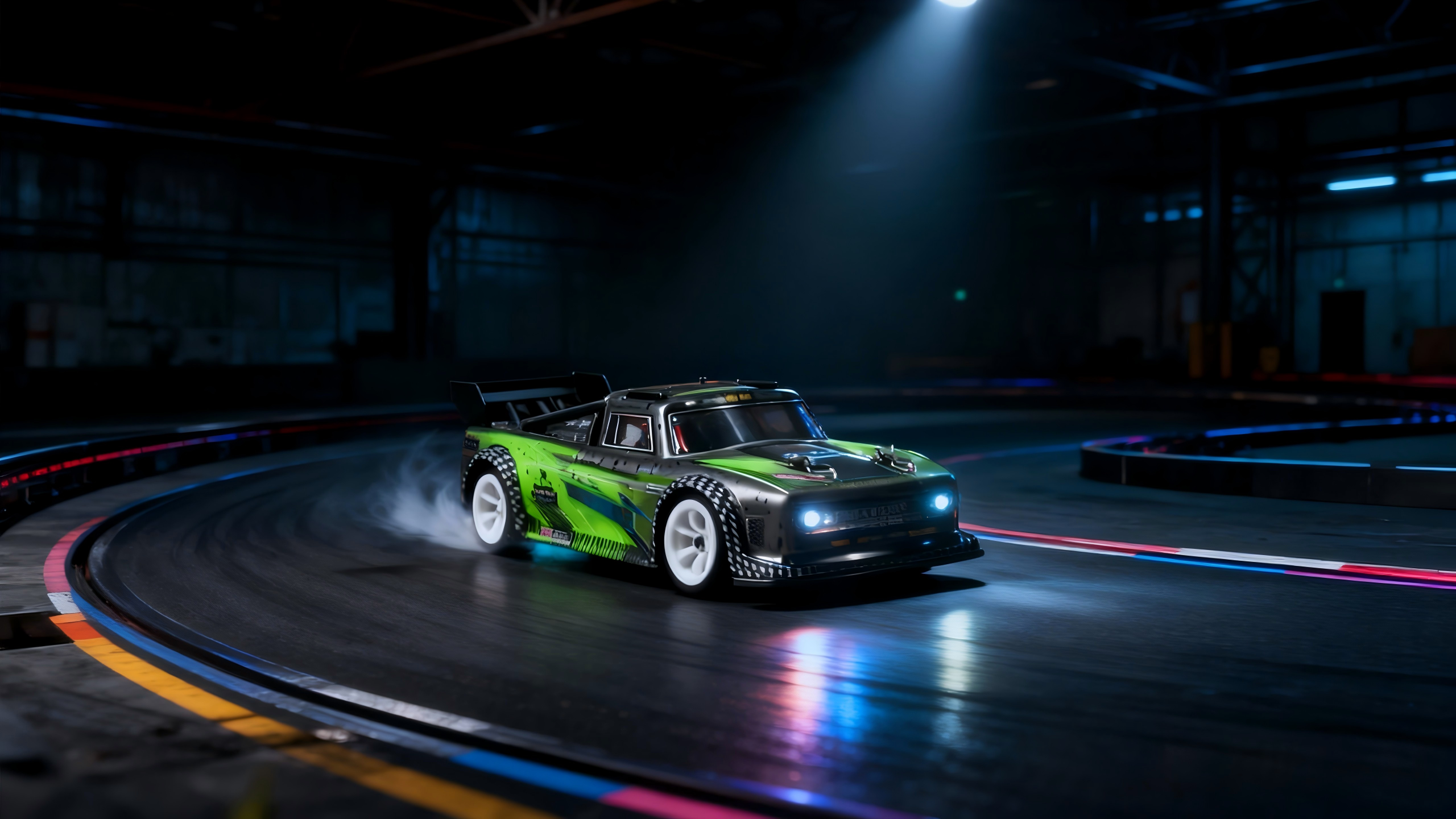
Our ranked picks (with evidence)
1) MST RMX 2.5 (1/10, RWD) — Best overall for growth from beginner to tuner
-
Positioning: Versatile RWD platform that starts friendly and scales into deep angle/tuning as skills rise.
-
Key specs: RTR variants offer brushless power and drift body; S+ kit leaves electronics open. Typical RTRs include entry brushless systems.
-
Pros: High‑angle steering and multiple Ackermann options; convertible RRX/RMX motor layout; robust aftermarket.
-
Cons: RTR electronics are serviceable but basic; tuning curve to unlock peak angle.
-
Best for / Not for: Best for style‑first teens who plan to learn real RWD technique; not for buyers who want instant AWD stability.
-
Price (from; subject to change): $399–$420.
-
Evidence: See the AMain listing for the brushless RTR and S+ kit specs (2026 context) — MST RMX 2.5 brushless RTR, RMX 2.5 S+ kit.
2) HPI Sport 3 Drift — Nissan Silvia S15 (1/10, AWD) — Best plug‑and‑play body realism
-
Positioning: Sealed AWD shaft drivetrain with metal diffs and detailed licensed body for instant drifting.
-
Key specs: Brushed 15T setup; adjustable double‑wishbone suspension; common bundles include radio, battery, and charger.
-
Pros: Out‑of‑box drivability and durability; iconic body choices; parts support from HPI/Racers.
-
Cons: Brushed throttle feel isn’t as smooth as sensored brushless; AWD can mask technique vs RWD learning.
-
Best for / Not for: Best for teens who want immediate slides and realism; not for purists prioritizing RWD technique.
-
Price (from; subject to change): $300–$350.
-
Evidence: HPI official product page #160930 and AMain retailer listing.
3) Tamiya TT‑02D Drift Spec (kit) (1/10, AWD) — Best classic kit experience on a budget
-
Positioning: Beloved kit that teaches assembly while including drift tires and CVA dampers.
-
Key specs: Sport‑tuned brushed motor with heatsink; full ball bearings.
-
Pros: Affordable entry into kit building; massive body selection; reliable spares ecosystem.
-
Cons: Requires full electronics and assembly; plastic tub and brushed power limit ultimate drift realism vs modern RWD.
-
Best for / Not for: Best for builders who value the Tamiya experience; not for buyers wanting ready‑to‑run.
-
Price (from; subject to change): $170–$215 (kit only).
-
Evidence: Tamiya’s chassis overview and AMain category context — Tamiya TT‑02D overview, AMain TT‑02D listings.
Soft CTA: Want an easy indoor practice option you can drive in small spaces? Skip down to our “Best beginner‑friendly mini AWD” pick in this list.
4) Kyosho Mini‑Z AWD MA‑020 ReadySet (1/28, AWD) — Best for apartments and tabletop courses
-
Positioning: Micro‑scale AWD that drifts beautifully on smooth floors and makes great short‑form clips.
-
Key specs: MA‑020 with VCS front suspension; optional gyro; Syncro KT‑531P radio.
-
Pros: Indoor‑friendly; detailed bodies; huge global community.
-
Cons: Brushed 130‑class power; needs AAA batteries; surface choice is critical.
-
Best for / Not for: Best for creators filming stylish indoor slides; not for outdoor asphalt or rough surfaces.
-
Price (from; subject to change): $189–$240.
-
Evidence: Kyosho America MA‑020 example and AMain Mini‑Z AWD listing.
5) Yokomo RD2.0 “Rookie Drift” (kit) (1/10, RWD) — Best value RWD kit to learn real technique
-
Positioning: RWD kit refined from the YD‑2 line, focused on easy driving with big steering angle.
-
Key specs: Updated Ackermann and zero‑trail options; sealed 4‑gear transmission; rear ESC mount.
-
Pros: Strong geometry for drift angle; clear upgrade path; respected brand in drift circles.
-
Cons: Requires full electronics; resin parts may push you toward FRP/carbon later.
-
Best for / Not for: Best for learners who want to master throttle/steering coordination; not for zero‑assembly shoppers.
-
Price (from; subject to change): $210–$250 (kit).
-
Evidence: AMain RD2.0 base kit, RD2.0G variant.
6) Team Associated Apex2 Sport Drift RTR (1/10, AWD) — Best durable AWD starter chassis
-
Positioning: Tough AWD platform with oil‑filled aluminum shocks and active rear toe for balanced handling.
-
Key specs: 2.5mm chassis plate; sealed diffs; brushed RTR electronics.
-
Pros: Durable and easy to live with; solid brand support; good base for upgrades.
-
Cons: Generalist on‑road electronics; LiPo and charger commonly not included.
-
Best for / Not for: Best for teens who want a sturdy first AWD car; not for buyers seeking competition‑grade RWD realism.
-
Price (from; subject to change): ≈$300.
-
Evidence: AMain product family references for Apex2 Sport variants — Apex2 pages (specs/pricing context).
7) 3Racing Sakura D5 (kit) (1/10, RWD) — Best budget RWD kit for modders
-
Positioning: Low‑cost RWD kit popular for tinkering and custom builds.
-
Key specs: Lightweight plastic chassis; broad aftermarket.
-
Pros: Very affordable route into RWD; tons of community mods and guides.
-
Cons: Softer plastics can flex; may require upgrades for heavy use.
-
Best for / Not for: Best for mod‑happy builders on a budget; not for buyers who want premium materials out of the box.
-
Price (from; subject to change): ~$120–$170 depending on region.
-
Evidence: We recommend checking 3Racing and rcMart listings for current 2026 availability and pricing (evidence varied at the time of writing).
8) Playpulse RC 1:28 4WD Drift RC (284131 series) (1/28, AWD) — Best beginner‑friendly mini AWD for small spaces
-
Positioning: Compact AWD drift model with around 30 km/h headline speed and 100 m control range, aimed at first‑time sliders who want quick indoor fun.
-
Key specs: All‑in‑one RTR convenience; brand offers 6‑month warranty and 30‑day returns, with typical dispatch in 24–48 hours and US delivery measured in days.
-
Pros: Easy to start for newcomers; small‑space friendly; policy transparency and tracked shipping.
-
Cons: Brushed powertrain lacks the throttle silkiness of sensored brushless; toy‑class scale depends on smooth surfaces for best results.
-
Best for / Not for: Best for beginners and younger drivers practicing lines at home; not for enthusiasts chasing competition‑grade realism.
-
Price (from; subject to change): See product page for current pricing.
-
Evidence: Playpulse 1:28 AWD drift product page. Policies and support context: warranty/returns/shipping pages on the official site.
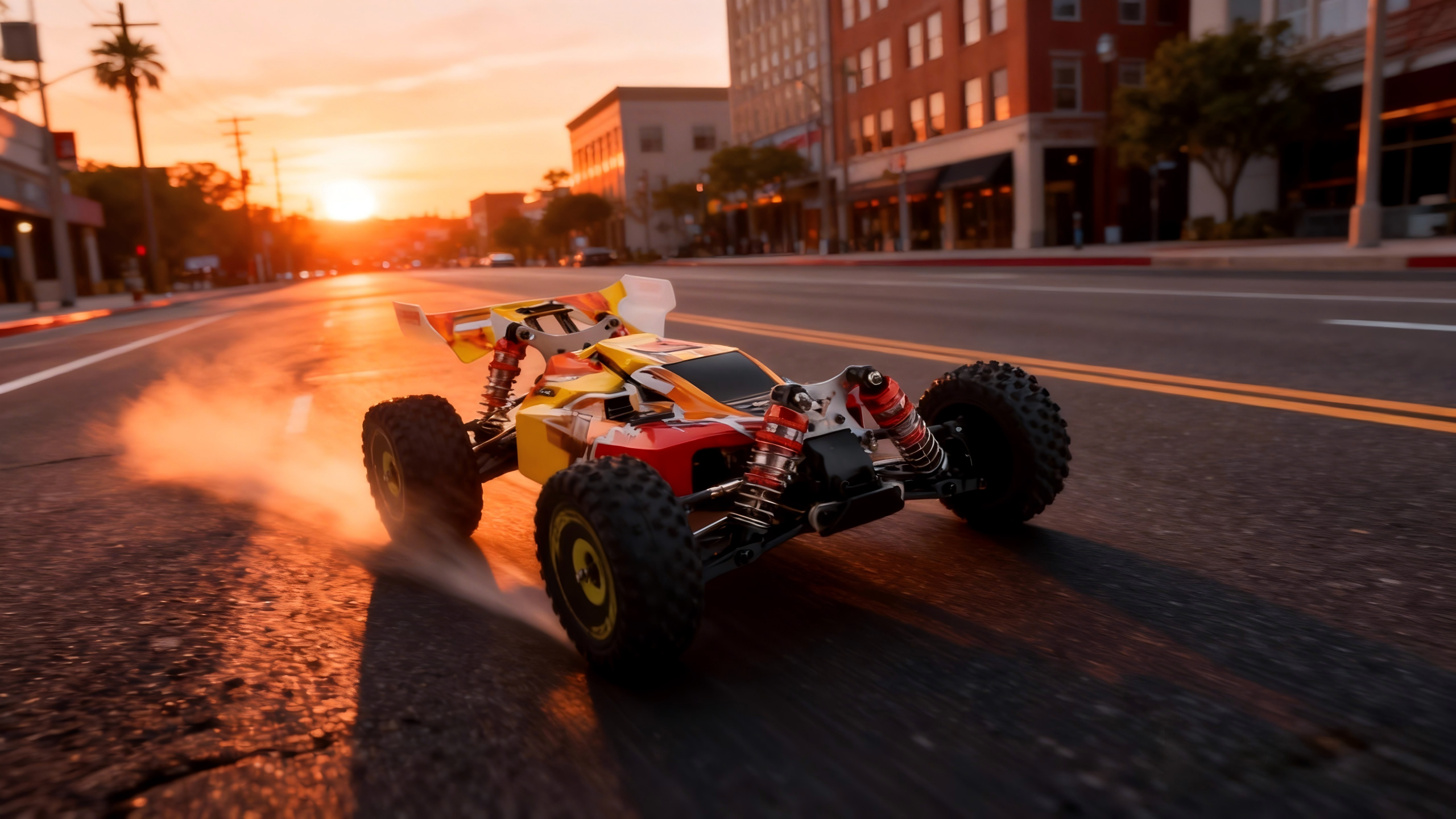
Buyer’s guide: RWD vs AWD, brushed vs brushless, and setup basics
RWD vs AWD for RC drifting
-
RWD emphasizes throttle and steering coordination for authentic drift technique. Many drift‑focused communities guide learners toward RWD for skill development. According to the authority shop Super‑G Drift’s Buyer’s Guide (updated 2024–2025), RWD is preferred for modern RC drifting and AWD can be more forgiving for beginners — see the detailed reasoning in the Super‑G Drift buyer’s guide.
Brushless vs brushed (and why “sensored” matters)
-
Brushless motors are more efficient and powerful than brushed. For drifting, the smoothest launches and throttle modulation usually come from sensored brushless ESC/motor combos that know rotor position at low RPM. Hobbywing’s 2024 XR10 manuals document full‑sensor mode and startup smoothness features valuable for drift control — see the Hobbywing XR10 Stock Spec G2 manual (2024).
Indoor vs outdoor surfaces and tires
-
Micro scales (1:28) excel on smooth tile, sealed concrete, or epoxy floors; standard 1:10 drift tires work on polished concrete or painted surfaces. Kyosho’s Mini‑Z AWD descriptions highlight small‑space suitability and dedicated drift tires — reference the Kyosho MA‑020 ReadySet page for product cues.
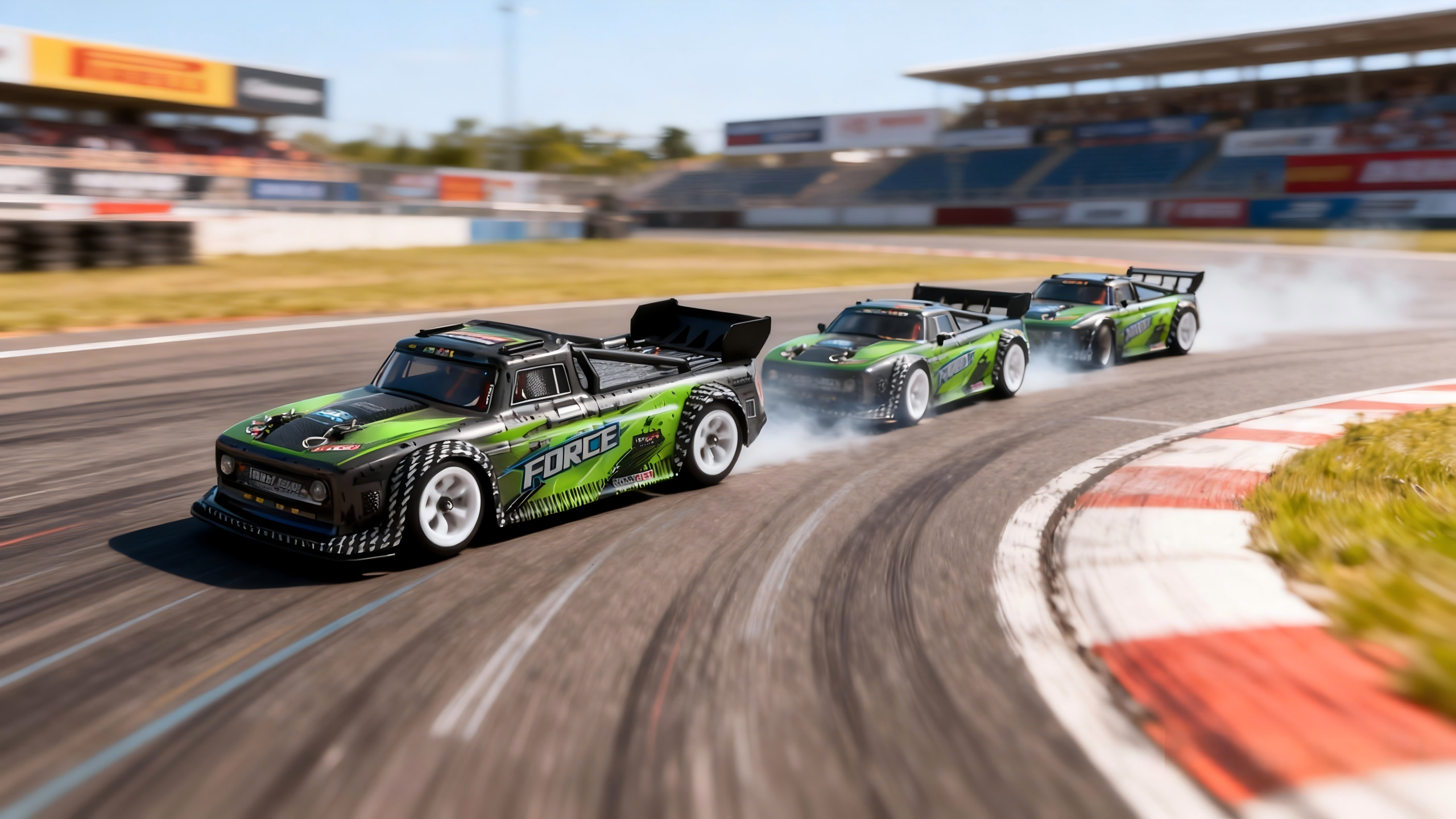
First drift in 15 minutes: quick setup checklist
-
Pick a smooth surface and mount drift tires (hard plastic for 1:10; dedicated slicks for Mini‑Z).
-
Dial in a bit of steering expo and reduce initial throttle punch if your ESC allows it; enable gyro assistance if included.
-
Start with moderate steering angle; practice figure‑eights to learn weight transfer; increase angle as control improves.
FAQ
What’s the best RC drift car for beginners in 2026?
AWD RTRs like HPI’s Sport 3 Drift are easiest to drive out of the box, while RWD platforms (MST/Yokomo) build authentic drift skills over time. Choose AWD if you want immediate stability; pick RWD if you want to learn technique. Community authorities such as Super‑G outline the trade‑offs in their Buyer’s Guide (2024–2025).
RWD vs AWD: which should I choose?
If you value realistic technique and plan to grow into tuning, choose RWD. If you want instant slides and simpler control for filming, choose AWD. Many beginners start AWD, then move to RWD as confidence increases.
Brushed vs brushless: does sensored brushless really help?
Yes—sensored brushless systems provide smoother startups and low‑RPM control that helps drift initiation and throttle feathering. See the 2024 features described in the Hobbywing XR10 manual.
What tires are best for indoor drifting?
For 1:28‑scale AWD like Mini‑Z, use dedicated drift tires on smooth floors; for 1:10, hard plastic or purpose‑built drift tires on polished concrete or painted surfaces work well. Kyosho’s product pages note small‑space setups for Mini‑Z AWD.
Pricing notes and availability
-
Price ranges reflect typical US retail as of 2026‑01‑28 and will change with stock, bundles, and promotions.
-
Availability can swing quickly; check regional stock and delivery ETAs when you order.
Closing and next steps
If you want instant, shareable slides, pick an AWD RTR or a 1:28 mini. If you want to grow into precise angle control, start RWD and upgrade to sensored brushless when ready. For an indoor‑friendly starting point, explore the brand’s Racing & Competition collection for current options and bundles: Playpulse RC — Racing & Competition.


Leave a comment
This site is protected by hCaptcha and the hCaptcha Privacy Policy and Terms of Service apply.