

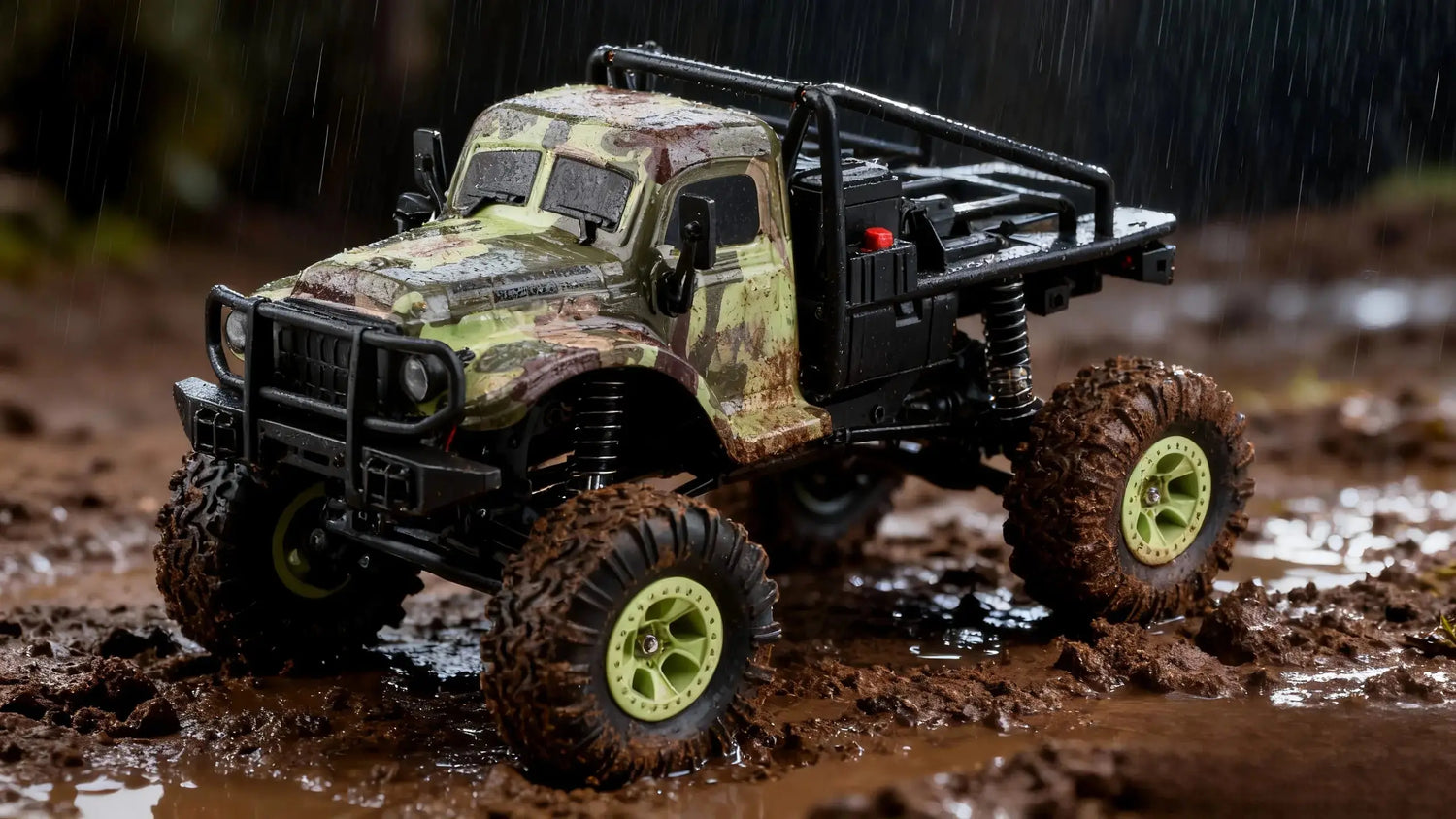
RC crawler buyer’s guide: how to choose the right rig and master rock crawling
If you want slow, precise control over ridiculous terrain—and a platform you can tinker with for months—an RC crawler is your lane. Unlike bashers or race buggies, crawlers thrive at low speed, balancing traction, clearance, and weight so you can pick technical lines, pose for trail photos, and share those “made it!” clips.
This RC crawler buyer’s guide is written for teens who care about capability and looks, and for hobbyists who geek out on scale realism and upgrade paths. You’ll get a simple decision framework, the specs that actually matter on the rocks, rock crawling tips you can use today, and smart upgrade paths—without the hype.
Key takeaways
-
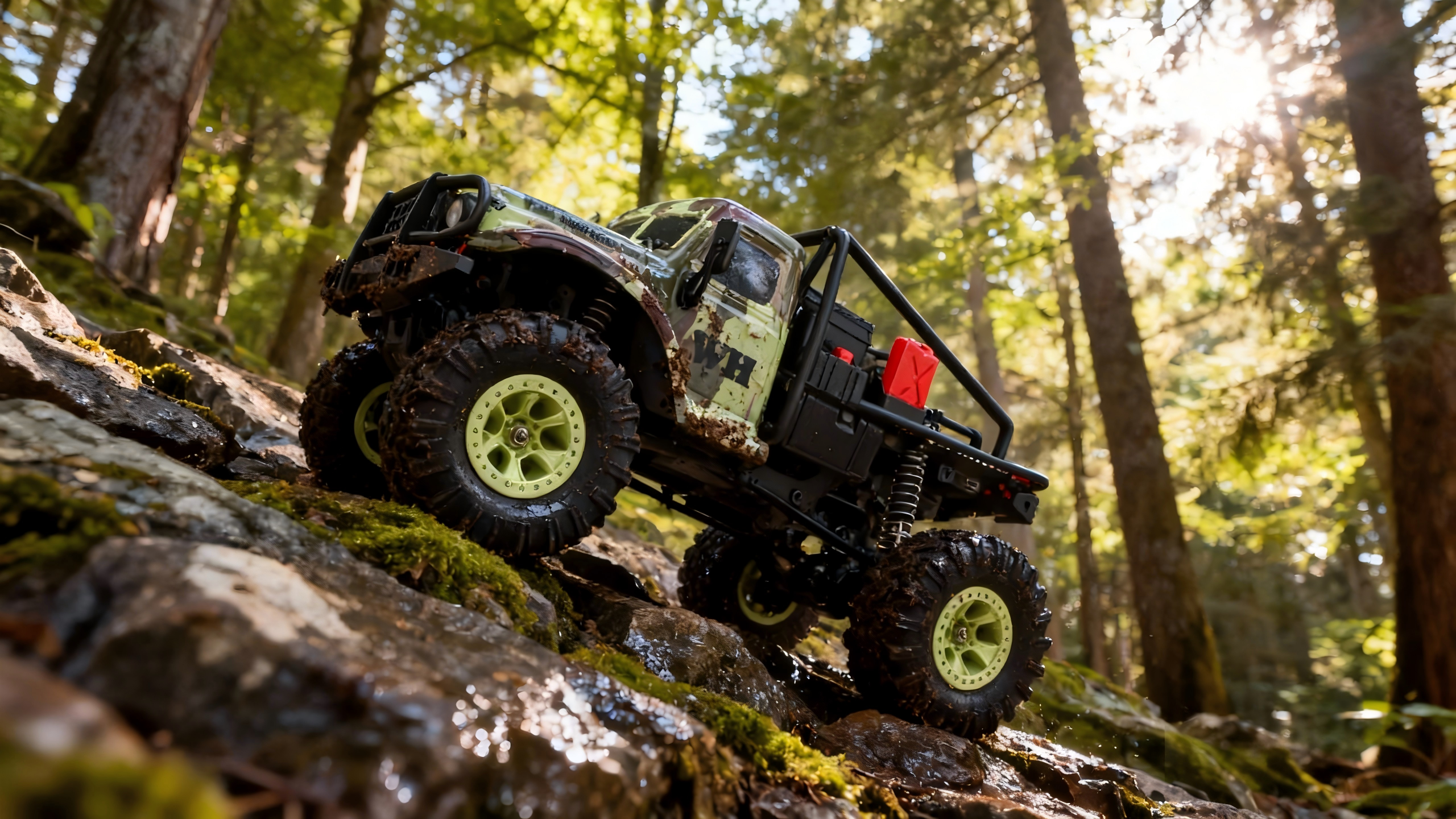
Portals vs straight axles is a real trade-off: portals add hub reduction and clearance for fewer hang-ups; straight axles can sit lower for stability if you manage weight placement.
-
Prioritize control over speed: a higher-turn brushed motor plus a crawler ESC with adjustable drag brake gives smoother throttle and better hill holding than raw KV numbers.
-
Tires and foams are your traction engine: soft compounds with supportive inserts can transform side-hilling and vertical climbs more than most metal parts.
-
Servo torque matters more than speed: aim around 25–35 kg·cm at 6–7.4 V for 1/10 rigs; go higher for heavy builds and portals.
-
Start with a mild front weight bias (~60/40), set precise steering endpoints, and map drag brake to an AUX so you can adjust it on the trail.
Quick decision framework (how to choose an RC crawler)
Start with how and where you’ll drive. Do you want scale looks and mod potential, or pure capability for steep lines? Do you shoot trail photos and short videos to share, or chase technical challenges with your crew?
-
Terrain: Slick rock and tall ledges favor extra clearance (portals, taller tires). Tight, rooty trails reward a slightly shorter wheelbase and lower center of gravity (straight axles, careful battery placement).
-
Realism/upgradability: If you love scale details, choose a platform with a strong parts ecosystem (light kits, metal rails, interior bits). If you prefer performance-first, pick a chassis with easy gearing access, robust drivelines, and portal options.
-
Electronics priorities: Look for an ESC with adjustable drag brake and throttle curves; a steering servo in the 25–35 kg·cm range; and a reliable 2.4 GHz radio for group trail days.
Pro tip: Spread-spectrum 2.4 GHz radios allow many drivers to run together with minimal interference, a big upgrade from old crystal setups, as explained in EuroRC’s overview of modern radio systems in 2025. See the discussion in the EuroRC radio systems overview.
The anatomy that actually matters on the rocks
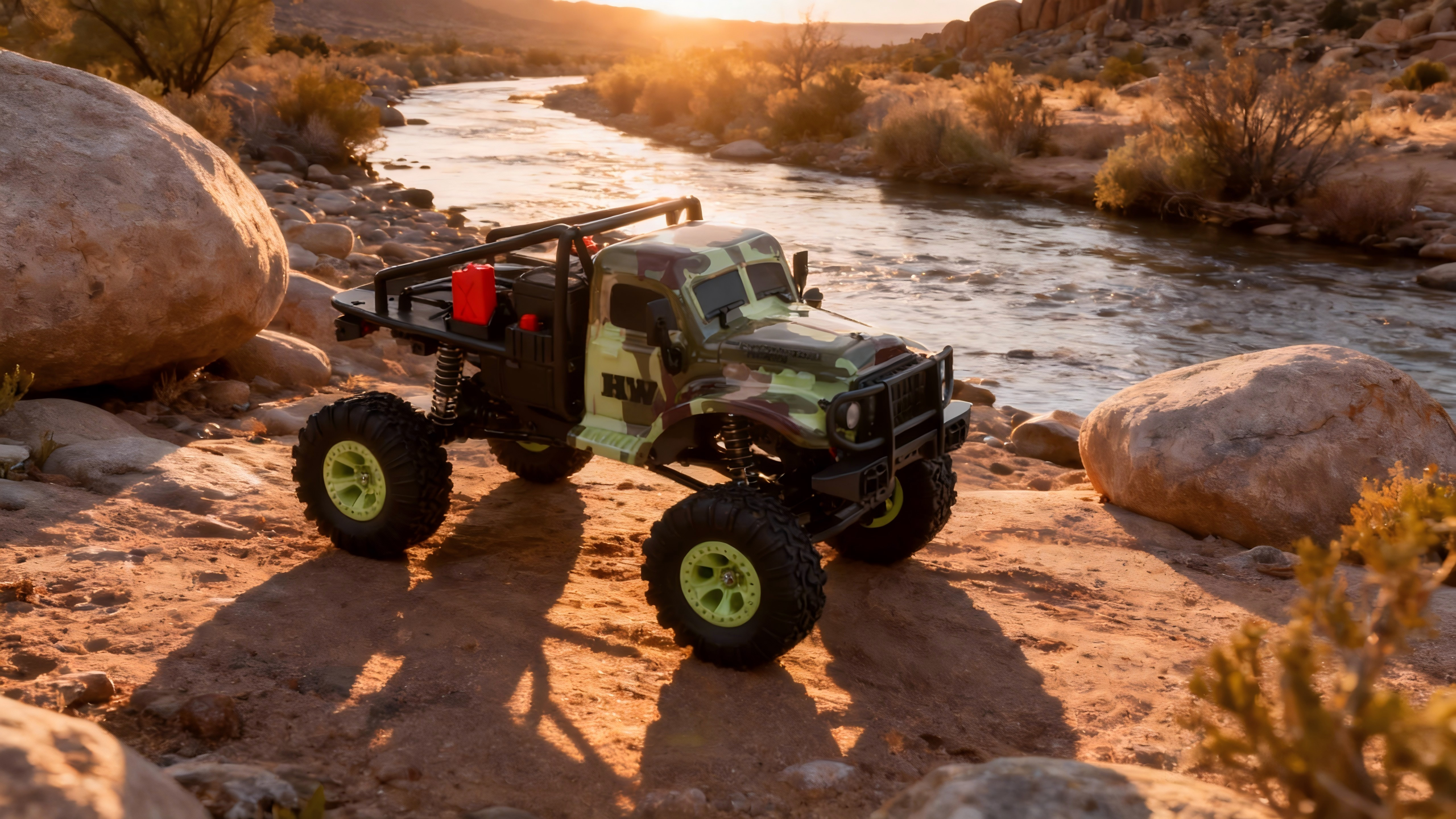
Axles and clearance (portal vs straight)
Portal axles add gear reduction at the hubs and raise the differential housings for more center-axle clearance, which reduces belly and diff hang-ups on breakovers. Element RC describes its Enduro portal setup as offering “almost an inch more clearance” compared with straight axles—an advantage you’ll feel when cresting sharp ledges. See Element’s official materials in 2024: Enduro Ecto Portal press release.
Trade-off: portals lift the ends slightly, nudging CG upward. Counter that with low battery placement and selective brass at the hubs or knuckles. Straight axles can sit lower and feel more planted on side-hills if the terrain doesn’t demand maximum diff clearance.
Drivetrain and crawl ratio (motor turns, gearing, ESC drag brake)
For slow, precise control, match a higher-turn brushed motor (e.g., 35T or 5-slot variants) with crawler gearing and an ESC that lets you adjust drag brake and throttle curves. Drag brake applies automatic braking at neutral throttle so your rig holds on inclines instead of rolling back. Castle explains the concept and “Hill Hold” variants in its technical notes; tuning matters for both control and heat. See Castle Creations’ Hill Hold explainer and a typical crawler combo like the Castle Mamba X crawler set. Spektrum’s programmable crawler ESCs also expose drag brake and throttle curve settings you can dial for your local terrain; example: Spektrum Firma crawler combo.
Practical starting points: moderate drag brake strength (20–50%), a gentle throttle curve, and conservative gearing. Map drag brake to a radio AUX so you can bump it up on steep rock and back it off on long descents to manage ESC/motor heat.
Tires and foams (your biggest performance lever)
Soft, sticky compounds plus supportive foams expand your tire’s contact patch and prevent sidewall collapse when side-hilling. Dual-stage inserts (firm inner, soft outer) or advanced TPU/silicone styles often give the best balance for 1/10 rigs. If the tire “tacos” on a traverse, stiffen the insert or choose a firmer compound; if it chatters on climbs, go softer.
For examples of super-soft compounds and insert options, check the product-level descriptions from reputable retailers: a super-soft 1.9” option is outlined on Eliminator RC’s crawler tire page; insert types and sizing are summarized in INJORA’s inserts collection.
Steering servo targets (torque where you need it)
For a 1/10 crawler with 1.9” tires, target about 25–35 kg·cm torque at 6–7.4 V and metal gears as a baseline; heavy rigs on portals may benefit from 35–40+ kg·cm and HV support. Servo speed is secondary for crawling; precise endpoints matter more to avoid stalling at full lock. For reference ranges and examples, see the Hitec servo specification chart and high-torque examples such as AGFRC’s HV units.
Rock crawling tips you can use today
Here’s the deal: the fastest way to feel more capable is to slow down and make your crawler easier to control. What if you could hold a steep line, pause mid-climb for a photo, then ease over the lip without drama?
-
First run checklist: Center and calibrate your steering; set servo endpoints precisely; start drag brake at a moderate level (20–50%); aim for a mild front weight bias (~60/40); and verify tire pressures/insert support for your rig’s weight.
Technique notes:
-
Throttle discipline: Use tiny inputs and let the drivetrain load up—don’t “blip” unless you’re intentionally popping a ledge.
-
Side-hilling: If the tire folds, increase foam support or move a bit more weight to the low side. Keep CG low by mounting the battery as low and forward as the chassis allows.
-
Heat management: On long downhills with high drag brake, ESCs can get hot. If temperatures climb quickly or thermal protection triggers, reduce drag brake or step down your gearing.
Smart upgrade paths for teens and modders
-
Lightweight social-runner: Prioritize photogenic touches and responsive control. Add a slim light bar with scale buckets, upgrade to soft-compound tires with dual-stage foams, and fine-tune throttle curves for buttery slow starts. Keep metal add-ons minimal to preserve agility.
-
Scale realism build: Emphasize mod potential and durability. Flat-rail or metal chassis rails, portal axles for clearance, a light kit with functional brake/turn signals, and brass at hubs/knuckles to counter portal CG. Protect the drivetrain by programming conservative endpoints and using a high-torque, HV servo.
Neither path demands a brushless system to start; a well-tuned brushed setup plus an adjustable ESC can feel more controllable for technical crawling. If you go brushless later, pick crawler-specific sensored systems and keep drag brake settings conservative at first.
Safety, waterproofing, and compliance basics
Batteries: Treat LiPos with respect—use a balance charger, never puncture or over-discharge, and store in a fire-resistant bag. Follow your ESC and battery manufacturer’s guidance.
Waterproofing: “Waterproof” claims vary. Unless there’s a published rating, assume splash resistance and avoid full submersion. Dry electronics after wet runs and re-grease bearings as needed.
Compliance context (for buyers in teen and hobby segments): In the United States, toys intended for children 12 and under must meet ASTM F963 with third-party testing and a Children’s Product Certificate (CPC). Hobby-grade crawlers marketed for 13+ are generally treated as general consumer products but still need to meet applicable RF/EMC rules. For scope and definitions, consult the U.S. CPSC Toy Safety Business Guidance.
Spec targets by use case
|
Use case |
Axles & clearance |
Drivetrain & ESC |
Tires & foams |
Servo |
|---|---|---|---|---|
|
Teens: performance & social |
Portals if ledges are common; otherwise straight axles + low CG |
Brushed 35T + ESC with adjustable drag brake mapped to AUX |
Soft compound + dual-stage inserts for side-hill support |
25–35 kg·cm @ 6–7.4 V, precise endpoints |
|
Hobbyists: scale realism & mods |
Portals for “hero lines,” brass to counter CG |
Sensored crawler ESC; gentle throttle curve; conservative gearing |
Soft/sticky tires; terrain-matched inserts; keep spares |
35–40+ kg·cm HV for heavy builds |
Further reading and references
-
Portals and clearance: Element’s official note that Enduro portals add nearly an inch of clearance: Enduro Ecto Portal press.
-
Drag brake and holding features: Castle Creations Hill Hold; example programmable crawler ESC: Spektrum Firma crawler combo.
-
Tires and inserts overview: INJORA inserts collection; compound example: Eliminator RC super-soft crawler tire.
-
Radio systems primer: EuroRC radio systems overview.
-
Servo ranges and examples: Hitec servo specification chart.
Buyer Assurance & Support
Questions about returns, shipping, or warranties? Explore these helpful PlayPulse RC resources:


Leave a comment
This site is protected by hCaptcha and the hCaptcha Privacy Policy and Terms of Service apply.