RTR RC Tank Buying Guide for Beginners: A Parent’s Handbook
Choosing a first RC tank for a 6–12-year-old should feel exciting, not overwhelming. This practical guide walks you through what “RTR” really includes, how to pick the right size for your home and yard, the safety checks that matter, and the handful of features that make family play easy and fun. In short: you’ll learn how to buy with confidence, set up the first safe run, and keep the tank in good shape.
According to the hobby standard, “RTR” means Ready-To-Run: the model comes pre-assembled with electronics and is driveable soon after charging. For a clear definition written for newcomers, see the concise entry in the Tower Hobbies RC Dictionary.
Key takeaways
-
RTR means you typically get a pre-built tank, 2.4GHz transmitter, battery, and a basic charger; always double‑check what’s included on the product page.
-
Choose smaller scales for coffee-table spaces and younger kids; choose 1/16 scale for yards and outdoor realism with active supervision.
-
Prefer IR battle (no projectiles) for ages 6–12; if you opt for BB projectiles, use eye protection and close adult supervision.
-
Look for age guidance, CE/FCC/CPC markings, and toy-safety notes; in the U.S., toys for children 12 and under must meet CPSC rules including ASTM F963.
-
Expect 15–30 minutes of runtime per charge; stock chargers often take 3–4 hours. Sound/smoke effects reduce runtime.
-
Create a simple first‑run routine: charge safely, bind, test controls in an open area, set boundaries, then play.
RTR RC tank buying guide for beginners: what to know
For families, RTR (Ready-To-Run) cuts the complexity: you open the box, charge the battery, and drive. Many RTR tanks include a 2.4GHz radio system, which lets multiple kids play at once without channel clashes. Spread‑spectrum radios “bind” each transmitter to its tank and resist interference—one reason they’ve become the norm for family play.
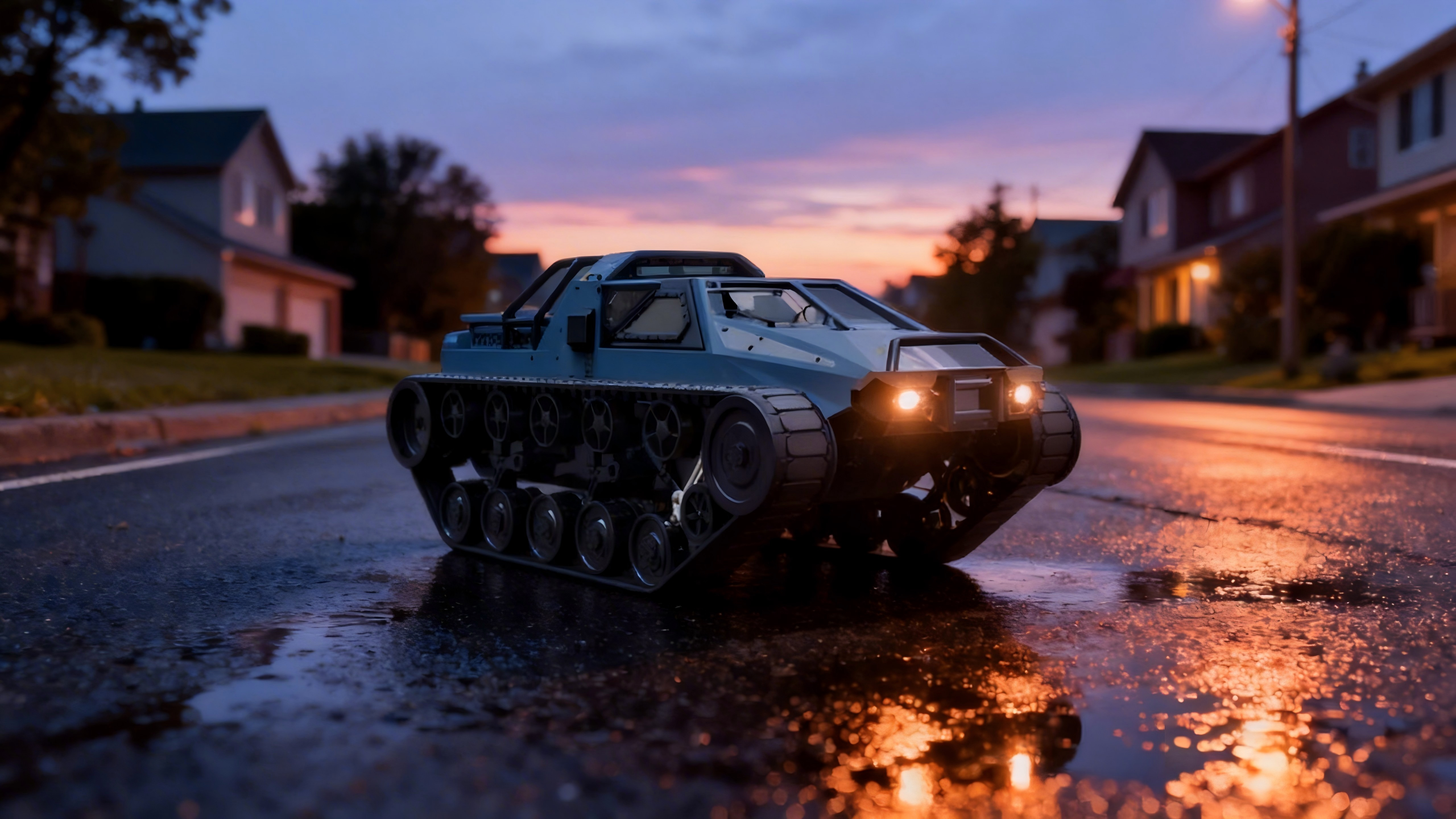
Sizing is your next big decision. Think about where your child will drive most often—indoors on smooth floors, or outdoors on short grass and paths. Use this quick table to visualize typical sizes and play spaces.
|
Scale |
Approx. length |
Best play space |
Notes |
|---|---|---|---|
|
1/28 |
~14 in / 36 cm |
Coffee table, smooth floors |
Very compact; often IR battle only |
|
1/24 |
~16–18 in / 40–46 cm |
Indoor floors, patios |
Still compact; easy storage |
|
1/16 |
~20–21 in / 50–53 cm |
Yards, parks, flat dirt |
Heavier, more stable outdoors |
Two more fundamentals:
-
What’s in the box varies. Some RTRs include the main battery and charger; others don’t. Always check the listing details.
-
Transmitters often require separate AA batteries; add them to your cart so first play isn’t delayed.
Decide the right size and play space
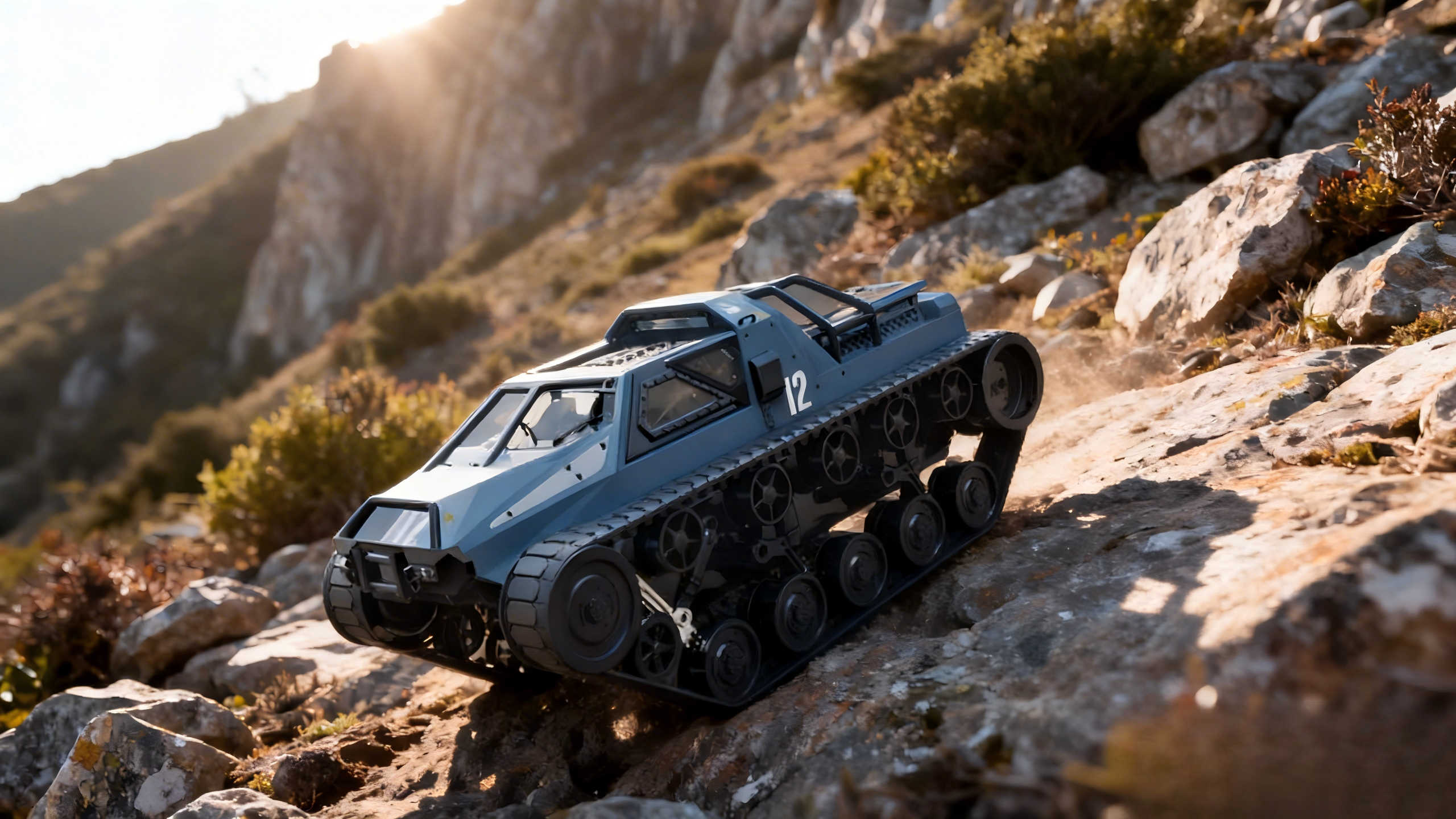
Match the scale to your child’s age, your space, and your supervision comfort. For 6–8-year-olds in apartments, a compact 1/28 or 1/24 tank keeps speeds tame and play contained to a coffee table or hallway. For 9–12-year-olds with access to a yard, 1/16 brings stability and outdoor fun, but you’ll want to supervise closely and choose smoother areas for early sessions.
If light rain or splashes are likely, look for water‑resistance descriptions tied to IP ratings. As a rule of thumb, IPX4 suggests splash resistance (rain from any direction), while IP54 adds limited dust protection—neither rating means submersion is OK. A practical explainer of these labels is the RS Components guide to IP ratings. After wet play, power down, wipe the tank dry, and avoid puddles and hoses.
Here’s the deal: think in scenes. If you picture Saturday‑morning laps around the coffee table, go small. If you picture backyard “missions” over patio stones and short grass, 1/16 is your friend—with boundaries, a clear play zone, and an adult nearby.
Compare the features that actually matter
-
IR battle vs BB projectiles: For kids 6–12, IR (infrared) battle systems simulate hits with light signals—no pellets, so there’s no impact risk. BB‑firing tanks shoot 6mm plastic pellets and demand stricter rules. Reputable retailers remind buyers to wear eye protection on BB models; for example, Motion RC’s Heng Long listings call out eye protection in plain language on the page. See that safety note on a representative product page here: Motion RC’s Tiger I Upgrade Edition.
-
Sound and smoke modules: Kids love them, but sound/smoke draw power and can trim runtime. Look for models that let you toggle effects on/off so you can extend playtime when needed.
-
Tracks and gears: Plastic running gear is lighter and friendly for indoor play. Metal tracks/gears add weight and durability for outdoor terrain but increase wear on batteries and drive parts. For beginners, plastic is fine; upgrade later if your child craves realism.
-
Power and runtime: With the included pack and stock charger, 15–30 minutes per run is typical. Rough surfaces, faster speeds, and effects shorten that window. Plan for cool‑down between packs to protect motors and batteries.
-
Radio control: A 2.4GHz transmitter is a must for families. It reduces interference so siblings can drive side by side and keeps setup simple.
Confirm safety, support, and value
Before you buy, verify safety markings and after‑sales basics. In the U.S., toys intended for children 12 and under must follow CPSC rules; the ASTM F963 toy safety standard is mandatory, and compliant toys require third‑party testing with a Children’s Product Certificate (CPC). The Consumer Product Safety Commission’s primer explains the framework clearly: CPSC toy safety guidance for businesses and manufacturers. For Europe, CE marking indicates conformity with applicable directives. FCC compliance addresses radio emissions for electronics like 2.4GHz transmitters.
Retailer checklist you can trust:
-
Age guidance and safety warnings are easy to find on the page.
-
Safety/compliance details (CE, FCC, CPC/ASTM context) are stated.
-
Warranty and return windows are clear; spare parts and support are accessible.
-
What’s included is explicit: battery, charger, transmitter batteries, and any effects modules.
Example of how to verify, neutrally: A reputable store will list certifications and support policies in writing. For instance, you can review safety posture and shipping/warranty details on a retailer’s info pages like Playpulse RC’s About Us and FAQ to see how CE/FCC are presented, how long returns last, and typical delivery times.
Set up the first safe play session
-
Unbox and inspect. Remove protective films, confirm the antenna is secure, and check that tracks move freely by hand.
-
Charge the main battery safely. Place the battery on a non‑flammable surface, away from soft furnishings. Don’t leave it unattended while charging.
-
Power‑on sequence and binding. Follow the manual’s order (usually transmitter on first, then tank). Move sticks gently to confirm forward/reverse/turns and turret functions.
-
Choose a test area. Use a clear floor or patio with several meters of space. Set simple rules: no pets nearby, no water, and no driving toward feet.
-
Add fun in stages. Start with sound off and no smoke. Once control is smooth, toggle effects on and, if using IR battle sets, introduce simple “missions.”
-
Post‑play routine. Power down, let electronics cool, wipe dust or moisture, and place the battery in a safe spot.
Maintain and troubleshoot
Battery basics you can remember: NiMH packs are simple and beginner‑friendly. LiPo packs are lighter and punchier but demand stricter care—charge only with a LiPo‑capable balance charger, on a non‑flammable surface, never unattended, and store at partial charge. A concise beginner primer is the EURORC guide to LiPo battery safety and basics.
Simple care routine after each session: wipe the hull and tracks, remove debris from the running gear, dry any moisture, and check that track tension feels even on both sides. Store the tank in a dry place away from direct heat.
Three quick fixes parents use:
-
Tank won’t move: Confirm the battery is charged and the power switch is fully on; re‑bind the transmitter if needed.
-
Steering drifts: Calibrate trims on the transmitter; check for hair or thread caught in sprockets.
-
Short runtime: Disable sound/smoke for a session; run on smoother surfaces; consider a spare battery once your child shows good handling.
Quick parent checklist
-
Decide scale by space and age: 1/28–1/24 for indoor play; 1/16 for supervised outdoor use.
-
Prefer IR battle for ages 6–12; if BB, require eye protection and close supervision.
-
Confirm 2.4GHz radio, age guidance, CE/FCC/CPC notes, and clear warranty/returns.
-
Expect 15–30 minutes per charge; effects reduce runtime; cool down between packs.
-
First run: charge safely, bind in the manual’s order, test slowly in a clear area, set boundaries.
-
After play: power down, wipe clean, dry, and store the battery properly (especially LiPo).
Closing and next steps
You’re ready to choose with confidence and set up a safe first drive. To compare specs, age guidance, and support details at a reputable retailer, you can browse a curated tanks section like Playpulse RC’s RC Tanks collection and review its policy pages before you buy.
References for further learning (authoritative, beginner‑friendly):
-
Definition of RTR: Tower Hobbies RC Dictionary
-
Toy‑safety framework (U.S.): CPSC toy safety guidance
-
LiPo care primer: EURORC battery knowledge and safety
-
IP water‑resistance labels: RS Components: IP ratings explained
-
BB safety note example: Motion RC Tiger I listing with eye‑protection warning