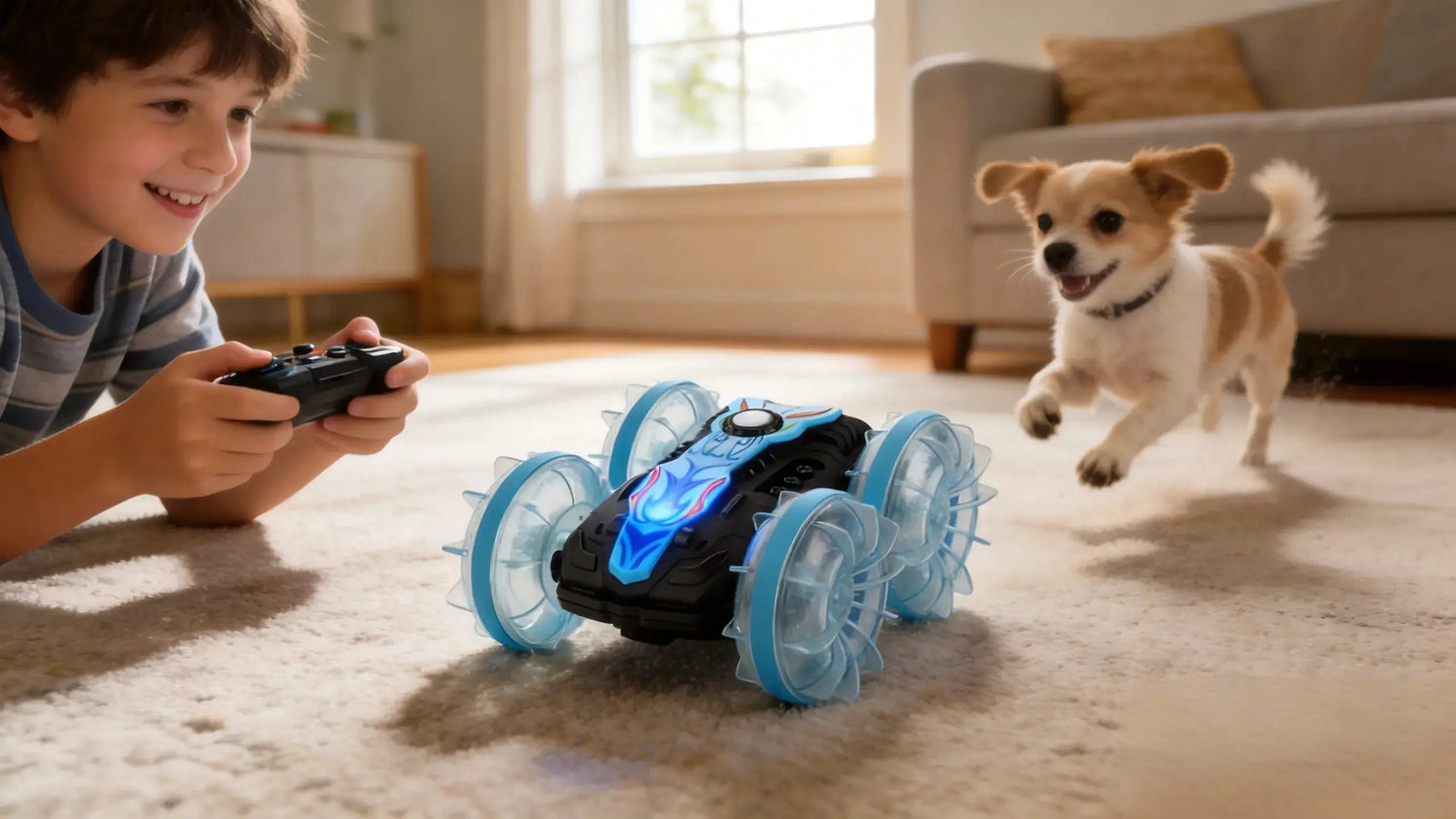
Interactive, Pet-Friendly Remote Control Car: Safe Indoor Play for Dogs and Cats
A restless dog pacing at the door. A cat yowling at 3 a.m. from sheer boredom. If you’ve been there, you know: indoor energy without a healthy outlet can snowball into stress. This guide shows you how to use a pet-friendly remote control car as a calm, safe form of indoor enrichment—so your dog or cat gets mental stimulation and gentle movement without chaos. We’ll cover safety setup, fear‑free introductions, and the features that matter most for apartments and family rooms.
Key takeaways
-
Start slow and keep it gentle: soft‑start, low‑speed motion and short sessions (5–10 minutes) help most pets stay curious instead of worried, aligning with fear‑free desensitization principles supported by reputable welfare education resources such as the Fear Free program.
-
Safety begins before play: prep non‑slip flooring, secure battery compartments, and clear small hazards; follow button‑battery rules emphasized by the U.S. Consumer Product Safety Commission in its 2023 materials on ASTM F963 requirements.
-
Look for chew‑ and drop‑resistant builds with replaceable shells: sturdy shells (e.g., ABS/PC blends) plus soft bumpers protect pets, furniture, and the car—while a spare shell keeps play going during cleaning.
-
Treat RC sessions as one part of a balanced plan: combine with puzzles, scent games, and rest. Pet care sources like PetMD and Best Friends emphasize short, structured indoor enrichment over marathon play.
What “pet‑friendly” really means for an indoor RC toy
“Pet‑friendly” isn’t a sticker on a box—it’s a set of design choices and handling habits that reduce stress and risk for animals who experience the world differently than we do. Indoors, a pet-friendly remote control car or rc car should:
-
Move in a predictable, low‑speed way with gentle starts and stops.
-
Stay quiet enough to avoid startling; rubberized tires and good gear mesh help soften harsh drivetrain sounds (we’ll still avoid promising any decibel numbers—none are published for pet toys).
-
Absorb bumps rather than transfer them—soft TPU/TPE‑like bumpers matter.
-
Use durable, rounded shells without sharp protrusions and with a secure battery bay.
-
Be easy to clean and even easier to swap (replaceable shells are a game‑changer).
This is enrichment, not a medical treatment. If your pet has diagnosed anxiety or is on a behavior plan, consult your veterinarian or a credentialed behavior professional before adding any high‑motion toy.
Prepare your room and your routine, then press “on”
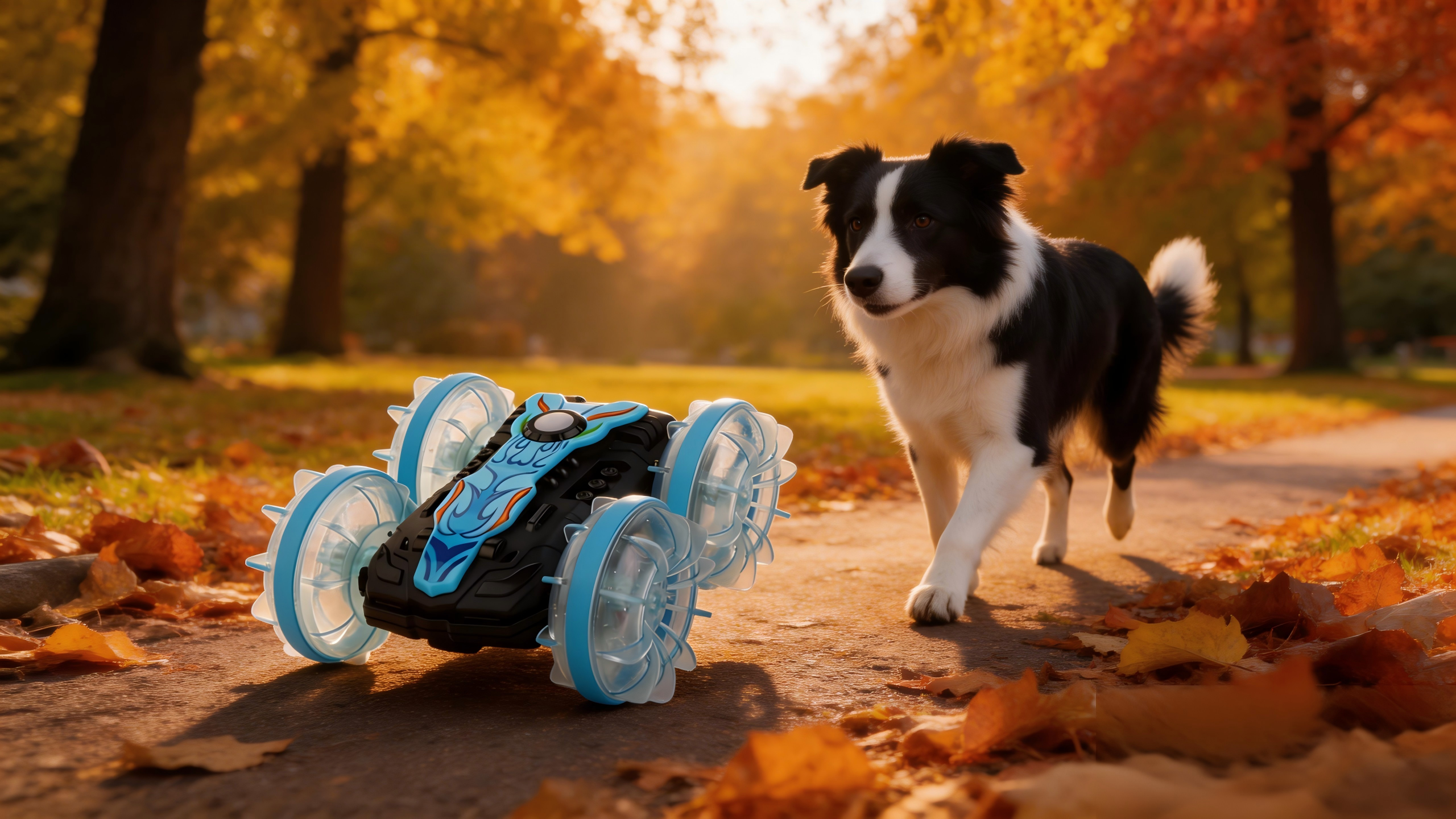
Set up the space before you ever press the throttle. Clear small hazards like loose cords or fragile decor, and give your pet choices: a cozy bed in the corner, a perch, and free access to leave the room. Non‑slip mats or area rugs matter more than many people realize; smoother floors can feel unsafe and amplify skids. Guidance on stress‑reducing handling repeatedly notes the value of grippy surfaces during new experiences—principles echoed in fear‑free handling education.
Next, think safety behind the shell. Secure battery compartments that use screws and resist prying are not optional in homes with kids or curious chewers. U.S. toy safety refers to ASTM F963 construction and button‑battery safeguards; regulators have publicly pressed for stronger measures following incidents. For background, see the Consumer Product Safety Commission’s 2023 discussion of ASTM F963 button‑cell requirements and Reese’s Law context in its official letter: CPSC letter to ASTM on F963 button-battery protections (2023).
Finally, plan the clean‑up. After a session, soap and warm water are typically enough for shells and bumpers. If you disinfect, follow public‑health guidance—let surfaces dry fully and keep pets away during that time. The U.S. Centers for Disease Control and Prevention provides step‑by‑step advice on cleaning pet supplies and home surfaces; see CDC guidance: Cleaning and disinfecting pet supplies (accessed 2026).
How to introduce an RC car without overwhelming your pet
Think of the first week like teaching a gentle waltz, not a sprint. Your job is to keep the experience predictable and rewarding. Here’s a practical, fear‑free‑aligned flow you can adapt.
For dogs: a six‑step, reward‑first plan
-
Set the stage. Lay down non‑slip rugs; keep high‑value treats ready. Place the rc car, turned off, a few yards away. Reward any calm glance or sniff toward the car.
-
Let it be a statue. Invite sniffing while the car stays inert. Reward curiosity; end before your dog gets bored.
-
Introduce the sound. With the car’s wheels lifted or on a thick rug to dampen noise, briefly run the motor at the lowest speed while feeding a steady trickle of treats. Stop the motor first, then end the food. If your dog tenses or retreats, you went too fast—next time, make it quieter/shorter.
-
Micro‑motion time. On the floor, cue one slow, straight roll for a second or two at a distance. Feed, then pause. Repeat a few times.
-
Build duration and shape. Over a few short sessions across days, lengthen those straight lines and add gentle arcs. Keep speed low; avoid sudden accelerations.
-
Balance the day. Cap sessions at 5–10 minutes and rotate with low‑arousal activities like sniffing games or puzzle feeders. Pet care sources such as PetMD’s indoor exercises for dogs (2025) consistently recommend short, structured play.
If fear pops up, back up a step. If arousal spikes into frantic chasing or barking, reduce speed, increase distance, and insert calm breaks (settle on a mat, scatter a few treats for sniffing, then resume later or stop for the day).
For additional framing of desensitization/counterconditioning for novel sights and sounds, see Fear Free’s DS/CC explainers and toolkits (2020–2025 collection overview and related pages).
For cats: short, prey‑like predictability
-
Choose the right time. Dawn and dusk are natural play windows. Ensure a secure perch and non‑slip surfaces nearby.
-
Start still. Place the rc car near a favored hangout and pair its presence with treats or a brief wand‑toy session to keep the association positive.
-
Move like a mouse, not a meteor. One or two seconds of slow, baseboard‑hugging motion is plenty at first. Avoid darting starts/stops.
-
Keep it tiny. Three to five minutes is a fine starting point. Watch for overstimulation cues—tail swishes, pinned ears, dilated pupils—and stop while your cat still wants more. Best‑practice overviews such as Best Friends’ indoor cat enrichment guide (2024) emphasize brief, positive sessions.
-
Add variety. Alternate RC play with foraging or puzzle feeders and vertical exploration. For broader context on mental stimulation, PetMD discusses why variety and routine matter for bored cats: How enrichment helps bored cats.
Features to look for in a pet-friendly remote control car
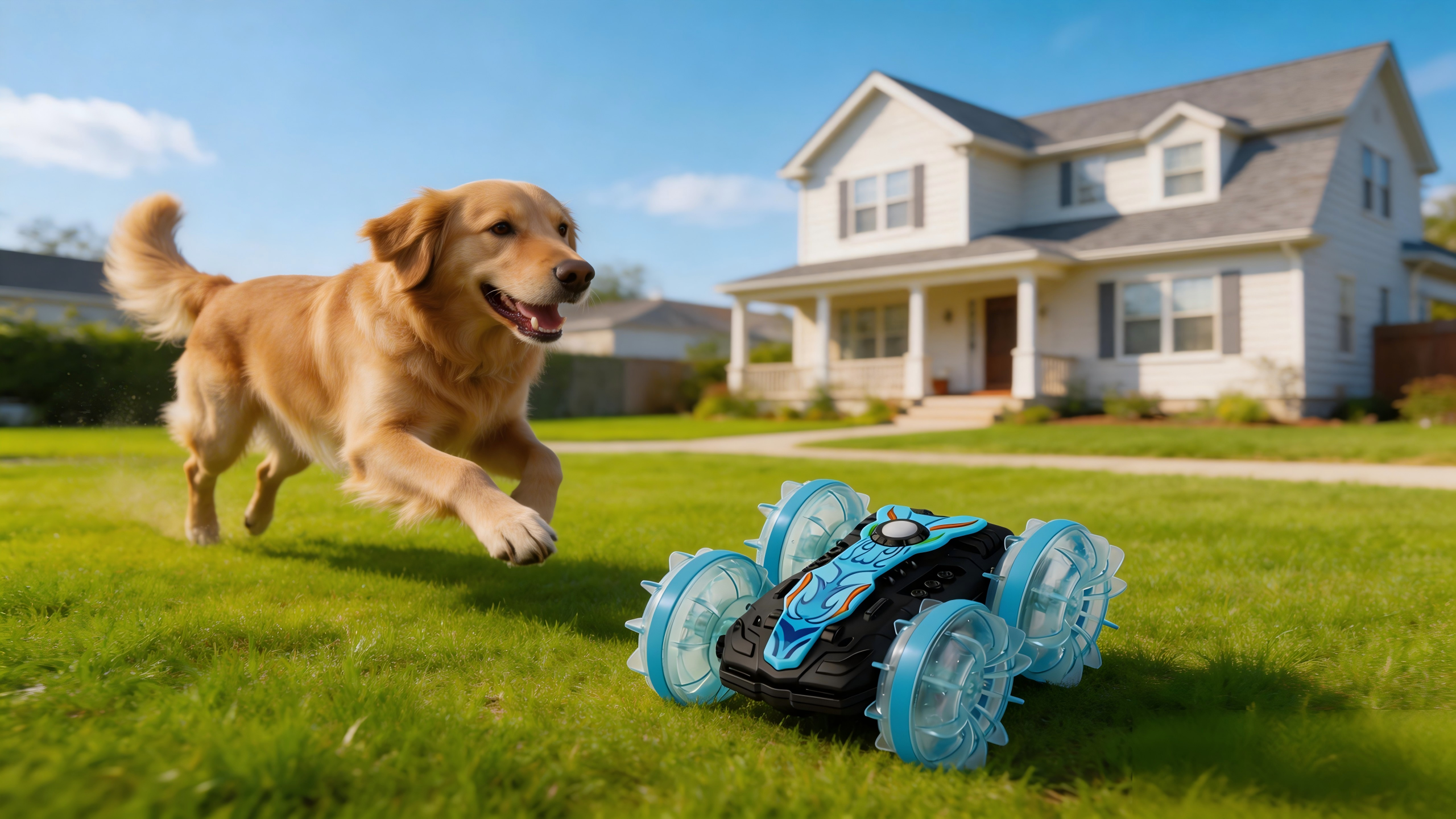
When you’re shopping, the spec sheet can be your best friend—if you know which lines matter indoors. Prioritize:
-
Low‑speed indoor mode with soft‑start/soft‑stop behavior. This keeps movement predictable and reduces startle risk.
-
Soft bumpers (TPU/TPE‑style) and rounded edges. These help absorb bumps and protect furniture and paws.
-
Impact‑resistant shells with replaceable options. ABS, polycarbonate, or PC/ABS blends are common for toughness; replaceable shells simplify cleaning and let you swap a scuffed cover out in seconds. Materials references in engineering overviews (e.g., UL Prospector’s overview of polycarbonate and ABS basics) explain why these blends strike a toughness/weight balance.
-
Secure battery compartment and tidy fasteners. Screwed covers and enclosed hardware lower ingestion and snagging risks.
-
Quiet‑leaning drivetrain choices. Rubberized tires and good gear mesh can soften harsher tones; avoid strobe‑like lighting that could agitate sensitive pets.
-
Optional basic obstacle‑avoidance at low speeds. Ultrasonic front sensing and/or IR side sensing can reduce coffee‑table collisions. Robotics references note trade‑offs; for a plain‑language comparison see this community discussion of ultrasonic vs IR sensors for small robots.
Practical example, not an endorsement: Some collections, such as the pet‑interaction category at PlayPulse RC, group lower‑speed models with soft bumpers and swappable shells that fit the criteria above; browse by looking for “indoor mode,” “soft‑start,” and “replaceable shell” in the specs. Explore the PlayPulse RC pet‑interaction collection for examples: pet‑interaction RC running partner and play models.
To satisfy search intent: yes, a pet-friendly remote control car can work indoors if you manage speed, surfaces, and session length. It’s not a set‑and‑forget toy; think of it as a guided game you both enjoy.
Sample indoor sessions and a simple weekly rhythm
Use short, predictable sessions and rotate activities to prevent over‑arousal and boredom. Here’s a lightweight plan you can adapt.
| Day | Morning (5–8 min) | Afternoon (5–8 min) | Evening (5–10 min) |
| --- | --- | --- | --- |
| Mon | Sniffing scatter + calm cues | RC micro‑chase: low‑speed straight lines | Puzzle feeder wind‑down |
| Tue | RC micro‑chase: figure‑8 arcs | Rest/chew on mat | Wand toy (cats) or nosework (dogs) |
| Wed | Foraging game | RC micro‑chase: baseboard route | Short cue review (sit/settle) |
| Thu | Puzzle feeder | RC micro‑chase: gentle turns around a cone | Sniff walk indoors (hide treats) |
| Fri | Scent box (cardboard + herbs/safe scents) | RC micro‑chase: stop/start with rewards | Cozy grooming/bonding time |
| Sat | Family co‑play (supervised) | RC micro‑chase: obstacle weave | Free choice (pet‑led) |
| Sun | Light rest day | RC micro‑chase: 2–3 short reps only | Quiet enrichment: window watching/perch time |
Tip: If your pet starts to chase too intensely, lower speed, add distance, and insert a calm break. Ending while your pet is still eager keeps tomorrow’s session easy.
RC car vs other enrichment: how it fits in
A pet-friendly remote control car shouldn’t replace calmer outlets like foraging or puzzles. It fills a different niche: interactive, supervised movement that lets you guide arousal up and then back down. Here’s a quick comparison to help you plan a mix.
|
Option |
Mental engagement |
Physical movement indoors |
Supervision needed |
Indoor suitability |
Upkeep |
|---|---|---|---|---|---|
|
RC car (low speed) |
High (interactive targeting) |
Moderate (short bursts) |
High (always) |
Good on non‑slip floors |
Clean shell/bumper; inspect hardware |
|
Puzzle feeder/foraging |
High (problem‑solving) |
Low |
Low |
Excellent |
Washable parts |
|
Scent games (hide‑and‑seek) |
High |
Low–moderate |
Low–moderate |
Excellent |
Minimal |
|
Ball launcher (manual/auto) |
Moderate |
Moderate–high |
Moderate (manual); high (auto) |
Fair (space/noise limits) |
Ball cleaning; space management |
According to welfare‑aligned resources, rotating these outlets—rather than leaning on a single activity—keeps indoor days smoother for most pets. Best Friends’ and PetMD’s enrichment pages both emphasize variety and short, positive sessions.
Why do dogs chase RC cars?
Many dogs chase remote control cars due to their instinctual prey drive and attraction to moving objects. The unpredictable movement mimics small animals, triggering natural chasing behaviors. While this can be engaging, it's important to keep sessions controlled and safe to prevent overexcitement or stress.
Maintenance, cleaning, and when to retire parts
After play, wipe the shell and bumper with warm, soapy water and dry thoroughly. Hair and grit around axles can grind and add noise; a quick brush extends the car’s life and keeps motion smooth. Disinfect only when you truly need to, and follow public‑health guidance on product choice and dry times; the CDC’s guidance on cleaning pet supplies is a reliable, plain‑language reference (linked above).
Inspect after each session. Replace a cracked shell or a torn bumper immediately—damaged parts become ingestion hazards or sharp edges. Verify that the battery compartment remains secure; keep spare cells and chargers out of reach. For homes with children, the Consumer Product Safety Commission has repeatedly highlighted safe button‑battery design and storage in official materials; the 2023 letter linked earlier is a good baseline reference.
FAQs
-
Will a pet-friendly remote control car scratch my floors? On slippery floors, wheel spin can leave light marks and increase skids. Use non‑slip area rugs and start on carpet or runners. Soft tires and low speed reduce scuff risk.
-
What if my cat ignores the car? Many cats prefer predictable, baseboard‑hugging motion, short sessions, and pairing with a favorite treat or brief wand‑toy interludes. Start at dawn/dusk and keep the car stationary at first to build curiosity.
-
My dog gets overexcited and barks—now what? Lower speed, increase distance, and insert one‑minute calm breaks. Reinforce a “settle” on a mat; resume with a single slow pass and reward quiet tracking.
-
Is obstacle‑avoidance worth it indoors? Basic ultrasonic/IR sensing can help avoid furniture at very low speeds, but it’s not a substitute for supervision. Treat those sensors as bump‑reduction, not bump‑proofing.
-
Is there a remote control dog toy?
Yes, many pet-friendly remote control cars are designed for dogs, combining low-speed movement and durable construction to safely entertain pets indoors.
A gentle next step
Indoor RC play can be a safe, shared ritual when you keep it slow, predictable, and brief. Layer it with puzzles, foraging, and quiet time, and you’ve got a balanced plan for rainy days and work‑from‑home stretches. For a look at how one maker frames safety, certifications, and soft‑edge design choices, you can skim the PlayPulse RC overview page here: About PlayPulse RC — safety ethos and certifications. And if your pet has a diagnosed anxiety condition or is on a behavior plan, check in with your veterinarian or a credentialed behavior professional before introducing any new high‑motion toy.