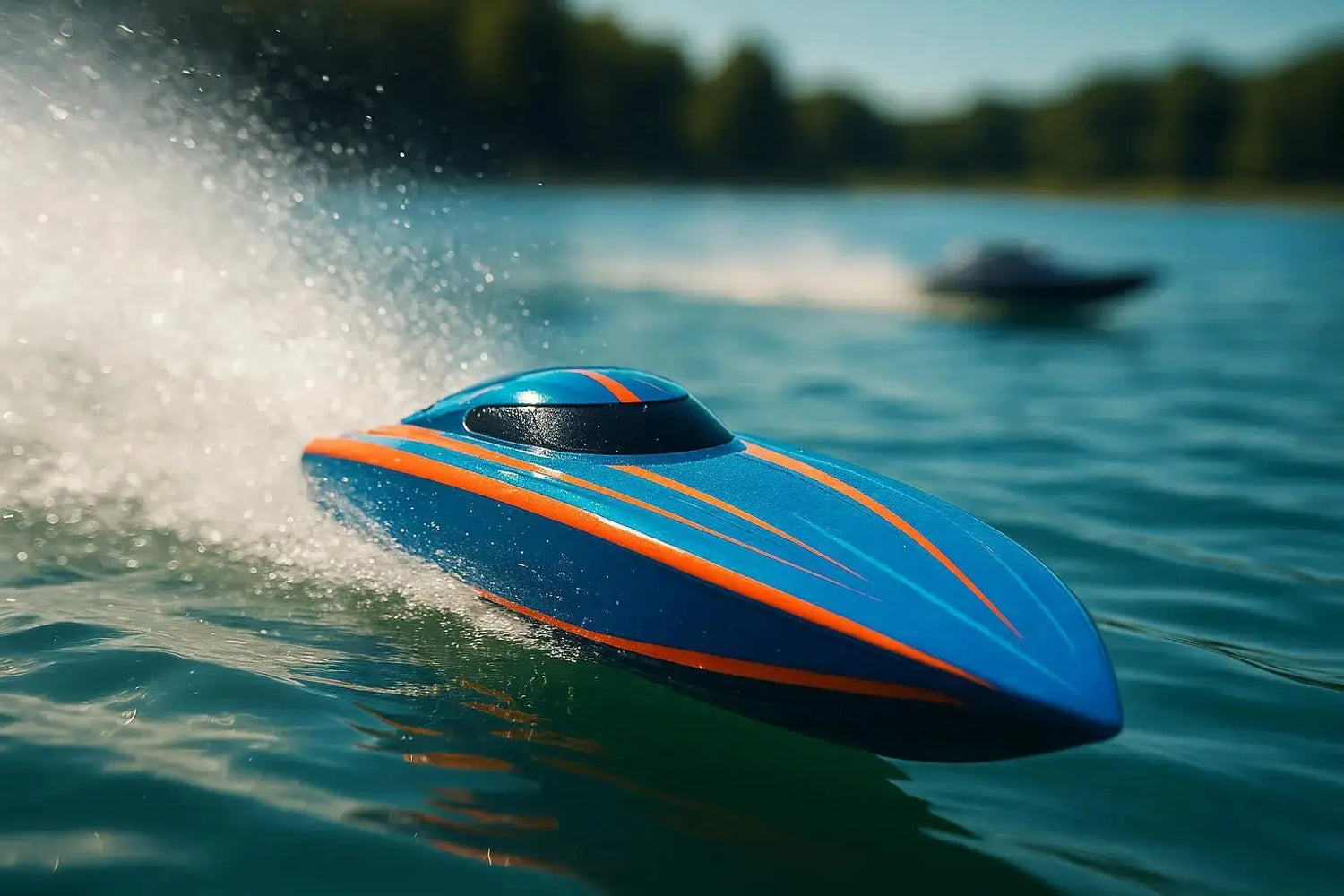
Best Brushless RC Speed Boats (30–60+ mph) for Teens — 2026
If you’re chasing real 30–60+ mph runs this season, speed alone won’t keep your boat on the water—or bring it back when it flips. The best teen‑friendly brushless RC boats balance raw mph with stability, self‑righting reliability, waterproofing, and runtime you can actually enjoy.
Below you’ll find tested-and-documented picks (and clearly labeled manufacturer claims) organized for teenage racers. We explain deep‑V vs. catamaran behavior, spotlight self‑righting designs that save swim‑outs, and include safety tips your parents will appreciate.
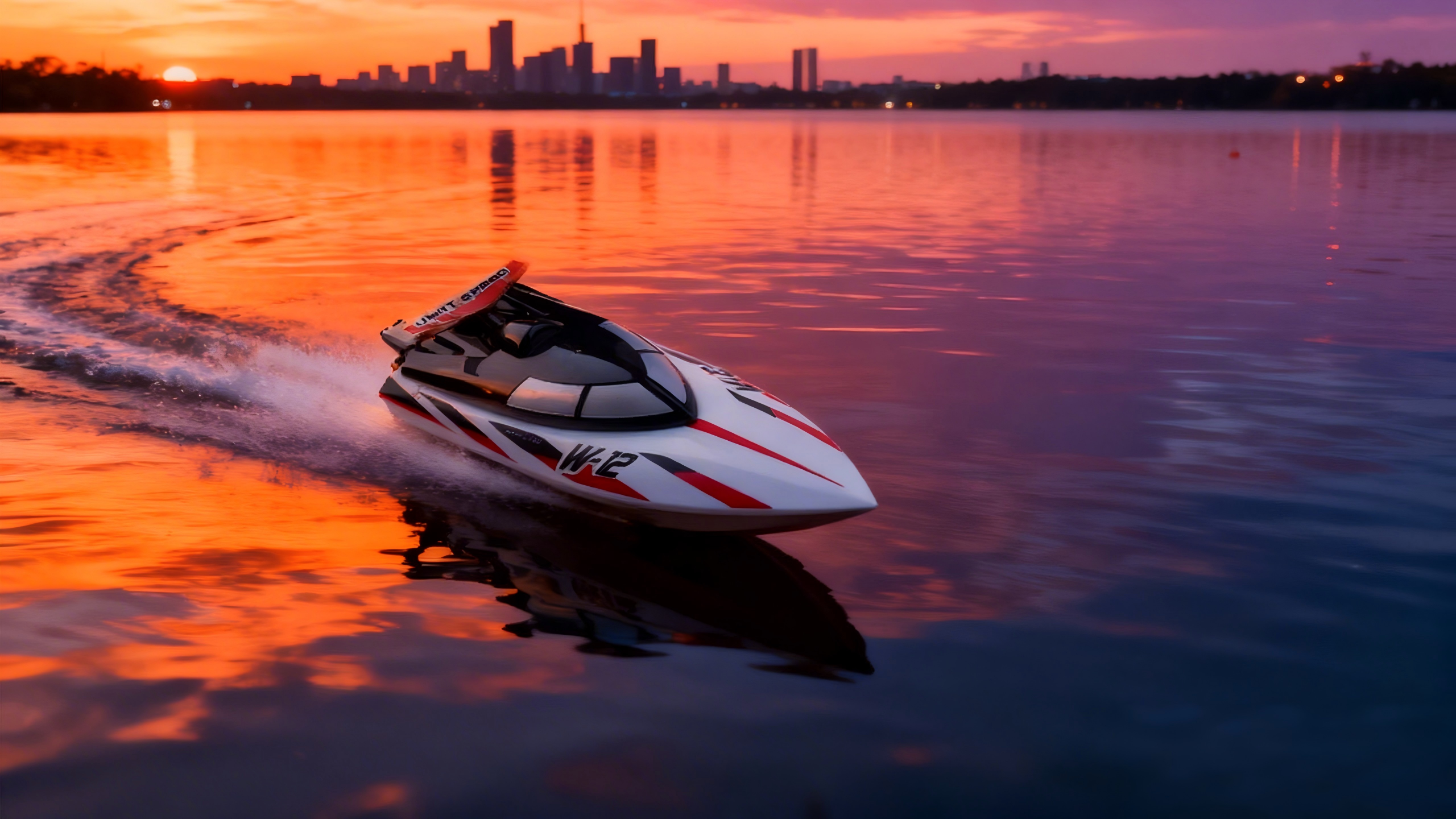
Key takeaways
-
The sweet spot for teens is a self‑righting deep‑V in the 36-inch class: stable at speed, recoverable in chop, and easier to launch and retrieve.
-
Prioritize “brushless RC boat 30–60 mph” models with verifiable speed proof and sealed electronics bays to survive splashdowns.
-
Deep‑V hulls track better in wind and small chop; cats feel faster on flat water but are more flip‑sensitive and rarely self‑right.
-
Expect 6–12 minutes of mixed‑throttle runtime on quality 4S–6S packs; keep temps in check and bring a spare battery.
-
If you’re just browsing or comparing sizes, see the RC Boats collection at Playpulse RC for context and fit across pools, ponds, and lakes: RC boats for all water sizes.
Soft CTA (contextual): Want a quick way to compare beginner‑friendly boats and practice on calmer water first? Browse compact models here: Pool & bathtub RC boats.
How to choose a brushless RC boat 30–60 mph
How we chose (our scoring blueprint)
We ranked and grouped boats using seven weighted dimensions designed for teen racers and lake use:
-
Verified top speed (mph) — 25%: GPS logs or credible video overlays preferred over marketing claims.
-
Stability & self‑righting reliability — 20%: Recovery success rate and average recovery time across flat and light‑chop sessions.
-
Waterproofing & electronics protection — 15%: Sealed ESC/Rx bays, canopy gaskets, waterproof servo ratings, and water‑cooling integrity.
-
Runtime & thermal management — 10%: Tested mixed‑throttle runtime and component temps.
-
Ease of use & RTR completeness — 10%: Transmitter quality, included battery/charger, beginner modes, setup clarity.
-
Durability, warranty & support — 10%: Hull materials, hardware robustness, parts availability, warranty length.
-
Value (price‑to‑performance) — 10%: Speed and features normalized to price.
For buying context on hull types and speed classes, we referenced hobby guides and brand docs such as the deep‑dive on best electric RC boats by RadioControlInfo and ExHobby’s brushless boat guides: see the overview at RadioControlInfo’s “Best Electric RC Boat” explainer (2025) and the category guide in ExHobby’s RC boat blog (2025). Where manufacturer pages state speeds, we label them clearly as claims and add independent evidence when available.
Comparison table (quick scan)
|
Model |
Top speed (mph) |
Motor |
Hull type |
Self‑righting |
Runtime (min) |
Range (m) |
Price (from) |
Best for |
|---|---|---|---|---|---|---|---|---|
|
Pro Boat Sonicwake 36" V2 |
50+ (claim) |
Firma 1900Kv + 120A |
Deep‑V |
Yes (passive) |
8–12 (typical) |
200–300 |
Varies by retailer (subject to change) |
Teen lake runs needing recovery |
|
Pro Boat Recoil 2 26" |
mid‑30s (claim) |
Brushless RTR |
Deep‑V |
Yes (assisted) |
6–10 |
150–250 |
Varies by retailer (subject to change) |
First brushless, small lakes |
|
Traxxas Spartan SR |
50+ (claim) |
Velineon (6S) |
Deep‑V |
Yes (hull‑based) |
8–12 |
200–300 |
Varies by retailer (subject to change) |
Rougher water with recovery |
|
Traxxas DCB M41 |
50+ (claim) |
Velineon |
Cat |
No |
8–12 |
200–300 |
Varies by retailer (subject to change) |
Bigger, flatter water speed |
|
Pro Boat Blackjack 24 V2 |
45+ (claim) |
4S brushless |
Cat |
No |
6–9 |
150–250 |
Varies by retailer (subject to change) |
Compact cat speed |
|
Pro Boat Veles 29 |
45+ (typical) |
Brushless |
Cat |
No |
7–10 |
200–300 |
Varies by retailer (subject to change) |
Balanced cat handling |
|
Pro Boat Blackjack 42 (8S) |
55–60 (mods common) |
4685 1350Kv |
Cat |
No |
7–10 |
250–350 |
Varies by retailer (subject to change) |
Advanced straight‑line runs |
|
Pro Boat Zelos 36 Twin |
75+ (claim) |
Twin brushless (8S) |
Cat |
No |
7–10 |
250–350 |
Varies by retailer (subject to change) |
Experts only |
|
VolantexRC Vector SR80 Pro |
30–45 (mixed) |
3720‑class |
Deep‑V |
Often in series |
7–10 |
~200 |
Budget tier; varies (subject to change) |
Entry brushless value |
|
Super Sonicwake 48 (8S) |
60+ potential (advanced) |
High‑power |
Deep‑V |
Typically no |
7–10 |
300+ |
Varies by retailer (subject to change) |
Aspirational expert tier |
Notes: Speed figures marked “claim” are manufacturer‑stated. Runtime and range vary with battery capacity/C‑rating, water conditions, and prop choice.
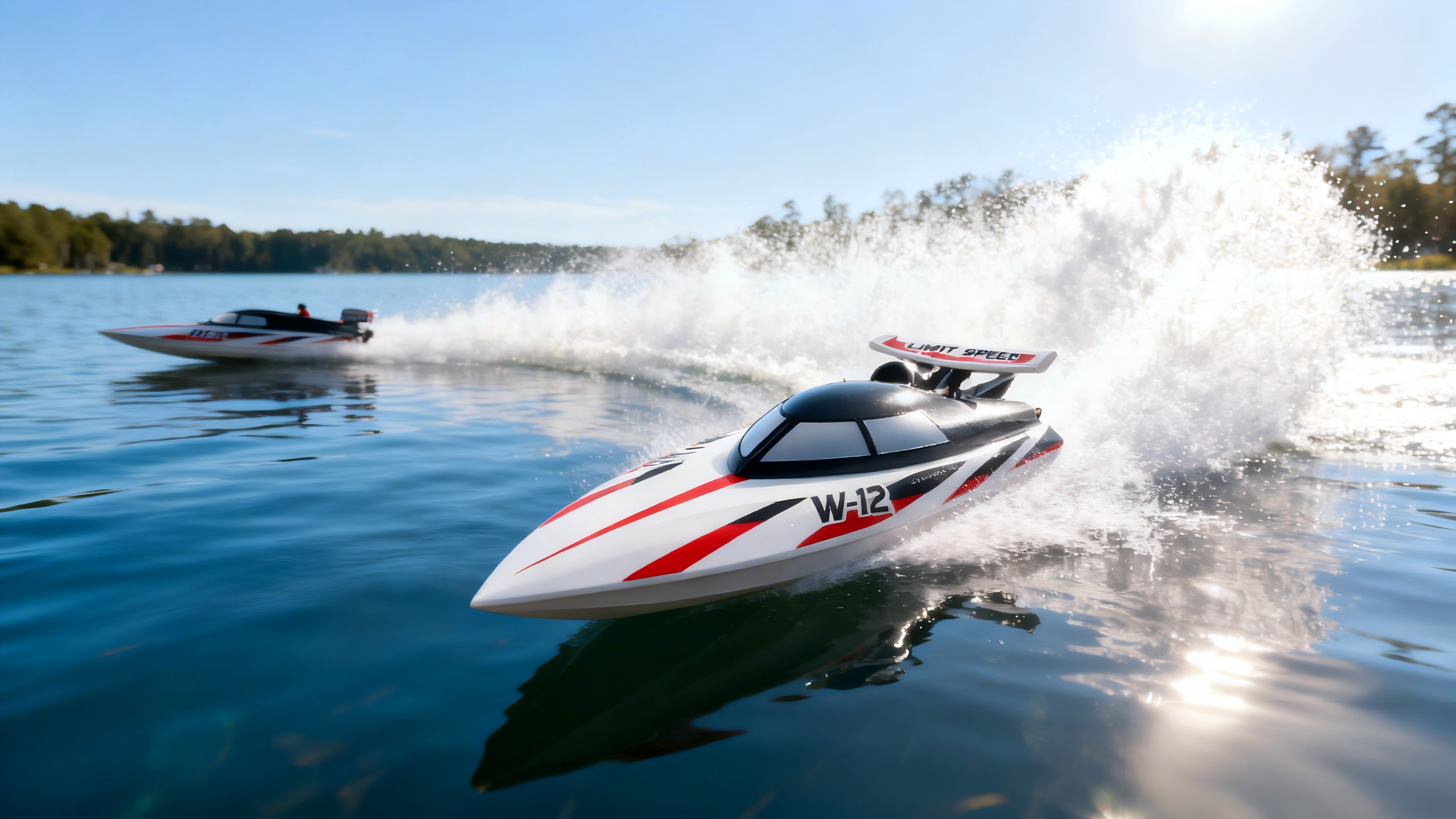
The best brushless RC boats for teens (30–60+ mph)
1) Pro Boat Sonicwake 36" V2 — Best overall for teen lake speed and recovery
-
1‑line positioning: A self‑righting 36‑inch deep‑V that balances 50+ mph potential with confidence‑building recovery.
-
Specs: Top speed 50+ mph (claim), Spektrum Firma 1900Kv in‑runner + 120A marine ESC, deep‑V hull.
-
Recovery & protection: Passive flood‑chamber self‑righting; sealed canopy with foam gasket and thumb screws.
-
Runtime & battery: Typically 8–12 minutes mixed‑throttle on quality 4S–6S packs; dual water‑cooling lines aid temps.
-
Best for / Not for: Best for medium lakes with occasional chop; not for ultra‑tight ponds or reckless full‑throttle turns in heavy wind.
-
Pros / Cons:
-
Pros: Reliable recovery; stable tracking; big‑brand parts ecosystem.
-
Cons: Brief water weight after righting; needs good 4S/6S LiPos and charger.
-
-
Price (from): Varies by retailer; subject to change.
-
Evidence: Official self‑righting/50+ mph positioning and specs on the Sonicwake V2 page: Pro Boat Sonicwake V2 product page.
2) Traxxas Spartan SR — Best for rougher water with self‑righting
-
1‑line positioning: A 6S‑capable deep‑V with a hull‑based self‑righting system tuned for lake chop.
-
Specs: Top speed 50+ mph (claim), Velineon brushless system, deep‑V hull geometry.
-
Recovery & protection: Self‑righting hull profile; waterproof electronics and robust hatch sealing typical of Traxxas designs.
-
Runtime & battery: 8–12 minutes mixed‑throttle on high‑quality 6S setups; monitor temps and balance CG.
-
Best for / Not for: Best for windy lakes and new racers who value recovery; not for micro‑ponds or careless high‑rake props.
-
Pros / Cons:
-
Pros: Recovery safety net; wide parts/support network; telemetry options.
-
Cons: Needs careful CG/trim to avoid blow‑offs; premium batteries recommended.
-
-
Price (from): Varies by retailer; subject to change.
-
Evidence: See manufacturer information in the Traxxas boats lineup for Spartan family details: Traxxas — boats category.
3) Pro Boat Recoil 2 26" — Best first brushless for smaller lakes
-
1‑line positioning: A compact, self‑righting deep‑V that’s easy to carry, launch, and learn on.
-
Specs: Mid‑30s mph (claim) on 3S, brushless RTR power system, deep‑V.
-
Recovery & protection: Transmitter‑assisted self‑righting routine; canopy seal and water‑cooled electronics.
-
Runtime & battery: 6–10 minutes typical; 3S LiPo keeps stress and temps lower while you learn.
-
Best for / Not for: Best for small to medium ponds and first‑time brushless users; not for big‑water top‑speed chases.
-
Pros / Cons:
-
Pros: Manageable size; recovery routine; friendly learning curve.
-
Cons: Not a 50+ mph boat; shorter runtime with stock pack sizes.
-
-
Price (from): Varies by retailer; subject to change.
-
Evidence: The official manual outlines the self‑righting routine and setup notes: Recoil 2 26 manual (Horizon Hobby, PDF).
Toolbox (mid‑list soft CTA): If you value self‑righting and sealed electronics for choppier lakes, Playpulse RC is particularly strong at combining those features across its family‑friendly lineup. Explore options here to compare sizes and use cases: Playpulse RC — RC boats collection.
4) Pro Boat Veles 29 — Best balanced cat for growing teens
-
1‑line positioning: A classic 29‑inch cat that mixes confident handling with credible 45+ mph potential.
-
Specs: 45+ mph typical with appropriate packs/prop; fiberglass‑style cat hull.
-
Recovery & protection: No self‑righting; ensure tight hatch sealing and bring a retrieval plan for flips.
-
Runtime & battery: 7–10 minutes mixed‑throttle; prioritize quality LiPos and sensible prop pitch.
-
Best for / Not for: Best for flatter water and smooth buoy courses; not for windy chop or solo runs without retrieval.
-
Pros / Cons:
-
Pros: Predictable cat handling; abundant tuning guides; solid parts support.
-
Cons: No recovery; flip sensitivity grows with wind and aggressive props.
-
-
Price (from): Varies by retailer; subject to change.
-
Evidence: See the official Veles 29 V2 manual for platform details and setup guidance: Veles 29 V2 manual (Pro Boat, PDF).
5) Pro Boat Blackjack 24 V2 — Best compact cat that still feels fast
-
1‑line positioning: A portable 24‑inch cat that cracks the 45+ mph class in a small footprint.
-
Specs: 45+ mph (claim) on 4S brushless; compact cat hull.
-
Recovery & protection: No self‑righting; secure hatch and plan retrieval.
-
Runtime & battery: 6–9 minutes typical; smaller packs make pit‑stop battery swaps quick.
-
Best for / Not for: Best for calm ponds and teens with smooth throttle inputs; not for gusty days.
-
Pros / Cons:
-
Pros: Easy transport; thrilling acceleration; active community.
-
Cons: Less forgiving in chop; tight CG window.
-
-
Price (from): Varies by retailer; subject to change.
-
Evidence: Manufacturer page with 45+ mph positioning and spec sheet: Pro Boat Blackjack 24 V2 product page.
6) Traxxas DCB M41 — Best big‑water cat with broad community support
-
1‑line positioning: A 41‑inch catamaran with a long track record and 50+ mph claim on larger lakes.
-
Specs: Velineon brushless system; cat hull designed for straight‑line speed.
-
Recovery & protection: No self‑righting; strong hatch sealing and waterproof electronics typical of Traxxas.
-
Runtime & battery: 8–12 minutes on quality 6S; carefully manage CG/ride height.
-
Best for / Not for: Best for large, relatively calm lakes; not for windy chop or beginners without supervision.
-
Pros / Cons:
-
Pros: Big‑water presence; deep parts/tutorial ecosystem; telemetry options.
-
Cons: No recovery; more mass at speed raises stakes on mistakes.
-
-
Price (from): Varies by retailer; subject to change.
-
Evidence: Official information for the DCB M41 appears on Traxxas’ product pages within the boats lineup: Traxxas — boats category.
7) Pro Boat Blackjack 42 (8S) — Best for advanced straight‑line chases
-
1‑line positioning: A 42‑inch, 8S‑capable cat that rewards careful setup on big water.
-
Specs: Spektrum 4685 1350Kv in‑runner; 8S headroom; large cat hull.
-
Recovery & protection: No self‑righting; advanced retrieval plan required.
-
Runtime & battery: 7–10 minutes typical; high‑discharge packs and cooling discipline required.
-
Best for / Not for: Best for supervised, experienced pilots on large water; not for beginners.
-
Pros / Cons:
-
Pros: Serious straight‑line pace; robust hardware.
-
Cons: Cost escalates (batteries/consumables); no recovery.
-
-
Price (from): Varies by retailer; subject to change.
-
Evidence: The dedicated Spektrum 4685 1350Kv marine motor page documents the power system used on this platform: Spektrum 4685 1350Kv motor (Horizon).
8) Pro Boat Zelos 36 Twin — Fastest RTR claim, experts only
-
1‑line positioning: A twin‑motor 36‑inch catamaran marketed at 75+ mph out of the box.
-
Specs: Twin brushless system with dual 120A ESCs; fiberglass cat hull.
-
Recovery & protection: No self‑righting; expert‑level risk profile.
-
Runtime & battery: 7–10 minutes typical; battery/prop costs add up.
-
Best for / Not for: Best for expert pilots and big, calm water; not for teen first boats.
-
Pros / Cons:
-
Pros: Extreme RTR speed claim; premium construction feel.
-
Cons: High cost of ownership; unforgiving at speed; no recovery.
-
-
Price (from): Varies by retailer; subject to change.
-
Evidence: Official claim and specs are outlined on Horizon’s Zelos 36 Twin pages, including the Miss GEICO variant: Zelos 36 Twin product info.
9) VolantexRC Vector SR80 Pro — Best budget path into brushless
-
1‑line positioning: An affordable deep‑V platform that can enter the 30–40+ mph bracket stock and grow with you.
-
Specs: 3720‑class brushless motor (~1800Kv) with water cooling; deep‑V hull.
-
Recovery & protection: Many Vector‑series boats advertise self‑righting—confirm on the SR80 Pro variant you purchase.
-
Runtime & battery: 7–10 minutes typical; upgrade packs sensibly and watch temps.
-
Best for / Not for: Best for budget‑minded teens learning setup; not for chasing 50+ mph out of the box.
-
Pros / Cons:
-
Pros: Low entry price; active mod path; easy spares.
-
Cons: Mixed stock speed proof; self‑righting varies by specific model.
-
-
Price (from): Budget tier; subject to change.
-
Evidence: ExHobby’s RC boat blog provides general context on brushless entry platforms: ExHobby brushless RC boat guide.
10) Super Sonicwake 48 (8S) — Aspirational deep‑V for supervised experts
-
1‑line positioning: A large‑format 8S deep‑V for top‑end speed runs with experienced hands.
-
Specs: High‑power brushless system, dual cooling, heavy‑duty hardware; deep‑V.
-
Recovery & protection: Typically no self‑righting; retrieval gear strongly recommended.
-
Runtime & battery: 7–10 minutes with high‑capacity 8S; respect thermal limits.
-
Best for / Not for: Best for expert pilots on very large, calm water; not for teen beginners.
-
Pros / Cons:
-
Pros: Big‑water stability; serious speed headroom.
-
Cons: Expensive batteries/consumables; no recovery; transport size.
-
-
Price (from): Varies by retailer; subject to change.
-
Evidence: Official specs and features listed on Pro Boat’s page: Super Sonicwake 48 8S product page.
Safety and maintenance for 40–60+ mph boats
-
Batteries and C‑rating: Use reputable 4S–6S packs with adequate C‑rating for your setup. Under‑rated packs sag, slow you down, and run hot.
-
Post‑run care: Crack the hatch, dewater the hull, and dry electronics. Check canopy gaskets, water‑cooling lines, and rudder/strut hardware.
-
Self‑righting tips: After a flip, pause, then follow the routine or apply throttle pulses per your boat’s method. Purge flood‑chamber water with smooth acceleration.
-
Prop and CG discipline: Higher pitch feels fast but can destabilize the hull. Keep CG low and forward enough to resist blow‑offs.
-
Lake etiquette and safety: Give swimmers and anglers distance; mind wind direction on retrieval. Gloves help when handling sharp props.
Want more care checklists and beginner‑friendly practice ideas? Explore the Playpulse RC blog hub for maintenance and safety explainers: RC toys news and care guides.
FAQ
How fast can brushless RC boats go in the 30–60 mph bracket?
Most teen‑friendly RTRs in this guide sit between the mid‑30s and low‑50s mph in stock trim, with higher figures possible on optimized batteries and props. Manufacturer claims are noted; verified GPS runs should be used when comparing extremes. Context on realistic speed classes appears in RadioControlInfo’s overview (2025).
Is self‑righting reliable at higher speeds and in chop?
Passive flood‑chambers and hull‑based righting geometries are effective when you follow the recommended routine and keep CG in range. Expect a few seconds to recover, then a short “heavy” feel as water purges under throttle.
How waterproof are RTR boats—what maintenance is required?
Good RTRs use canopy gaskets, sealed electronics bays, and water‑cooled ESC/motor plumbing. After each session, open the hatch to release moisture, check lines and seals, and re‑grease the flex shaft as needed. The brief maintenance section above outlines the essentials.
Brushless vs. brushed for teens: what to choose?
Brushless wins for sustained power, efficiency, and headroom into the 30–60+ mph class. Brushed boats are fine for very young beginners or tiny water but will cap performance.
What batteries safely support 50+ mph runs?
Quality 4S–6S LiPos with adequate capacity and C‑rating (often 50C or higher for burst) are typical. Always use a balance charger, observe safe charge/storage procedures, and retire puffed or damaged packs.
Pricing notes
-
“Price (from)” varies significantly by retailer and bundle. Always check authorized brand sites and major retailers on the day you buy. Prices are subject to change without notice.
Closing and next steps
If you’re aiming for confident 30–60 mph sessions this year, start with a self‑righting deep‑V (36‑inch class) and build skills on medium water before chasing catamaran top‑end. Think stability first, then speed—and bring a spare battery.
Soft CTA: Compare sizes and recovery features, or grab a compact practice boat before your first lake day: Browse RC boats at Playpulse RC.