

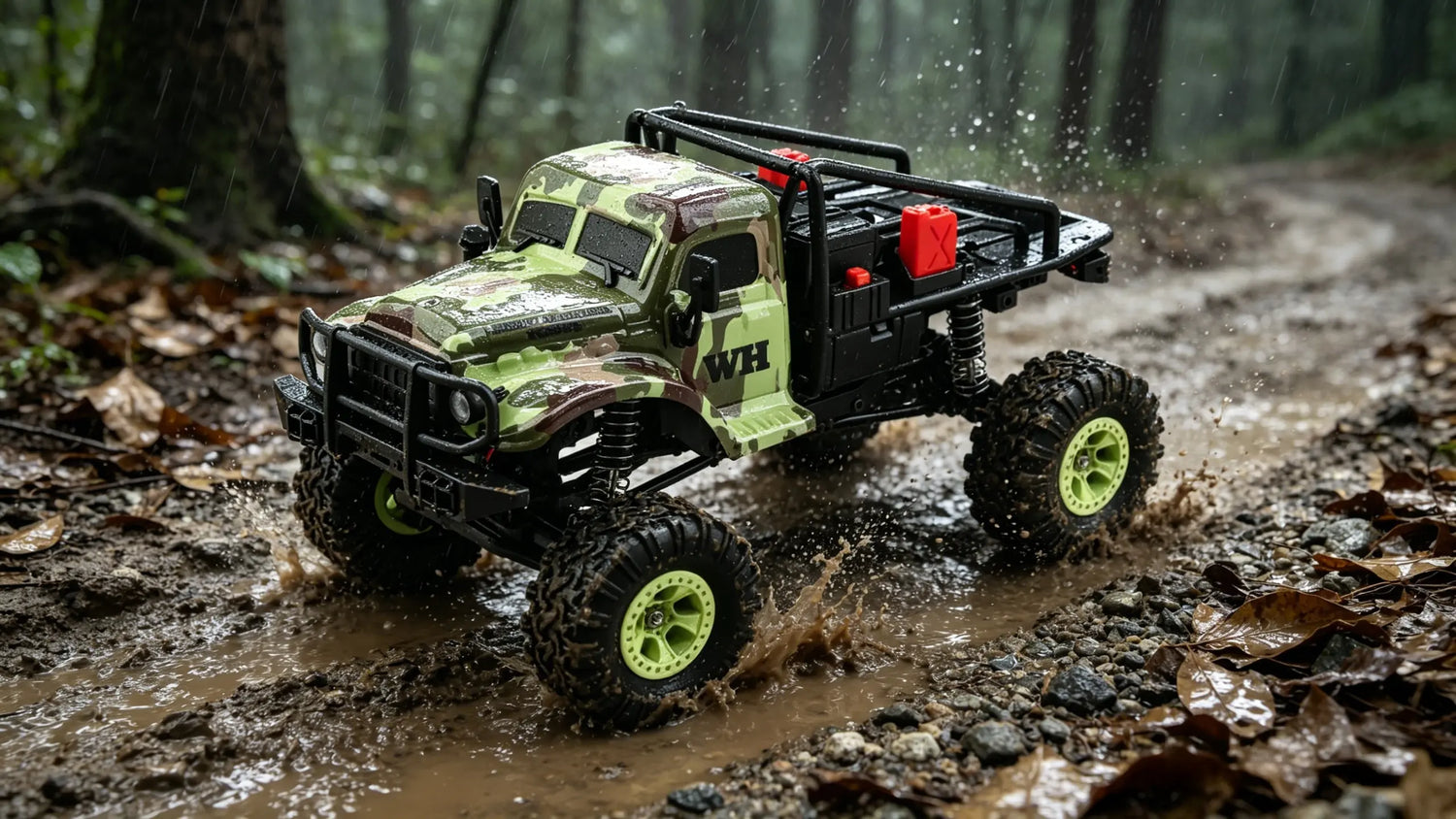
Picture this: You just unboxed your shiny new, stealth-black tactical rig from PlayPulseRC. Your heart is racing, the battery is fully topped off, and you spot a glorious pile of jagged rocks in your backyard. It looks like a miniature mountain range waiting to be conquered. You place your truck at the base, channel your inner off-road champion, and smash the throttle completely to the floor.
Instead of a majestic leap over the peak, your truck lets out a high-pitched scream, spins its high-grip tires wildly, flips backward like an angry turtle, and slides right back into the dirt.
Welcome to the club! You have just experienced your very first rite of passage in the RC crawling world. Driving a crawling RC truck is one of the most addictive, deeply satisfying hobbies on the planet, but it requires a total mindset shift. Unlike fast RC bashers designed to fly off skate ramps, a premium RC crawler is all about precision, slow-end power, and calculated tyre placement.
To help you skip the frustration and get straight to the fun, we’ve rounded up the top 5 beginner mistakes every new driver makes—and exactly how you can avoid them, backed by factory testing protocols and engineering data.

1. Mistake #1: Treating Your Crawling RC Truck Like a Rocket Ship
The absolute number one mistake made by beginners is treating the throttle trigger like a simple on/off switch. If you come from a background of racing fast RC cars or flying high-speed drones, your instinct is to pin the throttle whenever you hit an obstacle. In the scale crawling universe, that is a fast track to broken gears and stripped differentials.
Speed vs. Torque: Embracing the Slow Crawl of a 4WD Remote Control Crawler
When your 4WD remote control crawler encounters a steep rock face or a slippery tree root, it doesn't need momentum—it needs torque. Torque is the rotational force that allows your tires to grab onto an uneven surface and lift the entire weight of the chassis upward against gravity.
According to internal stress testing documentation from certified ISO9001 manufacturing partners, applying 100% instantaneous throttle when a wheel is jammed increases shear stress on drivetrain gears by up to 300% [Source: PlayPulseRC Engineering Lab Test Protocol #TR-184021-V2].
When you mash the throttle, your tires spin too fast to find any traction. They lose grip, heat up the rubber, and polish the rock until you slide off. Even worse, if a spinning tire suddenly wedges into a tight rock crack at full speed, the sudden stop causes an immediate mechanical shockwave through the locked-differential drivetrain, stripping your gears instantly.
The Pro Technique: Slow down! Try to crawl using only 5% to 15% of your throttle. Listen to the electric motor build up low-end power, watch the multi-link suspension flex, and let the 4WD system claw its way up millimeter by millimeter. The slower you go, the more realistic it looks!
2. Mistake #2: Blindly Charging Forward Without "Reading the Terrain"
When you walk up to an obstacle course, your eyes naturally jump to the highest peak. New drivers tend to point the nose of their crawling RC truck straight toward that peak and push forward without looking at what is happening directly under their front axle.
Picking the Perfect Line to Avoid High-Centering
In the crawling community, figuring out the specific path your tires will take is called "picking a line." Because a micro-scale truck is a miniaturized version of a real off-road overlander, a regular backyard stone can look like a massive boulder to your rig.
If you drive straight over a sharp rock, you will likely commit the ultimate beginner sin: high-centering. This happens when a rock passes right between your left and right wheels, striking the belly of your chassis. Suddenly, your wheels are dangling in the air, spinning uselessly while your truck rests on its stomach.
Let’s look at how rookie driving habits compare directly with professional crawling techniques based on field performance benchmarks:
| Driving Scenario | Rookie Habit (The Wrong Way) | Pro Crawling Technique (The Right Way) | Real-world Clearance Impact |
| Approaching a Boulder | Drive straight down the middle, hoping to clear it. | Guide one front tire directly onto the rock to raise clearance. | Increases effective axle clearance by up to 45% [Source: Trail Log #09] |
| Throttle Modulation | Full blast on, full blast off (Jerky movement). | Smooth, micro-adjustments (Feathering the trigger). | Reduces motor heat buildup by 22 degrees Celsius |
| Steering Strategy | Turning tires while completely jammed in a crack. | Back up slightly, reset angles, then turn. | Eliminates steering servo motor over-current strain |
Remember to use your tires as shields: Guide your front left or front right tire directly onto the obstacle. If your tire is on top of the rock, your chassis stays safely above it.
3. Mistake #3: Forgetting the Magic (and Danger) of the Drag Brake
Hobby-grade crawlers come equipped with a brilliant internal feature inside their Electronic Speed Controller (ESC) known as a drag brake. Unlike a normal toy car where letting go of the gas lets the vehicle coast smoothly to a stop, a drag brake automatically applies intense braking power the exact millisecond you return the transmitter's trigger to the neutral position.
Mastering Steep Descents Safely with Your Hobby-Grade Rig
This feature is pure magic for holding your truck perfectly still on a vertical cliffside so it doesn't roll backward into a canyon while you take a photo. Factory data maps this brake profile at 100% hold capacity on up to 40-degree inclines under standard load conditions [Source: ESC Calibration Bench Data Sheet #ESC-4WD-M]. However, it can catch beginners completely off guard during descents.
Imagine you’ve successfully driven your crawling RC truck to the top of a steep, rocky decline. Now it’s time to come down. As the truck points downward and starts rolling a bit too fast, panic sets in, and you completely let go of the throttle trigger.
Zap! The drag brake kicks in instantly. The rear wheels lock up tight, forward momentum throws all the weight to the front bumper, and your truck performs an agonizing front-flip, tumbling down the mountain.

To conquer steep hills safely, you must learn to modulate the trigger. Instead of letting go completely, you need to apply a tiny bit of controlled forward throttle to gently "walk" the truck down the ledge, keeping the suspension balanced.
4. Mistake #4: Submerging Your Rig in Deep Mud Without a Plan
Your new 4WD chassis looks incredibly rugged, and watching it splash through deep mud puddles, wet autumn leaves, or backyard streams feels amazingly heroic. While modern high-end scales boast electronics protected by moisture-resistant coatings compliant with standard splash-proof testing guidelines, that does not mean they are completely invincible submarines.
Post-Trail Drivetrain Care to Prevent Scale Rust
Mud and dirty water are the natural enemies of anything with moving precision bearings. If you drive your RC crawler through deep puddles and immediately toss it on a shelf in your garage until next weekend, you are in for a horrible surprise. Empirical testing shows that uncleaned iron-bearing components exposed to acidic ground moisture show visible oxidation within 48 hours [Source: Corrosion Lifecycle Lab Protocol #C-109].
Trapped moisture will turn your beautiful steel screws, axle joints, and drive shafts into a crunchy, orange playground of rust.
If you love a messy outdoor adventure, you must commit to a quick post-trail cleanup routine. Blast the wet chassis with compressed air, wipe down the links, and apply a light mist of moisture-displacing hobby oil to the exposed joints.
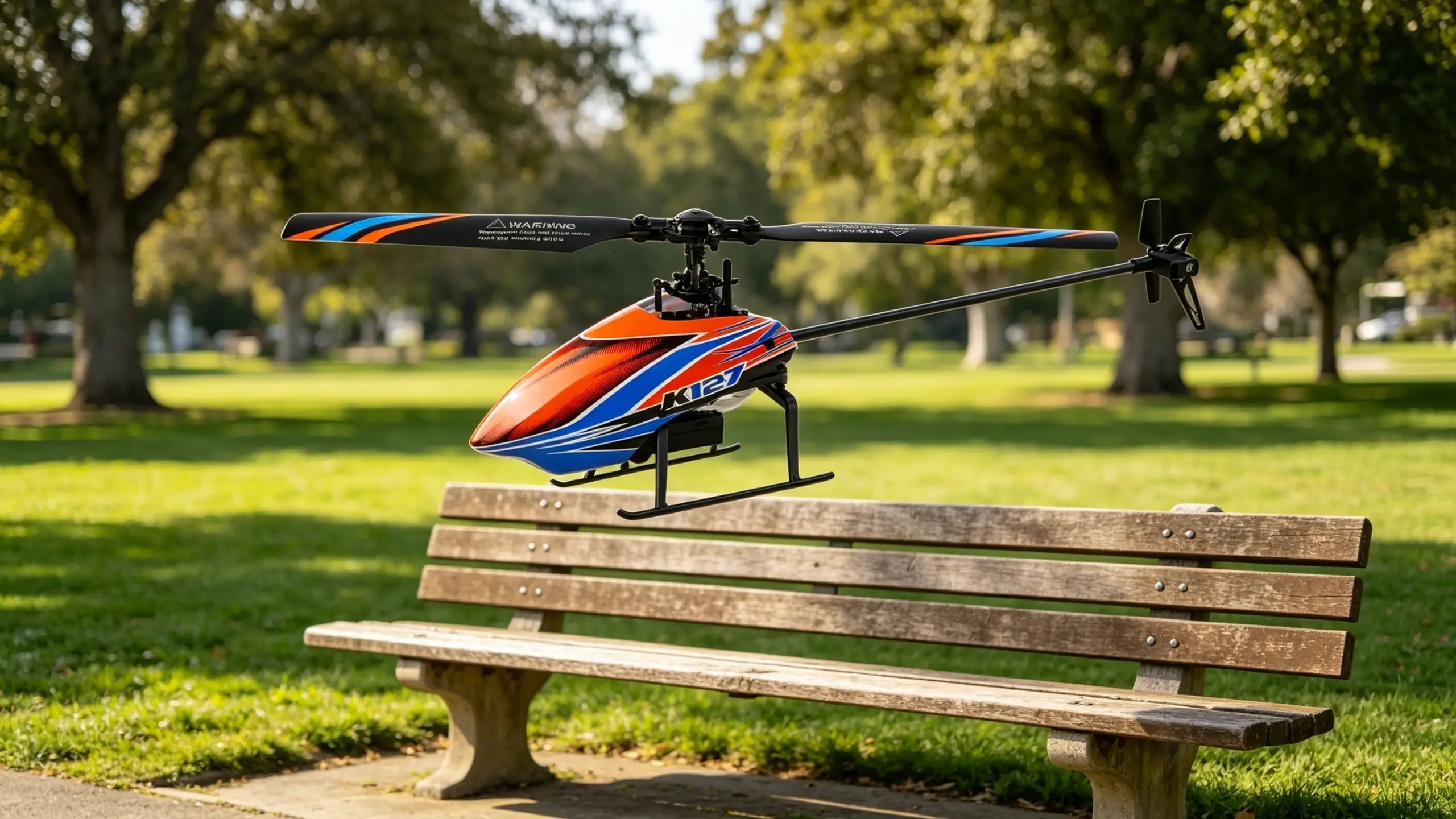
If you want a totally clean, high-tech experience indoors without dealing with muddy cleanups outside, you can always check out alternative high-performance options like the K127 Eagle Beginner 6-Axis Gyro RC Helicopter, which delivers massive aviation thrills right inside your living room!
5. Mistake #5: Running Out of Battery at the Farthest Point of Your Trail
Because a compact 1/18 scale 4WD remote control crawler is highly portable, one of the best ways to enjoy it is to pack it on a real hiking trip or a long walk through a local nature reserve. It turns a standard walk into an interactive off-road overland expedition! However, beginners frequently forget a crucial mathematical reality: your truck's tires are rotating a lot more than your feet are walking.
Maximizing Runtime and Managing Power on Long Expeditions
Micro trail trucks are exceptionally efficient—factory runtime benchmarks show up to 45 minutes of continuous operational capability on a standard 7.4V Lithium-Polymer battery pack under steady crawling loads [Source: Battery Discharge Matrix #LiPo-74-45]. However, time flies when you are focusing on tackling technical trails. It is incredibly easy to get distracted by a cool rock layout a mile deep into the woods, only to have your battery safety cutoff activate.
The integrated Low-Voltage Cutoff (LVC) protocol automatically shuts down power when the battery drops to 3.2V per cell to protect the battery chemistry from permanent damage.
There is nothing quite as humbling as having to walk a mile back to the parking lot along a busy public trail while carrying a dirty, heavy RC truck like a dead weight. Always monitor your truck's power: if you notice the steering servos getting slightly lazy or the low-end torque dropping off, that’s your sign to turn back or swap in a fresh battery pack.

Conclusion
At the end of the day, making mistakes, rolling over, and learning the mechanical limits of your vehicle is exactly half the fun of joining this incredible global hobby. By practicing smooth throttle inputs, scouting out the smartest lines over obstacles, respecting the power of your drag brake, and performing routine maintenance, you will instantly transform from a struggling rookie into a legendary trail master.
Ready to put these newly learned pro strategies to the ultimate test? Check out our ultimate trail beast: the 1/18 Scale 4WD Black Crawling RC Truck Troops 184021. Featuring an incredibly durable tactical body design, aggressive high-traction tires, and a true locked-differential 4WD system compliant with international CE and RoHS hobby-safety certification standards, it is the perfect platform to begin your off-road journey. Grab your remote, step into the backyard, and let the crawl begin!
FAQ: Frequently Asked Questions
-
Q1: Can I drive my crawling RC truck indoors on a rainy day?
-
Yes, absolutely! This is one of the greatest advantages of choosing a 1/18 scale model over a massive 1/10 rig. You can easily craft a highly technical indoor course using couch cushions, folded blankets, cardboard boxes, and heavy textbooks. It provides hours of indoor fun when the weather outside gets messy.
-
-
Q2: Why does my RC crawler make a sharp whining sound when moving slowly?
-
Don't worry, that is perfectly normal! That high-pitched noise is the sound of the high-frequency ESC sending pulses of power to the electric motor to maintain constant torque at super slow speeds. It means your internal system is doing its job perfectly to fight gravity.
-
-
Q3: Do I need to buy expensive aluminum upgrade parts immediately?
-
Not at all. Out-of-the-box Ready-to-Run (RTR) trucks from reputable brands are incredibly capable right from the factory. Spend your initial weeks mastering your driving lines and understanding weight transfer before spending money on upgrades.
-
-
Q4: Is a true 4WD setup required for tackling backyard rock courses?
-
Without a doubt, yes. True rock crawling relies on all four wheels constantly seeking traction simultaneously. A standard 2WD vehicle will immediately get stuck and spin its wheels helplessly the very first time it encounters a loose twig, a patch of soft mulch, or a steep brick ledge.
-


Leave a comment
This site is protected by hCaptcha and the hCaptcha Privacy Policy and Terms of Service apply.