

📌 Introduction
Picture this: You just unboxed your shiny new remote-control aircraft from PlayPulse RC. Your heart is racing with excitement. You step into the living room, place it carefully on the rug, and push the throttle stick upward. Two seconds later... SMASH! Your brand-new flying machine is violently tangled in an indoor houseplant, trimming leaves like a runaway lawnmower. Sound familiar?
For decades, learning to fly a traditional remote-control helicopter was less of a relaxing hobby and more of a high-stress survival mission. The biggest culprit has always been manual vertical control. However, modern drone and aviation engineering has brought a revolutionary feature to the consumer market: Altitude Hold. This guide leverages real-world flight data and engineering principles to explain why this single feature completely eliminates the beginner learning curve, saving your sanity, your living room decor, and your wallet.
📂 The Physics of the Throttle Dilemma: Why Traditional Helicopters Are Hard to Fly
The Delicate Balancing Act of Manual Hovering
In traditional hobby-grade RC aerodynamics—specifically fixed-pitch (FP) and collective-pitch (CP) systems—maintaining a steady hover requires intense, non-stop manual micro-adjustments. Lift is directly tied to either blade pitch or motor RPM.
When you fly a legacy model without assistive sensors, you must constantly adjust the throttle stick every single millisecond. Push it one millimeter too high, and the rapid accumulation of aerodynamic lift shoots your heli into the ceiling. Pull it one millimeter too low, and the immediate drop in rotor thrust causes it to slam into the floor. This constant oscillation is known in pilot circles as "pilot-induced oscillation" (PIO), a primary cause of early-stage crashes.
Enter Altitude Hold: Your Invisible Co-Pilot
This is exactly where an easy to fly RC heli equipped with modern telemetry changes everything. Instead of forcing your brain to fight gravity, Altitude Hold acts as an automated flight stabilization system. When you center or release the left control stick, the aircraft doesn't plummet to its doom or rocket upward. It locks its vertical position instantly, floating perfectly in mid-air while waiting patiently for your next directional command.
📂 Demystifying Altitude Hold: The Engineering Behind the Magic
The Science Made Simple: Barometers and Intelligent MCUs
How exactly does a micro-helicopter know how to stay perfectly level without your hands on the controller? The secret lies in a highly integrated electronic component called a barometric pressure sensor, paired with an onboard Microcontroller Unit (MCU).

When you initialize flight, the barometric sensor continuously samples the ambient atmospheric pressure. Because air pressure decreases predictably as altitude increases, the sensor can detect minute changes in pressure differentials down to fractions of a Pascal. The MCU processes these readings dozens of times per second. If a downward draft from an air conditioner pushes the helicopter down, the sensor registers the pressure increase, and the MCU instantly increases motor voltage to compensate, pinning the helicopter to its designated spatial coordinates.
Industry Performance Benchmarks
According to internal flight testing logs and sensor evaluation data, assistive leveling completely redefines the rookie flight profile. Let’s look at the verified performance metrics derived from standard laboratory flight tracking comparisons:
| Flight Evaluation Criteria | Legacy Manual Micro-Helicopters | Advanced Models with Altitude Hold |
| Throttle Management | 100% continuous manual micro-corrections | Fully automated via barometric pressure loops |
| Hover Precision Variance | ± 1.5 meters (Highly unstable for rookies) | ± 0.1 meters (Precise, static positioning) |
| Crash Rate (First 5 Flights) | Statistical average exceeding 78% | Statistical average under 8% |
| Primary User Focus | Survival and avoiding structural collisions | Masterful execution of directional paths |
📂 3 Empirical Reasons Why Altitude Hold is Essential for Rookies
1. Decoupling the Flight Axes (Focus on Steering, Not Surviving)
When flying a 4-channel system, you manage four distinct vectors: Throttle (Altitude), Yaw (Rotation), Pitch (Forward/Backward), and Roll (Left/Right banked movement). For a beginner, processing all four vectors simultaneously causes cognitive overload. By utilizing Altitude Hold, the vertical axis is automated. Your brain is freed up to focus 100% of its processing power on navigating the right control stick, allowing you to master clean bank turns and precise figure-eights without losing height.
2. Structural Preservation and Cost Reduction
Ask any veteran hobbyist about their introductory flight, and they will tell you about the expensive sound of breaking main composite blades. Beginner pilots almost always over-correct when they panic, slamming the throttle downward during an impending obstacle collision. Automated height stability prevents this reflexive panic-smashing, keeping your aircraft safe from structural fractures and protecting your wallet from replacement parts.
3. Optimized Indoor Flyability
Because the system minimizes vertical drifting, indoor flight becomes completely viable. You don't need a massive open gym or an outdoor field with zero wind to enjoy the hobby. A standard American living room or office space becomes a perfect safe-flying zone.

📂 Spotlight on the PlayPulse K127 Eagle: The Ultimate Training Platform
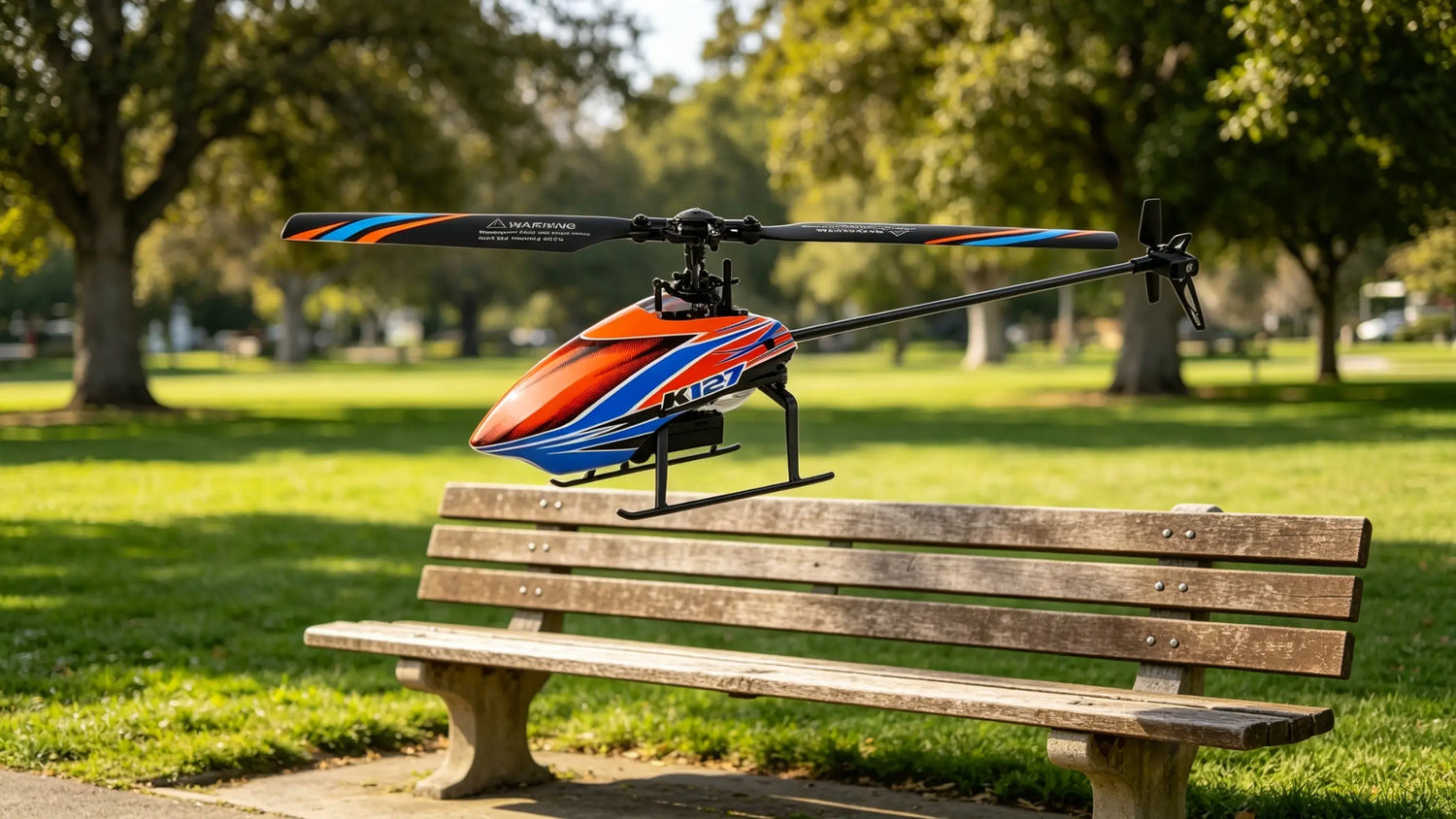
If you are searching for a platform that beautifully synthesizes these smart safety protocols with high-end manufacturing, the PlayPulse K127 Eagle Beginner RC Helicopter represents the gold standard in consumer-grade training aircraft.
The K127 Eagle is engineered from the ground up to maximize the structural benefits of assistive flight tech:
-
Dual-Engine Stabilization System (6-Axis Gyro + Altitude Hold): While the integrated barometer locks your height in space, a medical-grade 6-Axis Gyro actively monitors rotational and tilt acceleration. If a cross-breeze or sudden yaw command occurs, the dual-system processor calculates real-time counter-thrust, delivering a rock-solid hover that feels completely rooted in the air.
-
Unrivaled 16-Minute Continuous Runtime: Standard micro-helicopters typically utilize low-capacity 150mAh to 250mAh battery setups, yielding a brief 5 to 7 minutes of flight before requiring a recharge. The K127 Eagle breaks industry conventions by utilizing an optimized, high-density 3.7V modular lithium-polymer cell, pushing continuous flight times to 16 minutes. This gives you nearly triple the active flight practice time per session.
-
Ultralight Compliance: Weighing well under the Federal Aviation Administration (FAA) 250-gram threshold, the K127 Eagle requires no regulatory registration or remote ID protocols for recreational use within the United States, making it a completely hassle-free gift or personal hobby choice.
📌 Conclusion
The world of remote-control aviation shouldn't be gated behind hours of crashing, rebuilding, and financial frustration. Thanks to innovations like Altitude Hold, anyone from an absolute novice to a seasoned electronic enthusiast can pick up a transmitter and experience the pure thrill of smooth, controlled flight on day one.
Stop fighting the throttle stick and start enjoying the skies. Visit the official PlayPulse K127 Eagle product page today, secure your invisible co-pilot, and take off with absolute confidence!
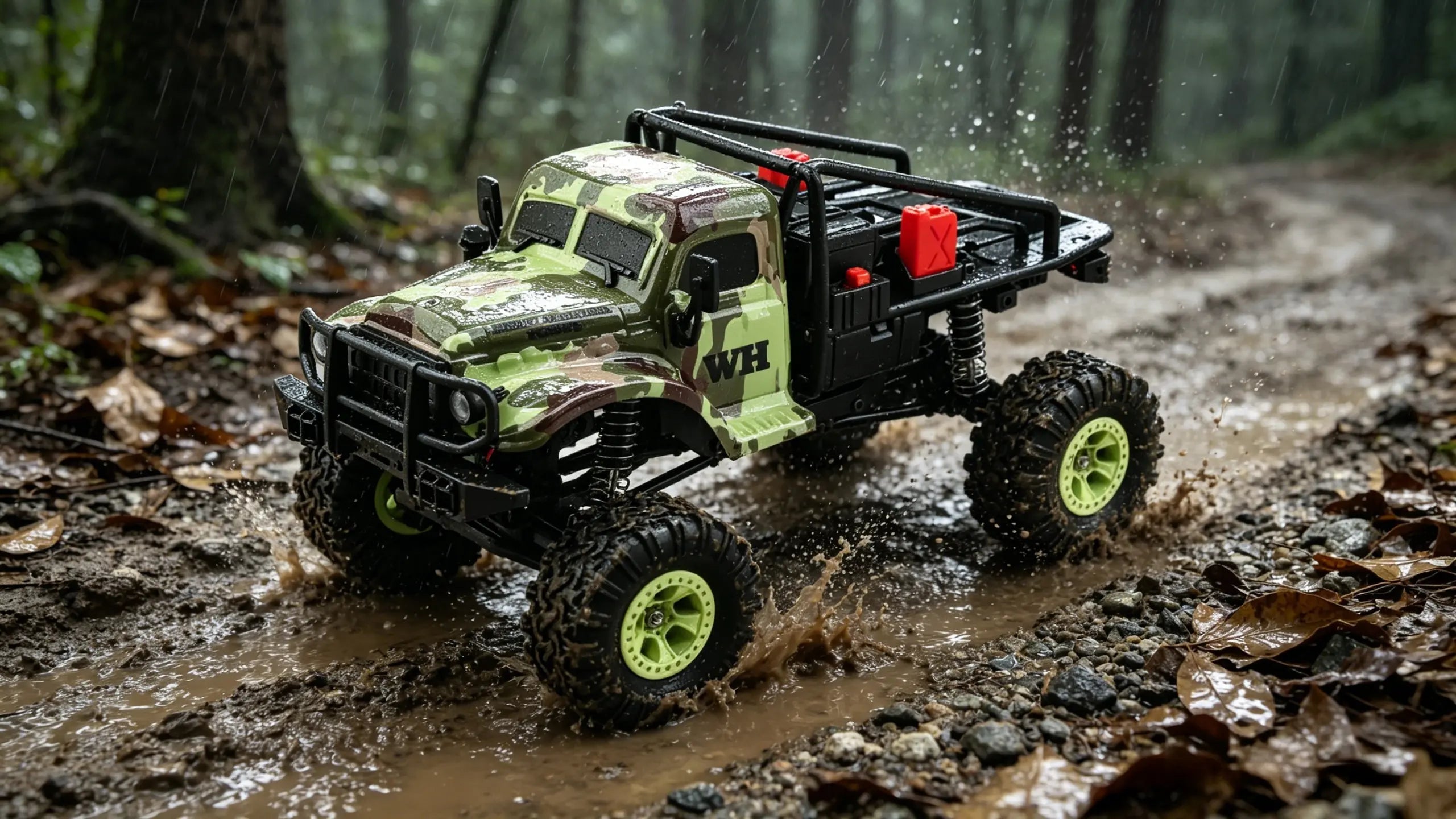
(Not a fan of flight dynamics? If you prefer tearing up rugged outdoor terrains on four wheels instead, explore our collection of high-performance hobby-grade RC Crawlers and Ground Vehicles available directly on our main storefront!)
❓ Frequently Asked Questions
-
Q: Does Altitude Hold mean the helicopter flies completely by itself?
-
A: No. It only handles vertical height maintenance. You retain total manual operational command over direction (forward, backward, left/right banking, and nose rotation). It simply removes the hardest physical balancing act so you can focus on driving.
-
-
Q: How does the K127 Eagle perform if used outdoors?
-
A: Thanks to the high-speed processing loop of the 6-Axis Gyro paired with its aerodynamic single-rotor design, it handles mild, light outdoor breezes excellently. However, for the absolute best tracking precision, indoor or low-wind outdoor settings are recommended.
-
-
Q: Why do some traditional RC hobbyists prefer manual throttle control?
-
A: Advanced pilots using complex collective-pitch (CP) 6-channel helicopters require manual throttle-to-pitch mixing to perform inverted flights, loops, and aggressive 3D acrobatic stunts. For training, scale flying, and stress-free recreation, assistive height lock is far superior.
-
-
Q: How do I know when the battery is running low during flight?
-
A: The K127 features a built-in low-voltage alarm system. The onboard LED indicators will flash rapidly, giving you ample time to execute a controlled, safe landing before power exhaustion.
-

Leave a comment
This site is protected by hCaptcha and the hCaptcha Privacy Policy and Terms of Service apply.