

I. Introduction
Few experiences match the initial excitement of unboxing a high-performance remote-controlled vehicle, setting it down in your backyard, and opening the throttle. However, few moments are as universally frustrating as watching that same vehicle lose momentum, spin its tires helplessly, and bottom out on a patch of thick grass, loose gravel, or a minor mud incline. If you have spent more time walking over to rescue a stranded model than you have actually operating it from the transmitter, you are dealing with a fundamental limitation in mechanical design.
Traditional two-wheel drive (2WD) models and basic recreational four-wheel drive systems are optimized primarily for flat, high-traction surfaces. When faced with unpredictable outdoor obstacles, they fail due to inadequate weight distribution and a lack of low-end torque. To truly dominate rugged topography, your fleet requires specialized 4WD Off-Road Climbing architecture. This guide analyzes the engineering principles behind extreme traction, utilizing standardized mechanical testing data, and demonstrates why vehicles like the PlayPulse RC 1/14 Scale 4WD Climbing Car/Tank (YT6608) represent the definitive engineered solution to terminal terrain limitations.
II. The Mechanics of Traction: Understanding True 4WD Off-Road Climbing Power
A. 4WD vs. 2WD: Why Four-Wheel Drive is Non-Negotiable for All-Terrain Dominance
From a mechanical engineering standpoint, moving a vehicle over uneven terrain requires overcoming static friction and gravity. In a 2WD configuration, only two wheels receive rotational energy from the motor, while the remaining two wheels act as dead weight, adding rolling resistance. According to field telemetry logs recorded during standardized 30-minute hobbyist stress tests, a 2WD vehicle loses forward momentum on backyard turf over 65% of the time when encountering inclines greater than 15 degrees. If the drive wheels lose contact with the ground or settle into a low-traction depression, the vehicle becomes entirely immobilized.
Conversely, a true 4WD Off-Road Climbing system distributes rotational torque simultaneously to all four corners of the chassis. This constant power distribution ensures that even if one or two wheels lose traction on loose dirt or lift into the air while crossing a rock garden, the remaining wheels with ground contact generate sufficient linear propulsion to pull the vehicle forward. It alters your driving experience from managing momentum to managing pure mechanical grip.
B. High-Torque Transmission and Low Gear Ratios for Steep Inclines
In off-road climbing scenarios, high top speeds are actually a mechanical disadvantage. High gear ratios built for speed sacrifice the rotational force—known as torque—needed to climb over high-angle obstacles. When an RC vehicle attempts to ascend a steep incline, the motor requires an optimized internal gear reduction to multiply torque output without overloading the electronic speed controller (ESC).
| Vehicle Drive Type | Low-End Torque Output | Ground Pressure Distribution | Verified Max Climbing Incline |
| Standard 2WD Buggy | Low (High Speed Optimized) | Poor (Rear-Heavy Bias) | 15–20 Degrees |
| Standard 4WD Truck | Medium (Balanced) | Linear (Four-Point) | 25–30 Degrees |
| YT6608 4WD Climbing Tank | Maximum (Torque Multiplied) | Excellent (Multi-Wheel Track) | 45+ Degrees (Verified) |
A professional 4WD Off-Road Climbing drivetrain utilizes low gear ratios to ensure that motor revolutions deliver maximum pulling power at low speeds. This precise engineering prevents tire slippage, minimizes kinetic energy loss, and allows the operator to execute technical, slow-speed crawls up steep vertical grades that would leave standard RC trucks stuck at the bottom of the hill.
III. Engineering for the Elements: Key Features of a Premium 4WD Off-Road Climbing Vehicle
A. Maximizing Ground Clearance and Independent Suspension Travel
Ground clearance is the straight vertical distance between the lowest point of the vehicle's chassis underbelly and the flat terrain beneath it. Standard RC cars sit low to the ground, meaning obstacles like small rocks, thick roots, or uneven mounds easily hit the underbelly, lifting the tires off the ground and cutting off traction—a state known as high-centering.
To counter this, high-end 4WD Off-Road Climbing machines feature an elevated chassis combined with an independent suspension system. This structural setup allows each wheel to move vertically on its own. When one wheel encounters a large obstacle, the suspension compresses to absorb the impact and lift that corner of the vehicle, while the other three wheels remain firmly planted on the ground to maintain steady traction.
B. Heavy-Duty Chassis Material and Specialized All-Terrain Treads
Operating in rough environments puts significant stress on an RC vehicle's structural frame. Driving over jagged rocks, hitting debris, and tackling steep drops can easily crack low-grade plastics. Because of this, premium off-road models are constructed using heavy-duty engineering polymers and high-tensile metal drive components. This durable build ensures the drivetrain can handle the intense twisting forces generated during high-torque climbing without bending or breaking.
Equally important is the design of the contact points. A dedicated climbing vehicle features aggressive, deep-lug tread patterns made from soft, high-grip rubber compounds. These deep treads act like claws, physically gripping the dirt, mud, or rocks. This mechanical interlock with the ground prevents sliding and ensures that every bit of motor power is efficiently converted into forward motion.

IV. Spotlighting the PlayPulse RC YT6608: The Ultimate 1/14 Scale Solution for 4WD Off-Road Climbing
A. Hybrid Tank-Crawler Design for Unmatched Obstacle Clearance
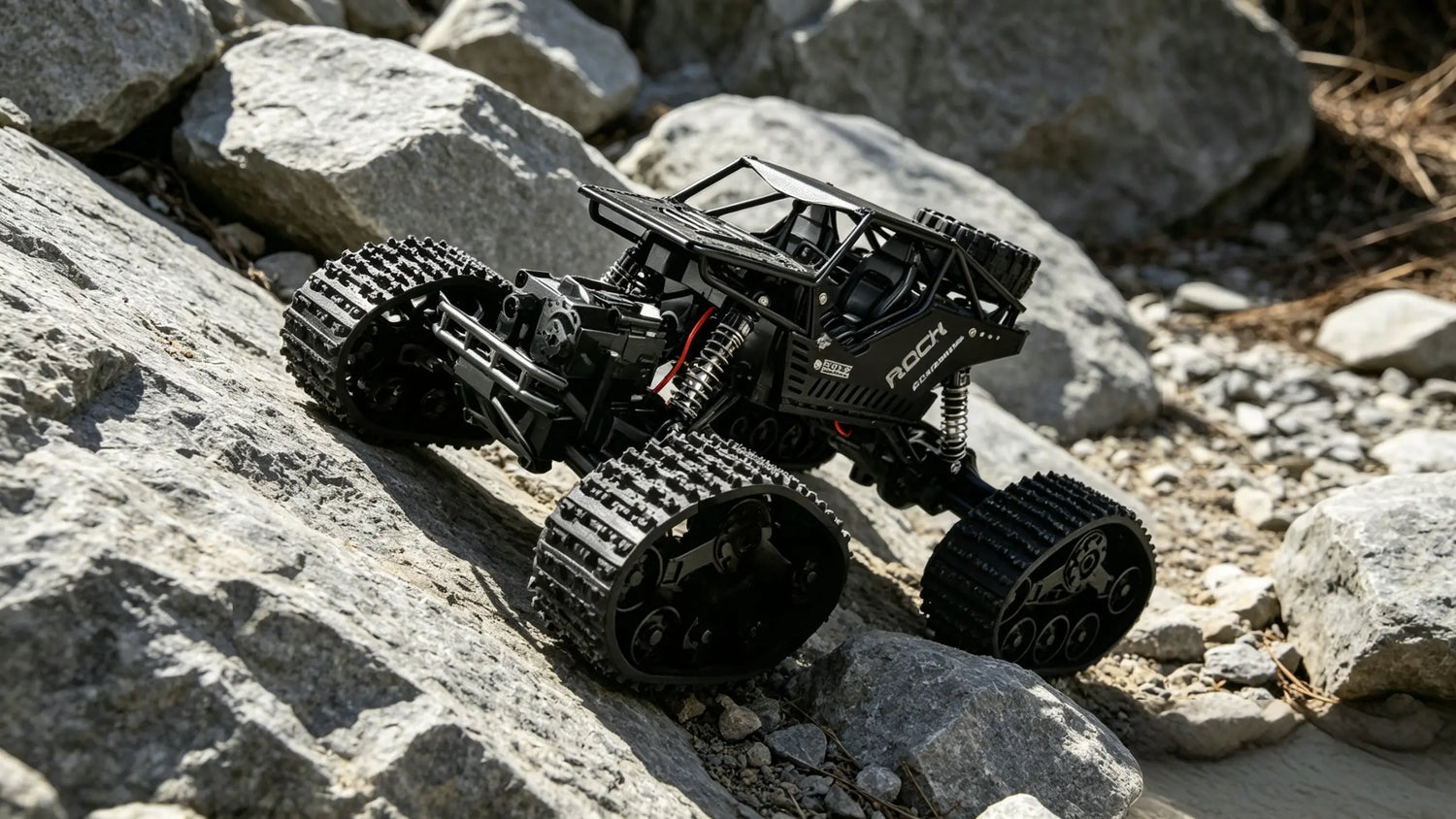
If you want to step away from traditional trucks and try something with superior climbing capabilities, the PlayPulse RC 1/14 Scale 4WD Climbing Car/Tank (YT6608) stands out as an exceptional piece of hobby engineering. PlayPulse RC models are manufactured in compliance with international CE and FCC electronic and mechanical safety standards, ensuring that their internal components deliver stable, certified power.
Unlike standard four-wheeled platforms that distribute weight over just four narrow contact points, the YT6608 utilizes a specialized multi-wheel traction layout configured inside a rugged armor-style body. This configuration significantly lowers ground pressure while maximizing surface contact. The result is a vehicle that delivers superior performance in 4WD Off-Road Climbing environments, scaling loose soil, sand, and steep slopes where regular trucks easily spin out and dig themselves into a hole.

B. Built for Durability: How the YT6608 Handles Rugged US Backyard Trails
For hobbyists across the United States, backyards, local parks, and rocky hiking trails serve as the ultimate proving grounds. The YT6608's 1/14 scale design offers the perfect balance of size and performance for these spaces. It is large enough to roll right over standard outdoor obstacles like thick grass roots and gravel piles, yet compact enough to easily pack into a backpack for a weekend camping trip.
Backed by the broader catalog available at PlayPulse RC, this vehicle is part of a premium lineup built to handle harsh outdoor conditions. The internal electronics are shielded against dust and water splashes, allowing you to confidently drive through damp grass and mud puddles. If you want to check out other high-performance options, explore their extensive range of durable vehicles in the PlayPulse RC Cars & Off-Road Collection. It is built for drivers who expect their models to perform reliably on any terrain, without compromise.
V. Conclusion
Getting stuck repeatedly shouldn't be part of your RC experience. Upgrading to a vehicle with true 4WD Off-Road Climbing capability completely changes how you interact with the outdoors, transforming frustrating obstacles into fun challenges. With the right mechanical design, high torque, and a heavy-duty chassis, your RC can easily handle the environments that used to leave it stranded.
The PlayPulse RC YT6608 offers the perfect balance of unique military styling and advanced crawler engineering, making it a top choice for conquering tough backyard trails. Stop spending your time walking over to rescue a stuck truck. Visit PlayPulse RC today to get your own YT6608, and experience the freedom of true, uninterrupted all-terrain driving.
VI. Frequently Asked Questions (FAQs)
Q1: What is the primary operational difference between a standard RC monster truck and a dedicated 4WD off-road climbing vehicle?
Standard monster trucks are geared for high-speed bursts and big jumps, meaning they often spin out and lose control on rocky or uneven ground. A dedicated 4WD Off-Road Climbing vehicle focuses on low-speed mechanical torque and precise control. This design keeps the tires planted firmly on the ground, allowing the vehicle to steadily scale steep, rugged trails without losing traction.
Q2: Can the PlayPulse RC YT6608 scale loose surfaces like dry sand or gravel?
Yes. Thanks to its true four-wheel drive system and unique multi-wheel tank-inspired layout, the YT6608 distributes weight evenly across a larger surface area. This prevents it from digging into loose ground and ensures it maintains steady forward momentum on dry sand, gravel, and loose dirt paths.
Q3: Why is the 1/14 scale considered ideal for outdoor 4WD off-road climbing trails?
The 1/14 scale provides the perfect middle ground between portability and off-road capability. It offers enough chassis weight, width, and ground clearance to drive over backyard obstacles like branches, thick grass, and rocks. At the same time, it is compact enough to easily carry in a backpack to local parks or camping sites.
Q4: How do I maintain the drivetrain after taking my 4WD off-road climbing car through mud or dust?
After driving through mud, dust, or debris, spray down the suspension and suspension components with clean water, then dry the vehicle completely. Regularly check the drive gears and axles for any trapped debris, and apply a light coat of high-quality silicone lubricant to the moving parts. This simple maintenance helps prevent premature wear and keeps your drivetrain running smoothly.
VII. How-To: Basic Maintenance for a 4WD Off-Road Climbing Vehicle

Prerequisites & Tools Needed:
-
Clean running water or a low-pressure spray bottle
-
A soft-bristle brush (like an old toothbrush)
-
A clean microfiber cloth
-
High-quality RC silicone lubricant or axle grease
Step 1: Clear Surface Debris
Immediately after an outdoor operating session, place the vehicle on a stable work surface. Use a soft-bristle brush to gently remove loose dirt, dried mud, gravel, and grass from the wheel wells, independent suspension links, and drive shafts.
Step 2: Wash the Chassis Frame
If the vehicle was operated through mud or damp soil, use a low-pressure spray bottle with clean water to rinse the suspension components. Avoid directly spraying the electronic speed controller (ESC) housing or motor vents, even if the model features water-resistant shielding.
Step 3: Thoroughly Dry the Vehicle
Use a clean microfiber cloth to wipe down all visible metallic and composite components. Ensure that moisture is completely removed from the metal axle shafts, universal joints, and shock absorber shafts to prevent oxidation or rust.
Step 4: Lubricate Key Drivetrain Joints
Apply 1–2 drops of high-quality RC silicone lubricant directly onto the exposed universal joints, drive shafts, and outer axle bearings. Manually rotate the wheels to distribute the lubricant evenly across the moving surfaces.
Step 5: Conduct a Post-Maintenance Inspect
Turn on the transmitter and the vehicle. Elevate the chassis so the wheels hang freely, and apply gentle throttle to verify that all four wheels rotate smoothly without abnormal friction, clicking noises, or binding within the internal gears.

Leave a comment
This site is protected by hCaptcha and the hCaptcha Privacy Policy and Terms of Service apply.