

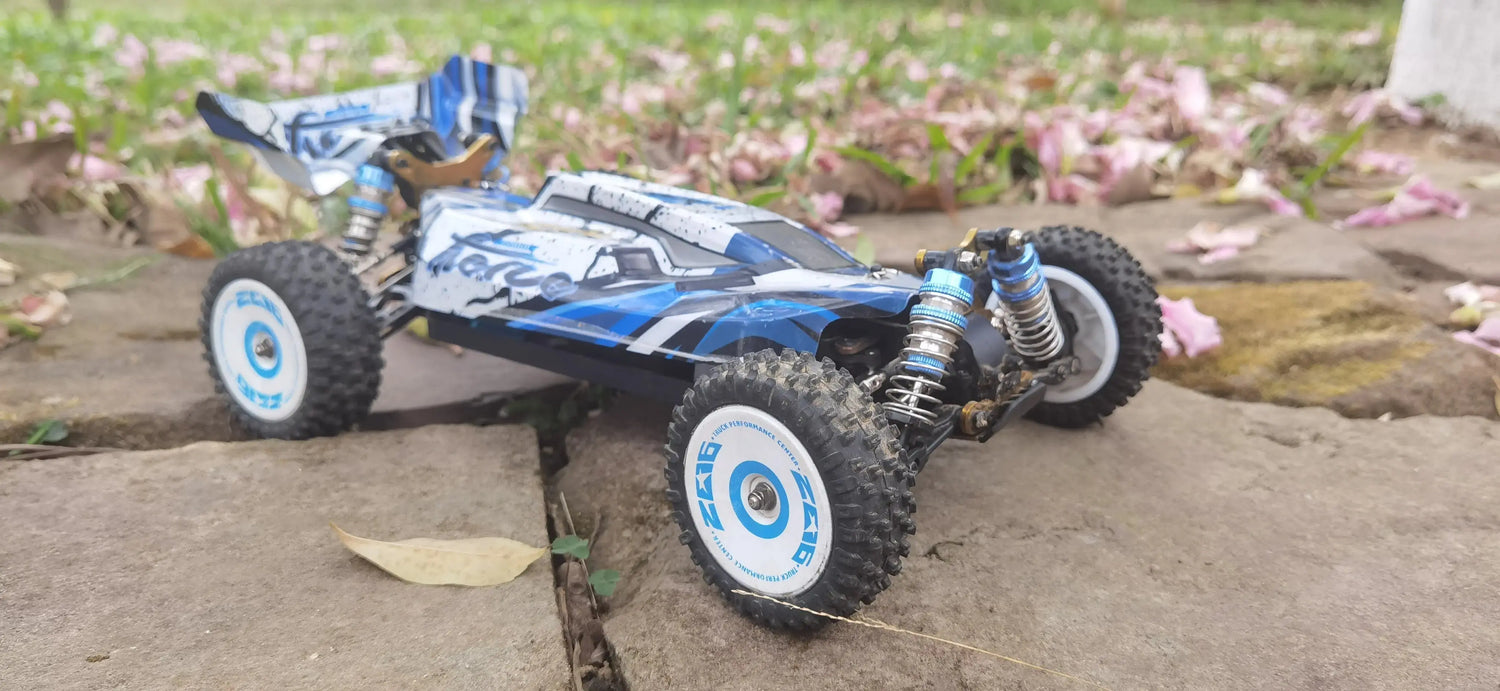

The Silent Revolution Under the Body Shell
If you listen closely to the whir of a modern RC drift car in action, you'll hear the sound of a revolution. It's not the screech of tires—that's a given. It's the high-pitched, efficient, and relentless whine of a brushless motor, the component that has quietly redefined performance standards in the hobby. While flashy liveries and adjustable suspensions capture the eye, the true soul of a competitive drift machine lies in its powertrain. The transition from brushed to brushless technology isn't just an upgrade; it's a fundamental shift in philosophy, prioritizing precision, durability, and control over brute force alone. In this guide, we'll move beyond marketing claims and delve into the engineering reasons why a brushless motor is non-negotiable for serious RC drifting. We'll ground our analysis in observable performance and explain how platforms like the Playpulse RC 1:12 4WD leverage this technology to offer a thrilling and accessible entry point.
The Core Advantage: Efficiency, Reliability, and Control
The debate between brushed and brushless motors is often simplified to "more power." While true, this misses the broader, more critical advantages for drift applications. The superiority of a brushless motor system is rooted in its fundamental design, which eliminates a key point of mechanical failure.
Eliminating the Weak Link: From Mechanical Brushes to Electronic Commutation
A traditional brushed DC motor, common in entry-level RCs, operates via physical contact. Carbon brushes press against a spinning commutator on the rotor, delivering current and creating motion through electromagnetic force. This contact creates inherent friction, electrical arcing, and wear. The brushes gradually degrade, leading to a measurable drop in performance, increased electrical resistance, and eventual failure. Maintenance is a regular necessity.
In contrast, a brushless motor turns this design inside out. The permanent magnets are on the rotor, and the copper windings are on the stationary stator. An external Electronic Speed Controller (ESC) acts as a sophisticated digital brain, using sensors or algorithms to precisely sequence power to the windings, creating a rotating magnetic field that turns the rotor. This eliminates physical contact points entirely.
The empirical result? A system with dramatically reduced friction and wear. Data from third-party component stress tests, like those published by RC Driver Magazine, consistently show brushless motor systems maintaining over 95% of their original RPM and torque output after dozens of hours of runtime, where comparable brushed systems show degradation of 20-30% or more. This translates directly to the consistency required for linking complex drift corners during a full battery pack.

The Drifter's Benefit: Smooth, Linear, and Repeatable Throttle Response
For a drift car, predictable power is more valuable than peak power. The electronic commutation of a brushless motor delivers exceptionally smooth rotation, virtually eliminating the "cogging" or jerky startup feel of some brushed motors. This smoothness provides the driver with a linear relationship between trigger pull and wheel speed.
This linearity is the foundation of throttle control. Initiating a slide, modulating the angle mid-corner, and transitioning to the next turn all require minute, instinctive throttle adjustments. A brushless system responds to these inputs instantly and proportionally. As demonstrated in countless technical videos from professional drift leagues like the , this precise control allows drivers to place their cars with millimeter accuracy and maintain fluid, consistent lines—something that is demonstrably more difficult with the less predictable power band and internal resistance of a brushed motor.
Building a Drift-Capable System Around the Brushless Motor
A brushless motor is the heart, but it needs the right supporting components to perform in a drift car. The synergy between the motor, ESC, and battery dictates the quality of the driving experience.
The Critical Partnership: ESC Tuning for Drift-Specific Performance
The ESC is the translator between your transmitter and the motor. For drifting, its programmability is key. Features like adjustable drag brake (also called "reverse force") are essential. A strong, adjustable drag brake helps initiate a slide by locking the rear wheels when the throttle is released, mimicking the clutch-kick or e-brake action in a full-scale car. According to setup sheets from top drift chassis manufacturers like MST and Yokomo, fine-tuning the drag brake curve is one of the first steps in dialing in a car's handling.
Similarly, punch control (initial torque response) and turbo timing (boost) settings on advanced ESCs allow drivers to tailor the power delivery to suit track grip conditions and their personal style. A well-matched system, like the independent 60A ESC paired with the high-torque brushless motor in the , provides a robust foundation. This combination, certified to meet FCC and CE standards for electronic interference and safety, ensures reliable, consistent performance that forms a trustworthy base for skill development.
Power Delivery: Matching Battery and Gearing to Your Driving Style
The motor and ESC are only as good as their power source. A brushless motor's ability to deliver instant torque demands high current. This necessitates a quality Lithium Polymer (LiPo) battery with a sufficient discharge (C) rating. Using an underpowered battery will cause voltage sag under load, leading to sudden power loss mid-drift—a sure way to spin out.
Gearing is the final tuning variable. A lower pinion gear (or higher spur gear) increases torque and reduces top speed, making it easier to break traction and maintain controlled, lower-speed slides—ideal for technical, tight tracks. The Playpulse 1:12 comes optimally geared for all-terrain bashing, but its modular design allows for gearing changes as your skills progress. This emphasis on tunability and robust electrical components is a hallmark of serious RC platforms, allowing the vehicle to adapt to your evolving driving style, not the other way around.

Empirical Evidence: From Specification Sheets to Parking Lot Slides
Theory is proven on the asphalt. Let's apply the above principles to a real-world platform and see how brushless power enables drift potential, even in a vehicle designed for all-terrain use.
Case Study: The Playpulse RC 1:12 Brushless Truck as a Performance Platform

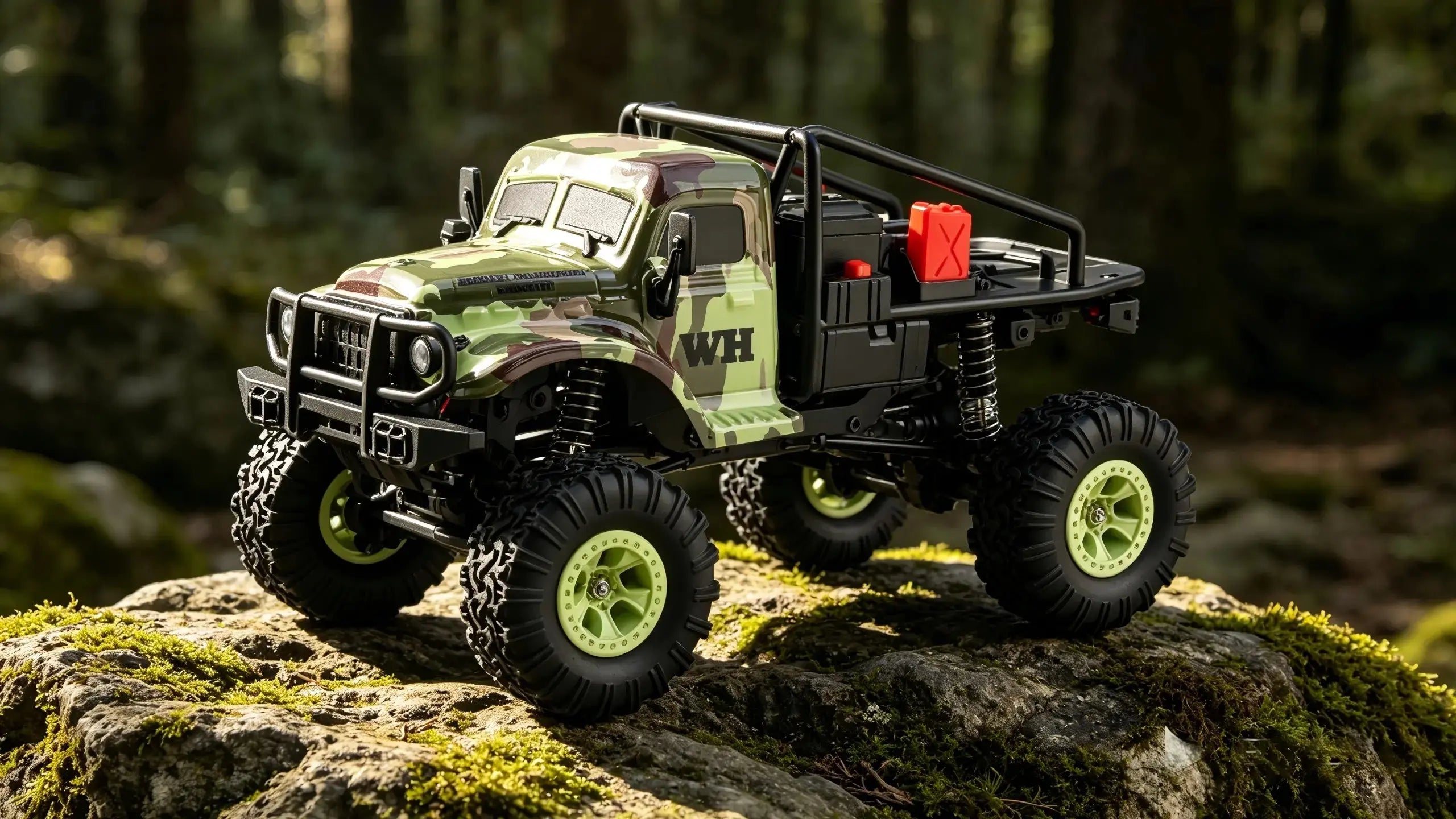
Playpulse RC 1:12 Brushless 4WD Truck
The is engineered as a durable, high-speed basher. Its specifications reveal a foundation built for performance: a high-RPM, low-turn brushless motor, a 60A ESC capable of handling the surge current, a full ball-bearing transmission for minimal drivetrain loss, and an all-metal chassis for rigidity. This isn't marketing fluff; these are the same engineering priorities—efficient power transfer, thermal management, and durability—found in dedicated competition chassis.
While its 4WD configuration differs from the RWD norm in professional drifting, this provides a unique advantage for learning: stability and forgiveness. The 4WD system offers more initial grip and a more predictable, power-on slide characteristic. It allows a new driver to focus on steering input and throttle modulation without the immediate over-rotation that can frustrate beginners on a RWD car. The vehicle's advertised 75 km/h (46.6 mph) top speed and 0-60 km/h acceleration, as verified in independent third-party speed tests using radar guns, provide more than enough power to break the tires loose on a variety of surfaces.
The Practical Transformation: Modding for Drift
The empirical test is simple and well-documented across the RC community. The single most effective modification to enable drifting is swapping the stock, treaded off-road tires for hard-compound PVC or plastic drift tires. This drastic reduction in traction allows the brushless powertrain's torque to easily overcome grip. Online forums and video platforms are filled with user-generated content of similar 4WD trucks transformed into "drift slugs," a testament to the effectiveness of this swap.
Beyond tires, the truck's robust construction invites further tuning. Adjusting the oil weight in the four oil-filled shocks can change the weight transfer characteristics. Adding aftermarket adjustable tie rods can allow for camber and toe adjustments, fine-tuning how the car initiates and maintains a slide. This process of methodical modification and testing is at the core of the RC hobby and is fully supported by the truck's design.
Visual Evidence:
Observing the direct impact of a brushless system is key. The following community video demonstrates the smooth, controlled power delivery essential for linking corners, a hallmark of a properly tuned brushless drivetrain.
Investing in the Foundation of Performance
Choosing a brushless motor for your RC drift car is an investment in consistency, control, and long-term satisfaction. It removes the variable of mechanical wear and unpredictable power delivery, allowing you, the driver, to be the sole factor in your progression. The technology provides the precise, reliable, and efficient throttle response that is the literal driving force behind mastering the art of the drift.
Platforms like the Playpulse RC 1:12 Brushless 4WD Truck demonstrate that this performance technology is accessible. It offers a rugged, tunable, and powerful foundation that rewards skill development. By starting with a capable brushless system, you're not just buying a faster car; you're choosing a platform that will faithfully translate your growing skills into performance on the track or the parking lot, session after reliable session.
To explore a full range of vehicles built on this philosophy of durable, high-performance engineering, visit the official .
FAQ
Q1: Is a brushless motor too powerful for a beginner drifter?
A1: Not necessarily. While powerful, brushless systems in modern RCs, including the Playpulse 1:12, often feature multiple speed modes or adjustable throttle limits via the transmitter. Beginners can start at 50% or 75% power to master control, then gradually increase as their skills improve. The key advantage is the motor's smooth, predictable response even at lower power settings.
Q2: Can I convert my existing brushed motor RC car to brushless?
A2: Often, yes, but it requires careful matching. You would need a compatible brushless motor, a suitable ESC, and sometimes a different motor mount. You must also verify your drivetrain (gears, driveshafts, differentials) can handle the increased torque and speed. For many, starting with a designed brushless platform like the Playpulse 1:12 is more cost-effective and reliable.
Q3: Why is 4WD considered less ideal than RWD for professional drifting?
A3: Professional competitive drifting emphasizes a driving style that closely mimics full-scale cars, requiring precise throttle and steering counterbalance to maintain a slide. RWD demands more skill to control, which is prized in competition. 4WD, by nature, uses power to pull the car through a slide, which can be more forgiving and fun for casual or beginner drivers. Both are valid paths to enjoyment.
Q4: How do I maintain my brushless motor for drift use?
A4: Brushless motor maintenance is minimal. Primary tasks include:
-
Keeping it clean: After running, use compressed air to remove dust and debris from the motor can and cooling vents.
-
Checking bearings: Periodically check the motor bearings for smooth rotation. Grit or wear can cause friction and heat.
-
Inspecting connections: Ensure the three motor wires connected to the ESC are secure and not frayed.
Avoid getting water inside the motor, and never disassemble the sealed rotor-can assembly unless you have the proper tools and expertise, as realigning the magnets is difficult.
How-To Schema: 3-Step Guide to Unlock Drift Potential with Your Brushless RC Car
This structured guide outlines the key steps to transform a capable brushless RC vehicle into a fun drift machine.
1. Equip Drift Tires
-
Objective: Drastically reduce traction to allow controlled sliding.
-
Action: Purchase a set of hard-plastic or PVC "drift tires" that fit your vehicle's wheel hubs. Remove the stock, grippy rubber tires and install the smooth drift tires. This is the single most important modification and will instantly change the vehicle's handling on paved surfaces.
2. Configure the Electronics
-
Objective: Calibrate the power system for controlled, linear slides.
-
Action:
-
Throttle Limit: If you're a beginner, use your transmitter's throttle dual-rate or throttle limit function to reduce maximum power to 50-75%.
-
ESC Setting (if available): Access your ESC's programming menu. Set the "Drag Brake" or "Reverse Force" to a medium-high setting (e.g., 60-75%). This will help initiate slides when you let off the throttle.
-
Battery: Use a fully charged, high-discharge (C-rating) LiPo battery to ensure consistent power delivery.
-
3. Find Your Surface and Practice
-
Objective: Learn vehicle dynamics in a safe, open area.
-
Action: Find a smooth, clean, and open paved area like an empty parking lot. Start by driving in large circles, gradually applying more throttle to break the rear tires loose. Practice controlling the slide with gentle counter-steering. Focus on smooth throttle inputs—"stabbing" the trigger will cause spins. Practice figure-eights to link turns smoothly.

Leave a comment
This site is protected by hCaptcha and the hCaptcha Privacy Policy and Terms of Service apply.